Mental Illness = Disease of the Mind

May is Children’s Mental Health Awareness Month. All children deserve role models to show them positive ways of living all year round, not just during the one month designated for mental health awareness.
On the Rez there’s always an abundance of unhealthy role models for our children to imitate. Alcohol, drug, gambling and violence addictions are witnessed by our young people more often than healthy life paths are.
Social networking websites which exist today give even more opportunities for people who lack integrity to influence young people. There is a lot of online bullying happening on the Rez. Bullying even happens through text messages. When someone suffers from bullying, it affects their mental health.
People tend to be very bold online. Many who won’t look us in the eye in person have no problem typing hateful words aimed at us in cyberspace. But it may not be disrespect – the person could actually be suffering from mental illness. Consequently, I equate mental illness as disease of the mind.
When our young people go online to visit social networking sites, I am sure they are regularly disrespected by both their peers and mentally ill adults. Parents have a huge influence in their children’s lives. Parents also have the power to ensure their children grow into mentally healthy adults.
This week I was thinking about the phenomenon on the Rez in which adults will teach their children how to carry a generational grudge. That is, many families have been at war for generations over nothing. Now these grudges will happen for a number of reasons and I am sure you can think of many examples without me listing all the scenarios here. In any case, it is not good for the mental health of anyone to go through life carrying a grudge.
It’s even worse when you make your children to carry that grudge for you. For instance, say your mom had a disagreement with your friend’s mom. They are good friends but they have that falling out. You always play with the children of your moms’ friends. Now you are forced to carry their falling out and give up your friends.
Also, the children, pre-teens, teenagers and young adults in the family of the person your mom had the disagreement are either totally ignoring you or else they glare at you when you see them. It’s very unhealthy for mentally ill moms, dads, aunties, uncles, grandpas or grandmas to coach their younger family members to ignore or glare at people.
The falling out we have with another person should be between us as individuals. It’s an extreme example of disease of the mind – which is the exact opposite of mental health – when you force your children to hold grudges against the adults you are pissed at.
It’s terrible when little children grow up to be just as vindictive as their parents or extended family members. This is not a Lakota virtue. It’s up to us to heal our disease of the mind.
The Reality of Living Near A “Man Camp”
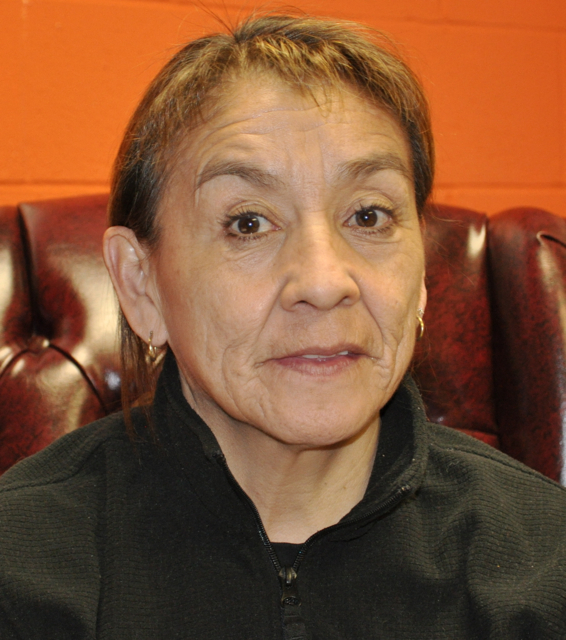
Grace Her Many Horses has dedicated many years of her life to law enforcement. After this article was published she was removed from her position at Rosebud and has since returned to work on the Fort Berthold Reservation. Article is reprinted with permission from The Sicangu Eyapaha (Rosebud Sioux) tribal newspaper.(Courtesy Photo)
By Damon Buckley
Communications Director, Rosebud Sioux Tribe
ROSEBUD, SD – Former Rosebud Sioux Tribe Police Chief Grace Her Many Horses took a temporary job working in the Bakken Region near Newtown, North Dakota. This Bakken Basin stretches from Montana to North Dakota and it is rich in shale oil supplies. She began work in June of last year until October of the same year. It was her first experience with Man Camps. She seen them before while driving past on the way to pow-wows but this was going to be the very first time she would enter the premises and work the area as a law enforcement officer. This seasoned professional would be in for a rude surprise.
“When I first got there some of the things they talked about, in any of these areas, was they told the men ‘Don’t go out and party. Don’t get drunk and pass out. Because you’re going to get raped,” she said without hesitation.
It’s not exactly something you would expect to hear from a workers’ camp but these places are not exactly your ordinary laborers’ camps. The depth of depravity and dubious behavior are commonplace in these so-called Man Camps. No one will say that all of the inhabitants are criminal but there is definitely an element there that has rocked the local law enforcement officials to the very core of their morals and value systems.
There are identifiable variables that remain constant: These oil workers usually come from desperate conditions. These workers usually have a family they have left elsewhere so they are not looking to start new relations. These workers are paid an excessive amount of money. These workers are well aware their employment is only temporary. These workers know they are living in a remote environment where law enforcement is already stretched beyond its limits and the temptation for criminal behavior is very strong. Unfortunately, most of America still cannot comprehend this information.
“Sexual assaults on the male population has increased by 75% in that area,” she continued. That kind of statistic makes maximum security prisons look like the minor league. “One of the things we ran into while working up there was a 15 year old boy had gone missing. He was found in one of the Man Camps with one of the oil workers. They were passing him around from trailer to trailer.”
He went there looking for a job and was hired by individuals within the Man Camp to do light cleaning in and around their personal areas. The young teenager was forced into sex slavery. It’s the kind of thing you hear about in the ghettos of third world countries; not in the quiet and remote countryside.
The victims aren’t just males but females too. Everyone has heard by now of the missing school teacher that was kidnapped as she was out jogging, repeatedly sexually assaulted, and murdered near one of these Man Camps. The age of the Man Camp victims varies. The assailants are not necessarily looking for male and female adults. They are also going after little girls.
Grace Her Many Horse recalls one specific instance where “We found a crying, naked, four year old girl running down one of the roads right outside of the Man Camp. She had been sexually assaulted.”
There has been a significant rise in prostitution, gambling, and organized crime in these Man Camps too. The oil workers enjoy being compensated at salaries far above that of the average American blue collar worker. So when their paydays come around the predators venture out of the camps and into nearby towns and places a little further down the road. They usually move in caravans of workers with large amounts of cash stuffed into their pockets. Their large payoffs give them the buying power to obtain anything they can think of including prostitutes and hardcore drugs that have never been seen in these towns before. It has a devastating effect on the local small towns.
This former tribal police chief’s first experience talking with prostitutes that cater to Man Camps came here on the Rosebud Sioux Indian Reservation. She pulled over two vans heading out of town. They were filled with female passengers, again, of varying ages. They were heading in the direction of the Man Camps. One of the brazen occupants declared outright to this officer, “Well, you know why we are going up there.” It’s not something you would expect to hear from a woman but these passengers were determined to make it to their destination one way or another.
After taking a long breath followed by a sigh Officer Her Many Horse said, “That small tribal town has been through so much. When you go into to their casino around 11 at night you notice the flavor of the patrons has dramatically changed for the worse.” She speaks of her short time policing those camps and admits it was easy to notice how hard drugs and prostitution had increased dramatically.
She spoke with local Indians that said they used to frequent their casino but they stopped. Things had changed so much that a large number of locals dare not venture outside at night. There are strangers everywhere. Again, this is coming from a small town where most of its population is Native American and everyone had known each other’s first names and origin. Now it is hardly recognizable. Businesses were forced to open only to be shuttered later. Trash and debris has increased. Violence of all types has surged and the beauty of the land has been replaced with heavy construction vehicles and the destruction of lands once referred to as God’s Country. The traffic on local highways has increased significantly as well as the number of traffic accidents and its numerous victims that can no longer speak for themselves. Life goes on in these small Indian towns but it is a life that is bitter and strange.
Meth has been seen as having destructive effects on Indian communities before but now there are new drugs filtering onto Indian reservations from these Man Camps. “There is a new drug called Crocus. When you ingest it your skin boils from the inside-out. It leaves you with permanent scars on the surface of your skin that resembles the scales of a crocodile. It will literally eat your feet off, eat your limbs off. It’s horrible. That’s been introduced up there and it is more addictive than heroin. The drug trade is rampant up there.” She explains how the police department near that particular Man Camp is smaller than the one here in Rosebud. “They need help,” she confesses.
There are oil workers there that can’t even speak English. The sex offenders are very prevalent. “We found thirteen sex offenders in one Man Camp and that Man Camp is found directly behind the tribal casino. Our supervisors would tell us “Watch your kids. Don’t let them run through there.” Making matters worse was the fact that Grace Her Many Horses moved up there with her two young daughters ages ten and fourteen. Living in those conditions and having to worry about the safety of her children must have added years to her life. After the need for workers ends the small town is left with its eye sore oil pipeline, businesses will go bust, the introduction of these new hardcore drugs will linger on, and its shocked residents will be left to contemplate their decision for the oil pipeline in years to come.
The most startling time Grace Her Many Horses spent at the Man Camps was when her police force had to serve warrants on some of the workers and remove them from their dwellings. She and her co-workers took things very serious, suited up in full SWAT gear, went through extra-ordinary measures to could conduct their raids, and to protect themselves from harm.
“It was scary. I never had to do that before in my many years of service. I feel really bad for the local residents because the flavor of their [Indian] reservation has changed so much,” she admits.
It leads the common Rosebud resident to ask if we have enough police officers to cover the proposed Man Camp being built nearby the Rosebud Sioux Indian Reservation. She was not hesitant to argue: “No we do not have enough members on the police force. We barely have enough people to cover our [Indian] reservation right now. If you were around for the first week of January we had a double-homicide, we had unattended deaths, we had shootings, we had a major car accident, and that’s just in one week. We were so busy here at the [police] station. My whole department worked thirty hours straight. I told those guys to go home, get showered, and come back to work. That’s not even taking care of our outlying communities. This tribal police department isn’t equipped to handle what’s going to happen out there when the Man Camp arrives. The infrastructure of the towns on this Indian reservation will be forced to expand then months later it will collapse onto itself. Because I’ve witnessed it doing just that… what I am saying up there in Newtown, ND. It’s going to be really scary. Realistically speaking, we’re going to need to setup a substation for the area nearest to the Man Camp, and we got have people on call 24 hours a day there too. I don’t know how we are going to deal with that just yet. We are overwhelmed as is stands right now. Once the Man Camp moves in…” Basically, it’s not a future everyone wants to see.
The Children Are Sacred. Aren’t They?

By Vi Waln
May is Children’s Mental Health Awareness Month. The mental health of our children is affected by abuse, whether it happens at home or school. Child abuse is unacceptable because it does affect the state of our children’s mental health.
Violent abuse at school would likely cause a child victim to have extreme Post-Traumatic Stress Disorder (PTSD) for life. School should never be a place for violence against children.
It’s unacceptable for a man who works in an elementary school to assault a little girl causing her to have a black eye. Child abuse by school staff shouldn’t be condoned.
Incidents like this one are supposed to be reported to the tribal child protection services or the police or the criminal investigator or even the Federal Bureau of Investigation. But many mandatory reporters of child abuse on the Rez call in reports without results. The assailant remains free in the community.
Well, at the very least I believe the staff member should be fired. Immediately. I also believe there should be criminal assault and child abuse charges filed against the staff member. What shouldn’t happen is an administrator, along with the parent of the staff member, advocating for the man who assaulted a child to be able to go back to work.
Say the man gets to go back to work in the school; now what if the next set of injuries inflicted by the man upon a child is worse than a black eye?
A man who works in a school and strikes a Lakota child hard enough to leave a mark on the student should be put in jail. Let me write that again. A man who works in a school and strikes a Lakota child hard enough to leave a mark on the student should be put in jail.
This actually happened a few months ago in a school on one of our reservations. The man was temporarily removed from his classroom job but now there are people close to the situation advocating for the suspension to be lifted so he can go back to his job. He was never arrested.
Do you really believe an adult who abused a child deserves another chance? Remember, this is a school where our own Lakota children are sent every day to learn. Many of us send our sons and daughters to school believing they will be safe.
But not all schools are safe. If this man is allowed to return to the classroom, I would encourage all parents to take their children out of that school. Do not wait for the next incident.
Obviously, a man who strikes a child hard enough to leave a black eye has major anger issues. He should be in counseling. There are anger management classes offered in jail.
The people of the community must not be silent when a man at school hits a little girl hard enough to leave a black eye.
What happened to the mantra which states Lakota children are sacred?
Rosebud leaders want Referendum Vote
By Vi Waln
ROSEBUD, SD – The Community President’s Association (CPA) of the Rosebud Sioux Tribe is working to get 27 Constitutional amendments placed on a Secretarial Election ballot for tribal members to vote on.
The CPA has formed a committee to provide education to tribal members. They have been attending community meetings to inform members regarding the process of amending the RST Constitution.
Several Constitutional Amendments were approved during a Secretarial Election held in 2007 and subsequently incorporated into the RST Constitution and By-Laws. A major update to the Constitution changed the election terms from two years to three years for the tribal president, vice-president and all twenty tribal council representatives. Elected officials are also limited to serving two consecutive terms under the current Constitution.
An amendment which allowed tribal enrollment based on lineal descent was perhaps the most controversial of all the changes which were made. That is, opponents of the lineal descent enrollment amendment contend that services are overburdened with the increased number of recently enrolled tribal members.
Each of the twenty reservation communities is allowed one tribal council representative. The twenty members of the governing body are elected through an at large process which allows all registered tribal voters to have a hand in choosing the entire tribal council. Previously, tribal council representatives were elected by their community voters only.
The proposed amendments are being circulated to the current tribal council members as petition resolutions. There are 27 resolutions and each one contains a single amendment. Each petition resolution must have a minimum of 15 tribal council representative signatures in order to be approved. Each resolution requests the Secretary of the Interior to call for an election for the members of the RST to vote on each amendment.
This process is being carried out as a referendum to put all of amendments which were voted on in 2007 back on a secretarial election ballot. Article VII, Section 2 of the RST Constitution and By-Laws states: “Referendum. Upon receipt and verification by the Tribal Secretary of a petition of thirty (30) percent of the number of persons who voted in the last tribal election or upon the request of two-thirds of the total members of the Tribal Council, any proposed or previously enacted ordinance or resolution of the Tribal Council shall be submitted to a vote of the people at a regular or special election to be held within sixty days of verification of the petition by the Tribal Secretary. The vote of a majority of those actually voting shall be conclusive and binding upon the Tribal Council.”
A summary of the amendments addressed in each resolution is as follows:
RST Resolution 2014-70: to amend the name of the Rosebud Sioux Tribe to Sicangu Nation.
RST Resolution 2014-71: to amend the name of the Tribe in the Preamble of the Constitution to Sicangu Nation.
RST Resolution 2014-72: to amend the provision allowing for lineal descent enrollment.
RST Resolution 2014-73: to amend the name of the tribal council to Sicangu Nation/Sicangu Council.
RST Resolution 2014-74: to amend the requirement for all council members, president and vice-president to be at least ¼ degree Indian blood.
RST Resolution 2014-75: to amend the limit of serving two consecutive terms and also to amend staggered terms.
RST Resolution 2014-76: to amend the at-large election process for council representatives.
RST Resolution 2014-77: to amend section 6 outlining qualifications of candidates.
RST Resolution 2014-78: to amend section 6 outlining qualifications of candidates.
RST Resolution 2014-79: to amend the provision for filling offices which become vacant before term ends.
RST Resolution 2014-80: to amend the at large voting process to elect secretary and treasurer as well as the appointment of the sgt-at-arms.
RST Resolution 2014-81: to amend the requirement of the president, vice-president, community representative, secretary, treasurer and sgt-at-arms to be at least ¼ degree Indian blood.
RST Resolution 2014-82: to amend the requirement that the RST electorate determine the qualifications of its officers, council members and community officers.
RST Resolution 2014-83: to amend the dates of the primary and general elections.
RST Resolution 2014-84: to amend the requirement of employing legal counsel.
RST Resolution 2014-85: to amend the section on appropriation estimates or federal projects.
RST Resolution 2014-86: to amend the section requiring a separation of powers.
RST Resolution 2014-87: to amend the section calling for protection of minors, mentally incompetent and others.
RST Resolution 2014-88: to amend the section requiring the council to consider the effect of their decisions on the next seven generations.
RST Resolution 2014-89: to amend the section on limitations of powers of council members.
RST Resolution 2014-90: to amend the section regarding the procedures for removal from office.
RST Resolution 2014-91: to amend the Bill of Rights.
RST Resolution 2014-92: to amend several sections defining the Tribal Court process.
RST Resolution 2014-93: to amend the section outlining and defining the duties of elected officers and the process for reporting violations.
RST Resolution 2014-94: to amend the section pertaining to some duties of the treasurer.
RST Resolution 2014-95: to amend the language contained in the Oath of Office.
RST Resolution 2014-96: to amend the section which defines the process of compensation of elected tribal officials.
For more information contact your Community President. The CPA has their regular monthly meetings on the second Saturday of each month. You may also contact the Tribal Secretary’s office for more information at (605) 747-2381.
Mom was my Best Friend Forever

My Mother was my best friend. She was a devout Catholic girl from the boarding school era and never ever complained about being abused. She attributed her experience in boarding school as one that helped her achieve an admirable level of self-control. I believed everything my Mother told me.
She played basketball and was a cheerleader while in high school. She once told me her high school nickname was “Creep” because she had the ability to just creep away when in a group of friends who would sometimes find themselves in trouble with the priests or nuns. She never got caught! She graduated from St. Francis Mission High School in the 1950’s and earned a college degree from Sinte Gleska University in the 1980’s. I remember I was proud of her when she received her college degree. My Mother always encouraged me to continue my education.
When my siblings and I were small children, our Mother would take us shopping and spend her entire paycheck on new clothes for school. I remember her washing our clothes in one of those wringer washers and hanging them on the clothesline. Each school day she would lay out our clean clothes for us. We lived in the country so she would drive us to and from school every day so we didn’t have to walk. She always made sure we had enough food to eat. My Mother made sure we had the things we needed. My Mother loved my siblings and me.
I remember one Halloween when she made our costumes all by hand. My sister and I were dressed like hobos; we even had those little sticks with the sack of hobo belongings dangling from the end slung over our shoulders. She spent a lot of time sewing patches on some old clothes we had. I was very small but I remember we won a prize at the costume contest held at the old St. Agnes Hall in Parmelee.
My Mother always put her children first in her life. She always acted in our best interest. If we needed something she would find some way to get it. She encouraged me in all my endeavors. No matter what I wanted to do, my Mother allowed me the freedom to live my own life and make my own mistakes. I am the person I am today because of everything my Mother taught me. She was an excellent role-model.
I remember when I decided to attend a big university in a different state and my entire family tried everything to discourage me from going. My Mother was the only person who was supportive of what I wanted to do with my life. When the time came to move she helped me load up her car with all my belongings and then we drove all night to get there. She even loaned me money to pay my summer school tuition because I could not hold my classes without paying first and my financial aid would not disburse a check until the first day of class.
My Mother had a great sense of humor. She confided a lot about her life to me. She always gave me good advice. When I was a teenager she was very supportive of me. She came to all the school activities I participated in. Sometimes I thought she was a bigger fan of the basketball team than I was! I also remember how she glowed with pleasure when people would ask us if we were sisters.
Next month it will be 24 years since my Mother made her journey to the spirit world. Her passing left a major void in my life and I still miss her. You do not know what it is like to be without your Mother until she is gone. Mother’s Day is Sunday. Take the time to call your Mother or, better yet, go and see her in person. Give her a hug and tell her you love her. Fix her lunch or take her out to eat. Buy her flowers. Tell her you appreciate everything that she has done for you.
If you and your Mother are not on speaking terms, find it in your heart to mend whatever rift is between you. She made the choice to bring you into this world. Honor her for your life!
The Mental Health of Lakota Children

Tiny Tot Dancers enjoyed themselves at the 29th Annual He Dog Wacipi. Lakota culture is important to mental health.
By Vi Waln
The 2014 National Children’s Mental Health Awareness Day is on May 8th. It is up to all of us to help the children and young people in our lives enjoy mental, emotional, spiritual and physical health.
Good thoughts take effort. A safe environment will help young people to think positive.
Also, ensuring that our families have enough food to eat is very important. The Indian Reservations of South Dakota have consistently topped the list of the poorest counties to reside in for many, many years.
Yet, as Lakota we have one of the strongest support systems in the United States. Children will have a better chance of finding a meal when they are surrounded by relatives. Many of you feed several children on a daily basis. Other families also share meals with their children’s friends on weekends. Getting enough to eat is important to not only physical health – it is also important to our mental, emotional and spiritual health.
But there are other families living on our reservations who pour all of their resources into feeding their addictions to substances like alcohol or drugs, gambling or unhealthy relationships. These are the families in which the mental – as well as the physical, emotional and spiritual – health of the children is lacking. Some children have been taken from parents who cannot cope with their addictions.
There’s an active lawsuit against the Department of Social Services (DSS) for taking Lakota children away from their parents and placing them in non-Indian foster homes. I don’t believe Lakota children should grow up with non-Indian families. Sadly, until we see more Lakota people step forward to become licensed foster parents, this atrocity will continue.
More of our young people could pursue social work degrees after high school. Many of the workers at the DSS offices on our reservations commute from border towns. The handful of educated Lakota social workers we do have are overloaded with cases involving our children.
Our tribal leaders talk a lot about contracting services currently operated by federal or state agencies. Why not contract DSS? It’s awful when tribes refuse to allow the state’s highway patrol officers to come on our highways to make arrests, yet we’ve handed jurisdiction over our children to state social workers who come upon our land every day to make decisions affecting our lives. There is just something terribly wrong with that picture.
I often wonder what growing up in a wasicu home does to the mental health of a Lakota child. We all know how good the Lakota people are at ostracizing our own relatives. Many of these same children will be snubbed when they come home as adults.
It isn’t very good for an individual’s mental health to be rejected by your own people.
Kudos to sober Lakota families residing in South Dakota and working hard to provide healthy environments for their children. You have everything to do with the mental, physical, emotional and spiritual well-being of our children.
The Rez needs more like you.
Iron Shell Breaks Briar Cliff University Sprint Record

Pictured at right is Robert Iron Shell (well half of him anyway) with Lolo Jones in the center. Taken in Des Moines, IA
SIOUX CITY, IA – College track records are written in the scorebooks until someone like sprinter Robert Iron Shell dashes right past them.
Hard work, discipline and determination are what drives his athletic and academic success. Since starting with the Briar Cliff University track team he helped the relay team qualify for the Indoor Track & Field Nationals in March 2014. He finished that competition as an All American and placed 4th overall.
Iron Shell, who is an enrolled member of the Rosebud Sioux Tribe, currently holds the record for the 400 meter sprint at Briar Cliff University. He broke the previous record with a time of 48.44. He qualified for the Outdoor Nationals in the 400 meter race on April 17 at the Northwestern Invitational meet.
He also is a member of the 4x100m relay team. The team raced to a 41.73 finish at the Mount Marty Twilight meet which was held on April 22 in Yankton, SD. Their time tied the school record for the 4x100m relay.
Iron Shell is a 2013 graduate of Le Mars High School in Sioux City, Iowa. He was their star sprinter while in high school and was voted Track Team Captain as well as MVP. He led his high school team to the State Track meet for three years in a row.
In his senior year, Iron Shell was part of the winning 4x200m relay team who brought Le Mars High School their first state title since 2005.
As a Briar Cliff University freshman, Iron Shell is majoring in Nursing. He is the son of Rosalie Iron Shell and Moses Reina. Robert is a direct descendent of the late Sicangu Lakota Chief Iron Shell. He is the grandson of Carol Clifford of White River, SD and the late Calvin Iron Shell, Sr.
It’s a Life or Death Fight
On Good Friday it was announced that the decision on the Presidential Permit for TransCanada’s Keystone XL pipeline (KXL) would be delayed indefinitely. One reason for this delay is because a District Court Judge in Nebraska ruled the law giving the Governor authority to declare eminent domain over privately owned land as unconstitutional.
Many people out there are mistaken in thinking this is a victory. A delay is a small step because it only means the decision is put off. One delay does not mean the fight is over. It’s a time to continue strategizing in the ongoing fight against toxic tar sands being transported over the Ogallala Aquifer.
The Rosebud Sioux Tribe has established a Spiritual Camp in Tripp County near the proposed route of the KXL pipeline. Camp organizers have no plans to disband. The camp was established as a place of prayer so human beings from all over the country could pray for the KXL pipeline to never be built.
It is my understanding that the camp will remain intact as a spiritual place. If ground is ever broken to begin building KXL pipeline, the camp will convert to a blockade.
Last week a very large gathering was held in Washington, DC to bring awareness and to also protest the KXL pipeline. People from all over the country traveled to America’s capital to participate in a week of events on the National Mall.
While people were in Washington, DC leading highly-publicized marches and educating people about the threat the KXL pipeline will bring, there were people here on the reservation belittling their efforts and wondering if they were tribal members. There will always be the colonized cynics who have problems over who is traveling or what blood quantum they have. Usually it’s the people left behind who always have something negative to say.
What many people fail to realize is the fight against TransCanada is one of life and death. Without a fresh water source we will die whether we are tribal members or not.
I attended a Court hearing in Tripp County earlier this week. TransCanada is forcing John Harter – a rancher from Colombe, SD – to accept a settlement he doesn’t want for an easement allowing the pipeline to cross his land. He is the only man in South Dakota who took the fight against TransCanada to court.
TransCanada believes they are in the right in taking this man’s land away from him and allow for their pipeline to be built. TransCanada also believes the environmental and other impact studies have been satisfied.
The issue in Tripp County Court has to do with the settlement being offered by TransCanada, which Mr. Harter feels he is being coerced into. The Judge stated he has no jurisdiction over anything except a jury trial to determine the amount of the settlement to be paid to Harter. A continuance was granted through July 1, 2014.
Prepare yourselves for another round in the ongoing battle against TransCanada and their KXL pipeline.
Tribe Prevents Mega Truck Loads from Crossing Reservation
SD/NE STATELINE – At least one truck carrying an oversized mega load was prevented by tribal police from entering the Rosebud Reservation on Monday afternoon.
Tribal members and police officers stopped and detoured the truck at the Rosebud Fuel Plaza late Monday afternoon. The truck belonged to Hess Services, Inc. of Hays, Kansas and was headed north on highway 83. The company manufactures tanks and other equipment designed for chemical mixing as well as storage. They also provide tank delivery and set up.
“Approximately seven tractor trailer loads headed north from the Rosebud Fuel Plaza,” stated Gary Dorr of Oyate Wahacanka Woecun. “They held equipment for Zenergy, which is a sub-contractor for TransCanada.”
The Rosebud Sioux Tribal Council has a standing resolution opposing the proposed Keystone XL pipeline expansion, including the transport of equipment on roads running through the reservation. RST Resolution 2014-33 was approved on February 27, 2014 and reads in part: “The Tribal Nations of the Oceti Sakowin stand in unified opposition to the construction of the TransCanada XL Pipeline.”
At least four trailers loaded with single well stream process packages manufactured by Hess Services, Inc. remained in the parking lot of the RST Fuel Plaza on Monday afternoon. However, Zenergy was “asked to remove their equipment from the premises and that any prior agreements made between the Auto Plaza Manager and the Hess Transport company were null and void [as ordered RST President Cyril Scott],” continued Dorr.
Apparently, an informal agreement had been struck between the RST Fuel Plaza Manager where the company would guarantee gas purchases for their trucks in exchange for storing the trailer-loads behind the store on the gravel lot. Four trailers were left on the premises.
“Tribal police made contact with one truck driver from Hess Trucking and asked him to turn around and go back to have his company remove the trailers,” stated Dorr. “He said he would call the company and he did leave in the direction of Valentine, NE.”
The four trailers were removed by the company from the RST Fuel Plaza parking lot on the morning of April 15, 2014.
The Rosebud Sioux Tribe did establish a Spirit Camp on March 29 on tribal land near the proposed Keystone XL pipeline route. Visitors are welcome and can take highway 18 east of Mission, SD and then drive north on highway 53/183. The camp can be seen on the east side of the highway.
For more information you may call the Rosebud Sioux Tribe at (605) 747-2381. The Oyate Wahacanka Woecun also has a Facebook page at www.facebook.com/shieldingthepeople which you can check for updates or you can call 1-888-742-7244.
Photos by Gary Dorr at https://www.flickr.com/photos/123350743@N04/

