Education is your key to success

Education is very important. I believe the only way we can get ahead in today’s society is to finish school. An education is the most potent weapon you can carry today. An educated Lakota can be on the same intelligence level as anyone else in this world.


To master the educational system of the oppressor is an extremely effective form of protest, in my opinion. You can use your college degree to fight the system put in place to keep you in a state of poverty. The oppressor wants us to all give up and quit school. And as long as we remain dependent upon the oppressor they will continue to control our lives. Don’t you want to be independent?


There are many Lakota people who have, for whatever reason, dropped out of high school. Many of you who quit high school did not enroll or finish a General Educational Development (GED) program either. There are many tribal members in Rosebud who cannot find steady work because they don’t meet the minimum educational requirements. Most of the jobs advertised by the Rosebud Sioux Tribe require applicants to have at least a high school diploma or a GED.


I realize the local schools are lacking a lot. There is no motivation for many of our students to remain in school. Bullying is rampant in our schools. And even though there are many dedicated staff members employed by our schools, there are many others who shouldn’t be working in our schools at all. School staff should be positive role models encouraging students to learn.


I worked in a school system for many years. The best part of working there was the students. They always had something to teach me. Our elementary, middle and high schools exist to serve the students. But most schools on the Rez are more focused on the drama created by the adults than they are on the students. Oftentimes, a school board will vote in staff/faculty/policy which is not in the best interest of the students. Yet, politics are politics and school boards are far from being above petty political maneuvers.


When you drop out of school you are setting an example for your peers to follow. You show your friends and younger siblings that it’s okay to quit school. But believe me, you will regret dropping out of school when you can’t find a job and have to depend on others to pay your way through life. We all need money to survive in this cash economy. In order to make money you will need a job. You will never get a good paying job when you are a high school dropout.


High school was a difficult time for me. It is usually a difficult time for us all. It was hard to finish high school but I knew if I dropped out I would be limiting the choices I had in life. I stuck it out and graduated with a high school diploma. And even though it took me many years I also graduated from college with a Bachelor’s degree. The time I spent in school was well worth it because now my education carries me through life. I would never have made it this far in my life without a college education.


When my children were small I depended on financial assistance from the tribe and state to make ends meet. But when my children grew into adults and started families of their own the public assistance ended. I had to pay my own way. My college education will always be there to help me find a job. I have chosen to remain on the Rez so it takes time to find a job but a college degree always gives you an added advantage. My education is something no one can ever take away from me.


Furthermore, working for your own money will allow you to stop depending on public assistance programs. It’s also great for your self-esteem! Paying your bills with the money you earn by working is a way to feel good about yourself. Education is the key to a lot of things in life. One door having an education can open for you is to be hired for a job which pays enough for you to be self-supporting.


I realize we live in one of the poorest counties in the nation. Personally, I am sick of living in a county which is famous for how poverty stricken it is. One way to protest this is to become self-sufficient. That is, I believe it is a form of protest to work yourself away from dependence upon tribal and state assistance programs. I am so glad that I do not have to deal with all the rude workers in the social services office anymore!


I am not trying to degrade my fellow tribal members who depend on public or tribal assistance programs to make ends meet. We do live in an extreme poverty area. But we all have control over their own lives. You can always choose to finish school. It’s really hard to study. It’s really hard to have a job where you have to be there every day. It’s difficult to do many things when you lack financial resources, dependable transportation and child care. But the rewards you receive in terms of being self-sufficient are priceless.


This week we will see many of our beloved children making their way back to the classroom. Many of our students are motivated to begin their quest for an education. Most are genuinely committed to receiving an education. They are looking forward to another academic year in the classroom. Please encourage them to stay motivated and support their efforts to finish school.


We desperately need our Lakota people to become educated. Our future is in our children. I want them to be self-sufficient. It is a fact that some families have not worked at jobs for two or three generations. Is this the future you want for your great-grandchildren?


Welcome to the 137th Annual Rosebud Fair, Wacipi and Rodeo

Congratulations to Byron Wright (Treasurer Elect), Julie Peneaux (Secretary Elect) and Mike Boltz Sr. (St. Francis Council Rep. Elect) who were the unofficial winners of Rosebud’s Election on August 22, 2013.

I am always happy to see new faces in my tribal government. Yet, I know most of you are not happy with the way tribal government functions. It is a system which is never win/win, someone always loses or gets left out. I remain hopeful that a true Lakota leader will emerge from the Seventh Generation to re-write our entire Tribal Constitution in a way which will benefit us all.

A revised document reflecting true Lakota virtues could be proposed to the tribal council at any time. If all twenty communities worked together through the Community President’s Association to bring a resolution containing a revised Constitution to the tribal council it would have to be acted upon. A new Constitution could be put to a ballot through Article IX of the current RST Constitution, which reads in part: “It shall be the duty of the Secretary of Interior to call an election on any proposed amendment, upon receipt of a written resolution signed by at least three-fourths (3/4) of the membership of the Council.”

On a more celebratory note, the Rosebud Sioux Tribe is sponsoring the 137th Annual Fair, Rodeo and Wacipi this week. Many people look forward to this time of year as it is a time for us all to enjoy ourselves. There are many activities scheduled to happen.

I especially want to welcome all of our tribal members who live off the rez along with other visitors to the Rosebud Reservation for this annual celebration. Many of our relatives travel long distances to return home for this celebration. It will be good to see them again.

Every August I write about the origins of Rosebud Fair. Yet, there are historians who disagree with the timelines I present surrounding the reason for our celebration. Still, as I have come to understand the history of my own people, the Sicangu Lakota maintain that our very first tribal celebration was held in late summer of 1876. This occurred when the Sicangu Lakota Oyate learned of the June 25 annihilation of General George A. Custer and the 7th Cavalry. A welcome home victory celebration to honor many Lakota warriors who had fought in the Battle of the Little Big Horn took place here on the Rosebud. Our Lakota Akicita carried home the personal flag of the fallen General Custer along with several troop guidon flags.

Francis White Bird, Sicangu tribal member and Decorated Vietnam Veteran, had replicas of the captured flags made several years ago. A ceremony was also held at Fort Meade in Sturgis to dedicate the flags. The flags are carried in the grand entry at the Rosebud Wacipi held every August. When the replicas were first brought to Rosebud, White Bird gave a history of how they came into the possession of the Lakota people and talked about the origin of the celebration. The Lakota descendants present that day were proud to be part of a waktegli waci or victory dance.

In the book, The Sioux of the Rosebud, Anderson and Hamilton describe the Fourth of July festivities in 1897 where “The celebration lasted for six days…On July 1 the Indians went to the fairgrounds… one mile north of the Rosebud Agency and set up their great circle of tipis…on July 6 the Indian police held a drill followed by a…reenactment of the Battle of the Little Big Horn. This event should not have required much coaching, since almost every Indian present over twenty-one years old had been at the original battle in 1876.”

When I was a small child I remember a large building which once served as a display area for the tribal fair. Garden produce, canned goods, handmade clothing, drawings, beadwork, quillwork, plus other arts and crafts items were judged at the fair. The displays were organized according to the districts of the Rosebud Reservation.

My late Grandmother often reminisced about how the celebration was when she was a child. The people of Rosebud knew it was fair time when a steady procession of horse-drawn wagons would arrive from all directions. Several people from the different reservation districts would come to the agency a few weeks in advance to prepare the camping area by building shades and outhouses. They would also build the arbor for the Wacipi and prepare the rodeo arena. All of this was volunteer work.

Families would travel with essentials and food to last the whole time they were camped. Our people were so self-sufficient and depended only upon themselves. They did not expect anyone to provide for their basic needs while at the fair. Wagons were loaded with clothing, bedding, tipis, poles, canvas tents, firewood, and tools; along with cooking and eating utensils.

The families camped according to the district they came from. It was a very organized circle, with everyone respecting each other and their camping area. There was no running water as we know it today and families had to haul their own water in wooden barrels. Many of us cannot comprehend packing enough food to last throughout the entire fair. Back when my late Grandmother was a child she used to tell me about how her mother would pack dried meat, biscuits, boiled potatoes, and home canned fruit for the family to eat while traveling and camping.

On the first day of the fair, there would be a morning charge. Many young men and women would mount their horses for a long charge through camp. It would be great to see someone bring back this tradition to remember our ancestors who fought at the Little Big Horn.

In closing, I do want to say that I have attended Rosebud Fair for many years without having to overdose on alcohol. When you stop buying booze you will have more money to spend on treats for your family, children and grandchildren.

I encourage you all to have a sober, safe Rosebud Fair.

Do not be intimidated

Several years ago I was involved with a man who was believed to know something about certain crimes which were under the jurisdiction of the federal government. He was questioned several times by Federal Bureau of Investigation (FBI) Special Agents. Two of those federal agents also visited me at work to question me.


I am not easily intimidated. One of those agents had come all the way from Quantico, Virginia because the case involved a suspect who had committed crimes in several states (the perpetrator was eventually caught and jailed). The other agent was a local guy out of Pierre and one I recognized as the dude who came into my yard to peer inside my house windows on one occasion.


When the agent informed me he was from the Behavior Analysis Unit (a place made famous through a weekly television series), I made a conscious effort to remain open in terms of body language as I had nothing to hide. The case under investigation did not involve me. Still, I noted how he carefully observed my non-verbal reactions to his questions. And even though I did not give much away in terms of body language, my voice remained very sarcastic.


At the end of the interview, he judged me as “hostile.” I asked him if he could blame me considering all the grief the organization he worked for had brought to my people. He just laughed arrogantly and stated that he was “from the new FBI where things had changed.”


Well, nothing much has changed in terms of the jurisdiction the federal government has over Indian Country. The federal government took jurisdiction away from certain tribes in the 19th century as a result of a murder case on the Rosebud Reservation.


“The Major Crimes Act (U.S. Statutes at Large, 23:385) is a law passed by the United States Congress in 1885. It places 7 major crimes under federal jurisdiction if they are committed by a Native American against another Native American in Native territory. The crimes which fell under federal jurisdiction were:

Murder, Manslaughter, Rape, Assault with intent to commit murder, Arson, Burglary, Larceny.


“The act was passed in response to the Supreme Court of the United States’ affirmation of tribal sovereignty in their ruling in Ex parte Crow Dog (109 U.S. 556 (1883)), wherein they overturned the federal court conviction of Brule Lakota sub-chief Crow Dog, who was convicted and sentenced to death for the murder of principal chief Spotted Tail on the Rosebud Indian Reservation in Dakota Territory. The Court reasoned that the ability of the tribe to deal with such an offense was an attribute of tribal sovereignty that had not been specifically abrogated by an act of Congress.


“The Major Crimes Act reduced the internal sovereignty of native tribes by removing their ability to try and to punish serious offenders in Indian country. The theory underlying it was that Indian tribes were not competent to deal with serious issues of crime and punishment. The constitutionality of the Major Crimes Act was upheld in United States v. Kagama (118 U.S. 375 (1886)), a case in which two Indians were prosecuted for killing another Indian on a reservation. While the Court agreed that the prosecution of major crimes did not fall within Congress’s power to regulate commerce with the Indian tribes, it ruled that the trust relationship between the federal government and the tribes conferred on Congress both the duty and the power to regulate tribal affairs.”


This legislation has had a major impact upon our people. Recently, I attended a federal court sentencing hearing wherein the judge stated there was no single victim involved in the crime committed by the defendant – the actual damage had supposedly been done to the United States Government. I thought it ridiculous to attempt to depict the US government as a victim! What about the Indian people victimized by that same US government?


Also, I’m not a lawyer. But I do have a word of common sense on answering questions during FBI interrogations – never let them intimidate you! I believe I can speak for many of you who wonder why it is a crime for someone to tell lies to a federal agent but it is not against the law for them to lie to you. Double standards usually breed corruption.


Have any of you experienced an interrogation by federal agents where you were taken to another jurisdiction (like the next county over) to be questioned? Did your interview take place in one of those SUV’s with dark tinted windows in an extremely isolated area out on the prairie? Did the federal agent become highly agitated when you refused to answer questions? Authority also breeds ego and many lack integrity when they are performing their duties. In my personal opinion, the entire law enforcement and court systems – whether they be tribal, state, county or federal – are corrupt in many ways.


Furthermore, in terms of the number of Indian people sentenced to prison, the argument always surfaces about how much influence historical and/or intergenerational
trauma has had on the fact that so many of our people are behind bars. For instance, it is believed that some people commit crimes because of the atrocities our people experienced a long time ago. Others are victimized as children and grow up to be adult offenders.


I do believe it is a fact that historical trauma continues to affect us. Yet, it is also up to us to begin the healing process. Intergenerational trauma is not going to magically disappear. We must take the first steps on our healing journey.


And what about the contemporary trauma being inflicted by the unscrupulous interrogation tactics used by federal agents? Please learn how to deal with people who are paid to intimidate or bully others.


Personally, I believe it is an individual form of protest to NOT be intimidated by federal agents. I pray for these people daily. They desperately need it.


“The Lakota Philosophy of Healing Through Song”

Image

“When we pray with our heart, we can never go wrong.” Warfield Moose, Jr.


Lakota songs carry powerful vibrations. A song sung from one’s heart can send waves of love and healing to all living beings as well as the universe.


Songs which are composed and sung by Lakota singers are very precious to me. Still, I know there are Lakota people who sit in judgment of our people who compose and/or sing songs, especially ceremonial songs. Personally, I am always happy to hear new ceremonial songs. It proves that our young singers are being gifted with new songs. It is a sign our people will continue to walk the ceremonial path of our powerful ancestors. Thus, we must encourage our Lakota singers and not judge them for their talent.


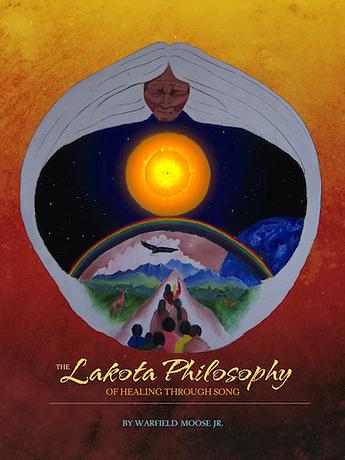
Our singers are very important people. Recently, I was asked to write a review of the CD composed by my good friends Warfield Moose, Jr. and Shilo Clifford. The CD is accompanied by a book written by Warfield and is titled “The Lakota Philosophy of Healing through Song.” The book contains beautiful images of Lakota people and places along with the stories behind each of the 13 songs. 


A forward by the late Albert White Hat, Sr. states in part “When Warfield’s dad went to the spirit world, my nephew came to work at St. Francis. We were having an Inipi, a sweat ceremony, and he came over and really honored me. He talked about his dad, who was his hero and the person he learned everything from. He said, my father is gone and I need an uncle. So would you mind if I called you uncle? It was a wonderful gift he gave me that day, to acknowledge me as a relative.”


“Leksi Albert and I would sit hours and hours talking about healing ourselves through songs and he told me we are all healers and the songs I sing will heal people just by listening. He said I didn’t have to meet everybody who listens to this CD but they will know you and they will get healing by singing your songs,” Warfield Moose, Jr.


The following paragraphs give the song titles and a short quote from the book.


Honoring My Father – “I dedicate this song to my father and all fathers who protect and guide their children. Sometimes we have to sing songs for them because they help us to become ikce wicasa – common men.”


Fire Without End – “This was a beautiful night when the spirit of the peta (fire) and the inyan (rock) gathered together to hear our voices through prayer and song. Hoka hey.”


Living – “When the Sacred White Buffalo Calf Woman brought the cannupa (sacred pipe) to our people, it was a time when we were strong in our prayers. Songs were composed in honor of this gift and Living is one of them.”


Green Grass – “My hope is this song will help people to heal and treat one another with love and respect.”


Mother – “To the Lakota people, Ina and Unci, Mother and Grandmother, are held in the highest regard because of the compassion and wisdom they bring to their families and this world.”


Cannupa Olowan – “My father explained that I should not call myself a pipe carrier, because it is the pipe that carries us. With our cannupa, we pray for all of the ones who need help: the sick, the orphans and those in prison. We pray for all walks of life and people, regardless of what kind of people they are. I see it as unconditional love and that’s why the cannupa is holy.”


Grandmother – “When I was young she took me to a healing ceremony in a darkened room. My grandmother explained that sometimes our eyes get us into trouble and we see things that hurt or bother us. When we aren’t able to see anything, our heart teaches our mind to trust and guides us to see good things.”


Has No Horse – “Our children, grandchildren and future generations have much to learn about our culture, history and language – but that’s the good part – because these teachings never end. There will always be something to come back when we need answers in our lives.”


Red Day – “There are people who appreciate every day they wake up to see the sun. My great grandfather, Frank Short Horn, whose Lakota name was Iyomakpe (I Am Happy), was such a person. My mother tells me a story about him, and how each morning he would use cedar to smudge throughout his home. He would cry and pray, thanking the Creator for a new day and offering prayers for our future generations.”


This Day I Pray – “You can get a better understanding of what is in a person’s heart by listening to how they speak to Tunkasila. My grandmother taught me that how we conduct ourselves is a reflection of our ancestors and relatives who raised us. I want to conduct myself in a way that honors the teachings of my parents and grandparents.”


Hoye Wayelo – “Whenever I sing Hoye Wayelo, I remember all of the young people who sing from their hearts without concern for whether they are making mistakes or trying to impress anyone.”


Wopila – “To the Lakota people, all we have, we give. We give so much that before someone is able to do something for us, we give to them. That is how we see Tunkasila: we have no expectations because we know in our hearts what we give of ourselves we have already received through the Creator.”


Remember Me – “This song was composed in the fall of 1997 and now it is sung everywhere – at many memorials and Sundance ceremonies. It makes me happy to hear young people carrying on this song. My wish is that it is sung how I composed it, with these teachings in mind. One of my father’s teaching says that people change, but not the ceremonies or the songs.”


These songs brought great encouragement and healing to me. I want to acknowledge and thank all the people who made this awesome project possible. I appreciate the opportunity to hear the songs and read the book. For more information please visit www.warfieldmoose.com and www.shicliff.com


I appreciate Warfield and Shilo allowing me to share my thoughts about their project. I also want to say Wopila to them for their tireless efforts in bringing healing to the people.


Mitakuye Oyasin.

I have a vision of all Lakota people living alcohol and drug free lives

Many do not give a second thought about our health conditions until we fall ill. We take our health for granted, especially when we are young. It is very common for our young people to view themselves as invincible. But in reality we are all only human.


Many of us stumble through our youth engaging in dangerous behavior. Some of us will continue risky behavior until we die. How many of you started drinking alcohol, smoking cigarettes, abusing prescription medication or illegal drugs as a teen? I do know that most of us living on the Rez start abusing substances at a very young age. For instance, I know of many children as young as 10 years old who live on the Rez and are already drinking/smoking/drugging. Is your child one of them?


Many adults are way beyond help. Just look at all of our Lakota people who did not reach their fortieth birthday because they regularly overdosed on alcohol to the point where their organs finally gave out. They literally drank themselves to death. When I was a teenager the death rate from cirrhosis was nowhere near what it is today.


In addition, fetal alcohol syndrome (FAS) or fetal alcohol effect (FAE) was once unheard of amongst Lakota people. Today there are many of our people who are living their lives with FAS or FAE. There is still a whole bunch of denial surrounding these birth defects which, by the way, are totally preventable.


Another disturbing statistic is the number of our people who are addicted to smoking cigarettes or chewing tobacco. Tobacco is a sacred substance but it is not sacred when you abuse it by sucking on a commercial cigarette or a wad of chew in your cheek. Statistics show at least one-quarter of Indian people are addicted to smoking cigarettes.


Do you have that constant cough? Do you realize how deadly it sounds to the rest of us? I smoked cigarettes every day for a very long time and it brought me nothing but illness. I am forever grateful for finding the strength to put my cigarette out for good. You will do yourself a big favor by putting out yours. Your grandchildren deserve grandparents who are not prisoner to a stinky sick-a-rette.


I am recovering from a recent illness which was serious enough to hospitalize me. I am still not well, yet I am feeling better every day. I want to say Wopila to all of you who prayed for my recovery, I appreciate you! Sincere prayers are always appreciated.


Being sick has made me realize, once again, how important good health is to our quality of life. It is not fun being hospitalized. The tests which medical staff have to perform on a patient are often painful. No one enjoys having their blood drawn every four hours. When you are in the hospital you live there with a needle in your vein so fluids and medication can be pumped into your bloodstream. While hospitalized you are always at the mercy of strangers.


Being sick is not fun. So, I want to encourage our young people to begin thinking about giving up the alcohol, tobacco and drugs because these substances will kill you. When you are my age you will regret all the drinking/smoking/drugging you did during your youth.


And those of you who have children owe it to them to get healthy because if you die prematurely someone else will have to raise the children you created. Do you really want to leave your small children behind? Some of our people did not live long enough to see their children grow into adults or to know their grandchildren. Do you want your children and grandchildren to only know you through the pictures they are shown because you died an early death?


Also, if you are engaging in unhealthy behaviors chances are very good that your children and grandchildren will follow in your footsteps. Are you coughing that rugged cough all day and night from your cigarettes? If so, you are showing your children and grandchildren that it is acceptable for people to live their lives smoking cigarettes to the point of having constant coughing fits.


Alcohol and drugs, including commercial tobacco, only serve to cover up a lot of issues. You have physical, emotional, mental and spiritual issues which those substances are covering up. To keep using is a serious form of denial. Are you going to summon your inner strength to give up your addictions and confront your issues? Or will you continue your slow suicide? The choice is always yours.


Furthermore, I hear a lot of our people constantly condemning the wasicu for all the misery they have brought to us. Still, so many of these same people are still willing to partake of the wasicu poisons – alcohol, commercial tobacco, prescription drugs and illegal drugs were all introduced to us by the wasicu. It’s totally hypocritical for us to condemn everything the wasicu does when we are still using his poison to kill ourselves, in my opinion. Do you really want to be chained for the rest of your life to the deadly venom of the forked tongues? Find the strength now to quit because if you don’t, then the wasicu has you right where he wants you – addicted to the point where you are pretty much useless to anyone, especially your own family. That drink, smoke or pill is going to send you to an early grave.


So, what kind of role model are you going to be? It’s never too late to change your behavior to set a living example for your children and grandchildren. It’s up to you to set the standard for your family. I have a vision of all Lakota people living alcohol and drug free lives – just like our ancestors did in pre-Columbus times. I need your help to see this vision become real.


Wopila to the sober Lakota people, you are the strength of our Nation.

Sincere prayer is not based in fear, it comes from love

“It’s a very intense time, personally and globally.” ~Doreen Virtue~


We are fortunate to be Lakota people. In today’s world there are so many events and people working to distract us from walking peacefully on our spiritual path. There is always something or someone put in front of you as a test.  


Those of us who embrace the spirituality which was handed down by our ancestors know how hard the tests can get. It seems as though the closer we get to the time of wiwang waci the more difficult life appears to be. There are days when the drama is non-stop. Lakota spirituality is a way of life and the true path has always been very narrow, it’s difficult to stay afoot.  


Many Lakota people have colonized minds. That is, we have been brainwashed into believing that the original instructions we were given are no longer valid. The White Buffalo Calf Woman shared teachings to show us how to live on Mother Earth and be good relatives to one another. The ceremonies she gifted our people with have kept us alive and spiritually connected to our universe for hundreds of thousands of years.


Still, the organized religions of this country continue to have many negative impacts upon our minds. The churches have successfully infiltrated our Lakota way of life. Many church leaders work very hard to convince our Lakota people that our prayers are offered to an entity which is not as good as their “God.”


Recently, there were some flyers printed up and distributed around the Rapid City area. The online pictures I saw of the posters denounced the Yuwipi way of prayer as some sort of dangerous, unhealthy cult. There were many derogatory things printed on these flyers, most of which is too ridiculous to share.


Also, those of you who actually saw the flyers know how ugly that picture looked! The image kind of resembled one of my starving brother-in-laws! Those posters were meant to spread fear through distorted information and paranoid misconceptions. Many (but not all) Christians and/or church leaders use words like “darkness,” “guilt,” “hell,” “demons,” and “devil,” to plant seeds of fear/doubt/terror.


Once again, misconceptions surrounding Lakota ceremonies are the focus. I didn’t think it was fair for the person or persons to actually print and distribute those flyers condemning our Lakota ceremonies. Someone has too much time on their hands, maybe they should get counseling instead of making obvious their private battle with acute mental illness by the public dissemination of absurd posters.


Or maybe they really believe all the propaganda put out by some local churches about how Lakota ceremony is “evil energy.” The organized religions have successfully instilled pure terror in many Lakota minds about our own spirituality. It’s pathetic. Personally, I am grateful that my spirit showed me the way out of the mind trap which organized religion wanted to keep me in; I refuse of be a prisoner of fear in my own mind because of how my Lakota ancestors have prayed since the beginning of time.


Those of us who saw the flyers will continue to attend ceremony and pray for those who created and distributed them. Hopefully, they will one day understand that what they did was very ignorant.


I don’t see any Lakota people printing and distributing ridiculous flyers about other ways of worship. What would happen if I created a bunch of strangely paranoid posters about a random church or organized religion, added a menacing image distortion of the Pope/Priest/Bishop/Pastor and spread them all over western South Dakota? The local media would most likely jump all over an incident like that.


I could print things like how the organized religions are still working very hard to demonize our sacred way of life. After all, it was the churches which instilled most of the fear surrounding Lakota ceremony, right? Many leaders in the organized religions still preach to the masses about how we should all fear our own Lakota spirituality.


When I was younger I once worked as a receptionist for a local religious organization. One of my duties was to announce visitors who came to see the priest in charge. One time a local medicine man was summoned to come and see the priest. Soon I could hear the priest’s voice get louder and louder in the office next to mine as he scolded the medicine man for having ceremony. I don’t even want to share what the priest said to the medicine man — I will say it was similar to what was printed on those flyers.


Still, even though he was chewed out wickedly by the priest for his spirituality, the medicine man came out of the room looking totally unfazed. He smiled at me and quietly left the building. He continued to have ceremonies for the people until he passed on several years ago.


That priest tried very hard to scare the medicine man by implying that “God” didn’t approve of Lakota spirituality. This is exactly what the person who created those ridiculous flyers tried to convey. They want people to be afraid of Lakota ceremony. Yet, ceremony is all about prayer. Sincere prayer is not based in fear, it comes from love; singing ceremonial songs is love in its purest form, in my opinion.


Furthermore, attending church services on Sunday never did cure me of any illness. On the other hand, Lakota Yuwipi men are totally awesome! I was humbled at the first Yuwipi ceremony I went to when I was doctored with a gourd and MY PAIN DISAPPEARED. I didn’t have to take pills anymore. My experiences at Yuwipi ceremonies have always been miraculous. It’s so amazing to sit in the same sacred space with the ancient spirits of ancestors who marked the spiritual path for us to walk.


Remember, two-hearted tricksters come in many forms — they could be human beings close to you. Ignorance is a disease. Pray for Wicozani.


If I do not write about them, who will?

“Some people won’t be happy until they’ve pushed you to the ground. What you have to do is have the courage to stand your ground and not give them the time of day. Hold on to your power and never give it away.” ~Donna Schoenrock


I don’t believe in defending myself. Why should I have to defend myself in the face of people who do not understand why I write the things I write? I have always been the type of person who does what I believe I need to do.


Also, I stopped second guessing myself a long time ago when I realized there was no point it in. When I make a choice to do something and if it turns out that it wasn’t something I really wanted, I’m always free to choose again. Life is too short to be stuck in a choice that you really aren’t happy with. Life is also too short to be second guessing yourself.


I have been writing these editorials for over four years now. I realize not everyone agrees with what I write here. Still, I put a lot of prayer into my work. Sometimes the words come out of nowhere and I have to run with them. Spirit guides us all; some of us listen while others don’t.


I believe there is a lot of confusion out there over what I write here every week. I walked into the world of journalism in 1998. I had a full time job which required me to send press releases to local media outlets for print which was a great way to learn journalism.


I have a college degree which helped me refine my skill. And even though I never took a single class in journalism (a fact which some of you have problems with) I believe I am an excellent writer. The amount of time I spent studying English helped me develop my writing skills. You can judge me for sounding like I am bragging about being good at something but it’s the truth.


And while we are on the subject of judgment, I have been accused of that too. Still, the most judgmental people I have seen on the Rez are some of you who practice Christianity or belong to those holy-roller cult groups who scream, cry or sing very loudly your devotion to Jesus Christ.


I’m also judged as being an “irresponsible journalist” by a former tribal official and was recently told to keep my opinions to myself. I was told to just write the “facts”. I haven’t written a news story for quite some time as I am now employed full-time by the Rosebud Sioux Tribe. I write this editorial on Sundays only because many of you tell me you enjoy reading it.


Consequently, Merriam-Webster.com lists one definition of story as “a statement regarding the facts pertinent to a situation in question.” News articles, human interest stories and press releases usually fall into this category. A good writer or journalist will present the facts and will usually quote the exact words said by the speakers referred to in the story. A good writer will not interject a personal opinion into a well written news article.


Merriam-Webster.com also defines an editorial as “a newspaper or magazine article that gives the opinions of the editors or publishers; also: an expression of opinion that resembles such an article.”  This is the definition which my trademarked Sicangu Scribe Scribblings editorials fall under. Also, the opinions I write about here are my own. They do not always reflect the opinions of this newspaper, our Owner/Publisher or correspondents. I take full responsibility for my own opinions and I will continue to write them.


I do not believe it is right for humans to stifle one another. But it happens on the Rez every single day. Remember the crabs in a bucket syndrome? Those of us who speak out about the atrocities or injustices which are committed every day on our Rez are often accused of tearing up our own people and/or our own tribe. But writing about the dark human truths of the Rez and tearing up your own people or tribe are two different things. Can you honestly accuse me of tearing up my own people or tribe when all I am doing is writing truthfully about what happens on the Rez?


I will not allow my opinions to be stifled. There are topics which I have addressed that are quite sensitive. I believe every dark issue I have presented here in Sicangu Scribe Scribblings falls within areas affecting our precious children. Our people would do well to emulate our ancestors and consider the future of the coming seven generations. Alcoholism, aggravated sexual abuse of children, domestic violence, criminal stalking and unscrupulous tribal members, etc. are facts of life on the Rez. If I do not write about them, who will?


Furthermore, when you or your family engages in conduct unbecoming to the Lakota Oyate, you can be sure I will address it here. Oftentimes, I see members of a Tiospaye or family acting up or acting out in public and I write about it. It is then when I am attacked through hate emails or on social networking sites. Consequently, there have been a total of two times when people have actually confronted me to my face about an editorial I wrote. The truth always hurts and it is even more painful to those people who carry around distorted images of truth.


I will continue to write these editorials each week for you to read. Sicangu Scribe Scribblings is an inherent part of me. I want to thank all of my readers who have emailed me encouraging messages. I appreciate all of you who come up to me to shake my hand and comment over an editorial which has touched you. Relatives like you motivate me to write about life on the Rez every week. Wopila for your kind words, thoughts and prayers. 

Response to Mitchell Daily Republic; Letter to Editor

rgourneau's avatarrgourneau

LETTER: Go ahead and negligently rant, Steve Novotny

By: Roquel Gourneau

To the Editor:


This letter is in response to an editorial that your paper had posted about an economic boycott in Chamberlain by the Tribal Chairman of the Crow Creek reservation, titled “Go ahead and boycott us, Brandon Sazue”. While I (as a Native American of South Dakota, myself) can appreciate any publicity given to Tribes in general, I completely disagree with the blatant disregard of true and unbiased facts that have been portrayed in said editorial article.

Don’t get me wrong, I am all for freedom of speech, however I’d like to mention a thing called libel. (Libel is published defamation of character. Libel is by definition false, anything that is provably true cannot be libelous. “Published” in this context simply means that the libelous statement is communicated to someone other than the person being libeled. That…

View original post 972 more words

KEYSTONE XL PIPELINE FOLLOWS IN THE TRACKS OF CONQUEST, SEXUAL VIOLENCE AND COLONIZATION

By Faith Spotted Eagle, Ihanktonwan Grandmother of Brave Heart Society

An urgent conversation needs to be held about the parallels between sexual violence, conquest, colonization, environmental racism and the rape of Mother Earth.  All are related.

Let’s talk about environmental racism in regard to KXL.  Ben Chavis (civil rights activist in 1994) coined “environmental racism” as “the enactment or enforcement of any policy, practice or regulation that negatively affects the environment of low-income and/or racially homogenous communities at a disparate rate than affluent communities.”  Repeatedly this environmental racism clear-cuts the way for American economic development.  The American economic system is founded on conquest mentality like Manifest Destiny, The Doctrine of Discovery and Papal bulls that dehumanize Indigenous people. Indigenous people on Turtle Island are all too familiar with that sad history, while America remains in denial.   Environmental pollution does not discriminate but it deliberately targets areas where no one cares about who lives there, which is typically where Native American communities, other minority populations or poor people are located.  Native communities are viewed by the colonizers as inherently “dirty, dispensable” communities where waste and toxins can be deposited. These reservations communities are located on or near the fifty six (56) waterways identified as being affected by the pipeline. TransCanada is invading on water bodies that are owned by Native senior water users as established by the Winters Doctrine in a US Court. This is an echo of Manifest Destiny, and will not be tolerated by Treaty defenders.

 February 2013 statistics point out that the most poverty stricken populations in the Nation are on South Dakota reservations.  TransCanada has capitalized on that by traveling and sending letters to each tribal office on the corridor offering funds to a population in need, provided they accept the pipeline. They are now even offering funds to host giant pow wows…..new forms of colonization. Our friend and ally Winona LaDuke calls it “predator economics.” 

 This mindset is so insidious and ingrained in the minds of government officials in Canada and the United States as they perpetuate another form of violence, that of Nation violence.  It is a colonial legacy of the United States to force policy on communities that are perceived to have less power.  In this case the ranchers and farmers of the Midwest have fallen into this category, by losing their land through eminent domain action.  The conquest is aimed at our Treaty water and lands.

 In March of 2013, I traveled to Ottawa, Ontario in Canada, carrying the International Treaty to Protect the Sacred against Tar Sands, which was recently invoked by the Ihanktonwan Oyate (people); Pawnee Nation and the Southern Ponca Nation in Pickstown, SD during January of 2013.   Subsequently, the Treaty was signed in Ottawa by five other First Nations who oppose Tar Sands Development due to the devastation of their homelands. 

Following the historic Treaty signing at a community center in Ottawa, it was no accident that we were offered a ride back to our hotel by two First Nations grandmothers who were driving across Canada to bring attention to the numerous murdering and missing Native women in Canada.  We climbed into a van that had the pictures on it of missing and murdered Native women.  The two grandmothers driving the van explained that they were on a walk across Canada to bring attention to this outrage; which they urgently believe is related to industrial and mining development on or adjacent to Native lands.  They were adamant about telling us to keep this in mind when stopping the KXL Pipeline, because it would protect the women, children and families of our nations.  As we traveled to the hotel, I could feel the spirits of the murdered and missing women traveling with us in the van. Upon arrival, the grandmothers showed us the picture on the van of their niece who is still missing, along with all the other beautiful young women plastered on the outside of the van.  Eerily, as they urged me not to forget this, I thought of the recent news release in South Dakota of the six hundred (600) man camp that would be located near numerous reservation communities in South Dakota, north of Colome, SD.   The pictures of the young girls on the van still haunt me as I continue the fight against KXL and TransCanada.  I will not forget. 

Why is this important?  This question leads us into a conversation of colonization, conquest and power. The Department of Justice continues to release figures citing that one in three Native women will be raped in their lifetime by non-Native perpetrators.  This is 2.5 times higher than the at large population which states that one in five women will be raped in their lifetime.  The same DOJ figures cite that 86% of perpetrators were reported as non-Native.  The mere existence of these figures behooves Tribal Nation leaders and everyday people, Native Women Advocates and families to mobilize to prevent the coming of these so called “man camps.”  If we look at the sad statistics coming to light on the Ft. Berthold Reservation in the Bakken Range; rape, prostitution and murder are now becoming common occurrences in communities stretched to breaking points.  Are we content to remain in the “culture of silence” as this threat invades our Treaty and aboriginal lands?  We are mindful of the great leader Sitting Bull’s words, as reported by Susan Leflesche who said that while he sat in captivity at Ft. Randall, he worried most about the women and children and what was in store for them if they could not be protected.  History has proven him to be prophetic on that danger. 

The other thought that comes to mind, is the psychological impact of intimidation that presents itself with the location of man camps made possible by presidential permits. This certainly triggers historical trauma responses imbedded in our genetic memory of the coming of garrisons such as Ft. Randall, Ft. Thompson, Ft. Yates, Ft. Peck and the list goes on. We already know what happens when man camps are created, the evidence is clear in the Bakken Range.  Meantime, poverty stricken non Native towns along the corridor hold on to the hope that the KXL will change their lives for the better.  If so, why are they bringing in six hundred men?  KXL will certainly change their lives forever in the form of climate destruction. 

Scholar/activist Andrea Smith speaks to the impact of colonization on sexual violence as related to colonization and conquest.  It is worth the survival of our grandchildren to listen to the conversations she has created around these issues.  She points out that colonization normalizes uneven gender power.  Communities often will side with perpetrators and not the victims, thus violators are not often held accountable for their crimes. In this case, TransCanada is in the role of a perpetrator.  Let’s look at environmental racism again.  Racism is a process where certain people are viewed as being pure and those being colonized are treated as being dirty.  The view of the body of a Native woman is a parallel to the way the United States is treating Mother Earth, Ina Maka.  Our lands are invadable and rapeable.  Not long ago, at Sand Creek, our heroic Cheyenne grandmothers’ private parts were cut off and paraded by the military.  It is not so different now. 

It is important to accept that we live in one of the most violent countries in the world and for all affected groups to unite and mobilize in protecting our home fronts.  Native people, farmers and ranchers, domestic violence advocates, elected officials and politicians and families must step up to the call of leadership.  Our Native prophecies state that there will be a time to stand up for what is important, and that time is now!!  Keystone XL and TransCanada must be stopped through unprecedented unity to save our land, water and our legacy.  

My fight against this recent and ongoing oppression is fueled by the memory of the founding of the White Buffalo Calf Woman’s’ Society in 1977, on the Rosebud Reservation. At the time, I was the first President of the Society and along with others was guided by Sicangu grandmothers who helped us in founding the first Native Women’s Shelter in the Nation.  This Society Shelter still exists and continues to protect our women and shelter from the colonized behavior of domestic violence.  I urge the White Buffalo Calf Woman Society and all other family coalitions in South Dakota to enter the fight with determination to stop this threat against our families and Ina Maka, Mother Earth.