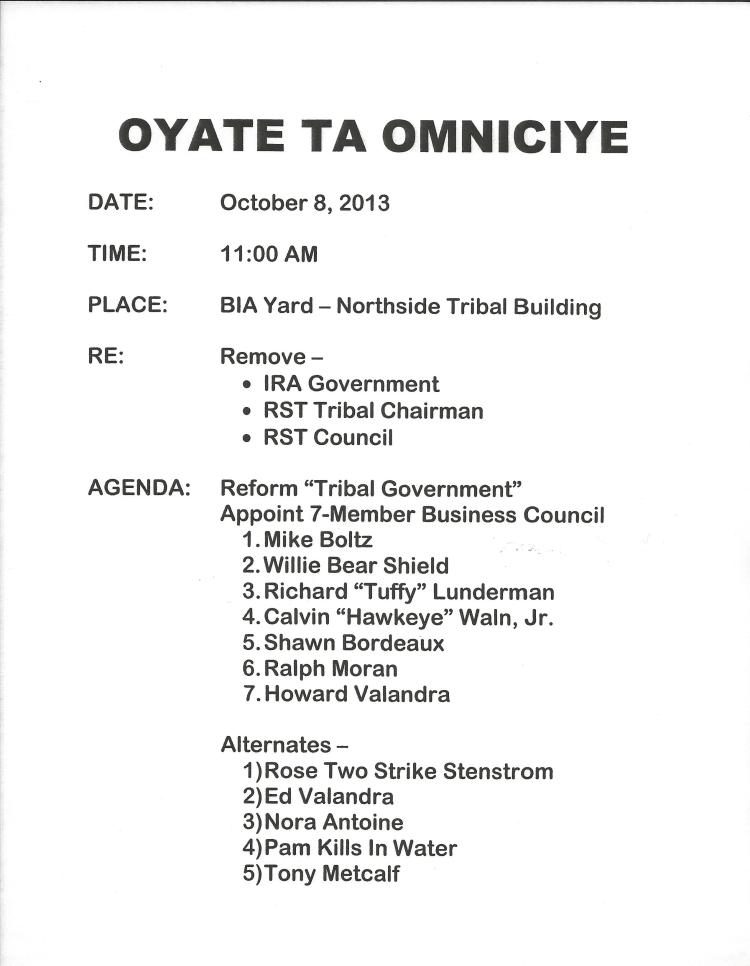
Rosebud is trying to make dramatic changes
Rosebud is trying to make dramatic changes

FOR IMMEDIATE RELEASE
Sunday, September 15, 2013
Contact: Wizipan Garriott
Email: wizipan.garriott@goldenwest.net
Phone: (605) 856-5090
‘KEYA WAKPALA’ COMMUNITY TO BE PLANNED BY REDCO AT TURTLE CREEK – PUBLIC INVITED TO SAVE THE DATE AND COME OUT TO SHARE IDEAS ON NEW PROJECT
Community Visioning Meetings in Rosebud, SD and Mission, SD to spark direction on future decision-making for a new community-oriented development
Mission, SD– Community members from all walks of life are invited to come out to voice their opinions and share ideas as part of the beginning stages of planning for a new community development, called ‘Keya Wakpala’ (“turtle creek” in the Lakota language) on the Rosebud Reservation of south/central South Dakota. The Rosebud Economic Development Corporation (REDCO) will host two community meetings on Monday, September 30, 2013 at the Rosebud Community Center in Rosebud, SD (across from the powwow grounds) and on Tuesday, October 1, 2013 at the Sinte Gleska University Multi-Purpose Room in Mission, SD. Doors will open at 5pm both days, with the meeting set to end by 8pm. Food/drinks as well as childcare will be provided.
“We are going to be on an exciting journey with the development of the Keya Wakpala project and we are counting on the people to help us make sure we are responding to their needs appropriately,” states Wizipan Little Elk, REDCO Executive Director. “We want to do this right, and that means including early on those who will eventually visit, support, work, learn, play and make a life in this community as it grows. We want to hear from anyone who has hope for a quality home, reliable employment, safe place for their kids, access to fresh food, lower utility bills, or supportive place to retire or grow old while still surrounded by a healthy, living community environment.”
The Keya Wakpala project will build off of the valuable input of community members and then link up with the various programs, services and funders who can help ensure the growth and sustainability of the master planned community, which REDCO intends to sustainably develop on the lands surrounding the Turtle Creek Crossing Supermarket west of Mission, SD. The ultimate goal of this project is to strengthen the sovereignty and self-sufficiency of the Sicangu Oyate (Burnt Thigh Nation) living on the ancestral homelands of the Great Lakota (Sioux) Nation as well as provide for all people who wish to live and work in support of Lakota lifeways and populations.
“This effort is meant to be inclusive from the very start. We are reaching out to our community leaders, spiritual leaders, elected officials, tribal programs and many more,” emphasized Little Elk. “This is a very large project and will take some time, but we have to start building the broad base of shared knowledge and understanding across all areas now if we are to have a solid shot at success.” In this spirit of collaboration, the community meetings have been designed to be flexible, interactive and fun. After a brief overview of the project location and introduction of the REDCO team, attendees will work together to start defining the values and goals for the Keya Wakpala project. There will be many opportunities to share, talk and listen as the path towards making the Keya Wakpala project happen.
Those who live, work or do business on the Rosebud Reservation are invited to attend. For more information on the Keya Wakpala Community Visioning Meetings starting at 5pm (both days) in Rosebud, SD at the Community Building on Monday, September 30, 2013 and in Mission, SD at Sinte Gleska University on Tuesday, October 1, 2013 please call REDCO’s main office at (605) 856-5090 or drop by REDCO’s offices located at the AERI facility just east of Sinte Gleska University at 101 Research Park Drive, Mission, SD 57555.
About the ROSEBUD ECONOMIC DEVELOPMENT CORPORATION:
REDCO is a chartered corporation owned by the Rosebud Sioux Tribe and managed by an independent Board of Directors for the purpose of generating revenue for the Tribe and promoting economic development. Through business management and development, policy development, and community development, REDCO works to create employment, strengthen the local economy, and provide self-sufficiency for the Sicangu Lakota Oyate. For more information please call (605) 856-5090.
KEYA WAKPALA DEVELOPMENT – BRIEF HISTORY:
In 2013, the Rosebud Economic Development Corporation (REDCO) and project partners committed to the pre-development for a sustainable development on the 600 acres of tribal land comprising the Keya Wakpala Green Development area. The commitment partners will create a master plan for a sequence of projects and multiple phases of construction for a mixed-use development at Keya Wakpala which may include renewable and distributed energy, energy efficiency housing, community supportive facilities, new businesses, and infrastructure projects. After master planning is completed, the project will be accomplished in multiple implementation phases over a longer span of time (15-20 years).
ADDITIONAL INFORMATION:
Keya Wakpala is also part of a commitment made to the Clinton Global Initiative at the 2013 CGI America conference held in June 2013. The Clinton Global Initiative (CGI), an initiative of the Clinton Foundation, convenes global leaders to create and implement innovative solutions to the world’s most pressing challenges. Established in June 2011 by President Bill Clinton, the Clinton Global Initiative America (CGI America) addresses economic recovery in the United States. CGI America brings together leaders in business, government, and civil society to generate and implement commitments to create jobs, stimulate economic growth, foster innovation, and support workforce development in the United States. Since its first meeting, CGI America participants have made more than 200 commitments valued at $13.4 billion when fully funded and implemented. To learn more, visit cgiamerica.org.
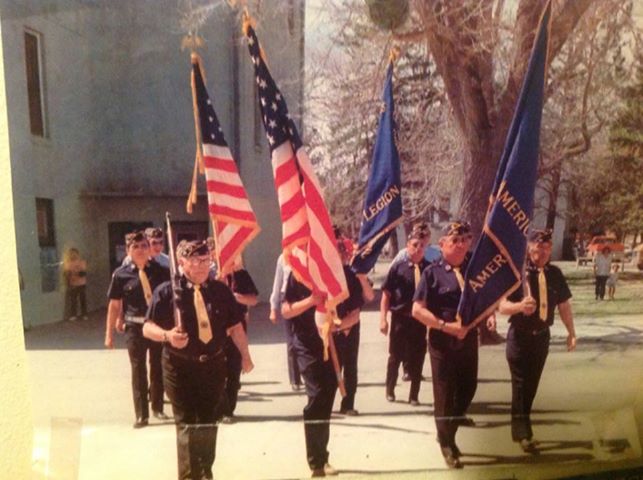
In 1989 the Chauncey Eagle Horn Legion Post served as Color Guard for the groundbreaking ceremonies held for the new school built in St. Francis, SD
Chauncey Eagle Horn Post 125 is hosting a membership drive for the American Legion in Todd County on Tuesday September 17, 2013. The meeting will take place at the JDC conference room at the facility in Soldier Creek at 6pm CST.
The American Legion focuses on service to Veterans, service-members, and the communities that we live in. We are looking to become active in our communities once again and really want to focus on developing our youth into our next generation of leaders.
The eligibility criteria for membership in the American Legion is as follows.
One day of honorable service in the following campaign eras:
Desert Storm/Iraq/Afganistan: August 2, 1990-PRESENT
Panama December 20, 1989 to January 31, 1990
Lebanon/Grenada August 24, 1982 to July 31, 1984
Vietnam February 28, 1961 to May 7, 1975
Korea June 25, 1950 to January 31, 1955
WWII December 7, 1941 to December 31, 1946
WWI April 6, 1917 to November 11, 1918
The American Legion has been active amongst the Sicangu Oyate since December 1919. Chauncey Eagle Horn Post 125 is the oldest post. The others include Phillip Stands Post 297 of St. Francis, John Guerue Post 295 of Parmelee, and Mission Post 287.
A special invitation is being extended to all Veterans who have served since August 2, 1990. This would include those who served during the eras of Operation Desert Storm (1990-1991), Somalia (1992-1994), Bosnia (1995-1996), Kosovo (1999), Operation Iraqi Freedon (2003-2011) and Afghanistan (2001-Present).
One does not need to have been awarded a campaign medal. You only have had to serve on active duty, for ONE DAY during the above eras.
For further information contact Dion Reynolds at 605-319-0237 or Eugene Ironshell, Jr. at 720-357-9916.
Historical Overview of
The American Legion
Chauncey Eagle Horn Post 125
Rosebud, South Dakota
By Eugene S. Iron Shell, Jr.
This post traces its lineage to World War I. In 1917 the United States entered the war against Germany and many Native Americans enlisted in the United States Army and Navy. It is interesting to note that at this point in history the Lakota people were not yet considered “U.S. citizens.”
Among the many Lakota men who stepped forward to serve was Chauncey Eagle Horn. He was born in 1874 and his home of record when he enlisted was in Okreek. When he volunteered he was 42 years old but chose to serve as an infantryman.
Chauncey was assigned to Company “M”, 167th Infantry Regiment, 42nd Infantry Division. This division was nicknamed the “Rainbow” Division because their shoulder insignia was a Rainbow.
Chauncey was killed in action on July 29, 1918 in the Battle of Chateau Thierry in France. He was the first man to be killed in action from any Tribe of the Great Sioux Nation and was eventually buried in Okreek at Calvary Episcopal Cemetery.
The American Legion was chartered by the United States Congress on September 16, 1919 and its members were comprised of the millions of returning WWI veterans. Interestingly a caucus of Veterans actually met in France during the War to discuss forming a national Veterans organization.
A group of Sicangu Lakota WWI veterans got together and wanted to start an American Legion post on the Rosebud Reservation. On December 2, 1919 Post 125 was granted their charter by the Department of South Dakota American Legion. Stephen Spotted Tail (Grandson of Chief Spotted Tail) was the first commander. Other founding members were Charles and Isaac Iron Shell (Grandsons of Chief Iron Shell), Jake LaPointe, Herbert Omaha Boy, and others. They named the new post after their friend and fallen comrade, Chauncey Eagle Horn. It is interesting to note that Herbert Omaha Boy had also fought with Company M 167th Infantry in France and witnessed Chauncey’s death.
The Post has been in continuous existence since their inception in December 1919 and is one of the oldest posts in the United States. In 2019 they will be recognized by the Department of South Dakota as a “centennial post.”
Over the years many men and women have served Post 125. Many of our leaders of the modern era have served in the Post. Some of them were Robert Burnette, Cato Valandra, and many others. Some joined as their fathers did like Sylvan Spotted Tail (son of Stephen Spotted Tail) and Eugene Iron Shell, Sr. (son of Charles).
One of the most outstanding members to serve was Frank LaPointe, Sr. A veteran of the United States Navy, he served during the Viet Nam War and for many years was the post adjutant. His position as adjutant was of great importance as this person is the one who handles the complex administrative functions and virtually holds the post together. Frank served with distinction in this billet up until his untimely death in 1992. Mr. Lapointe also served as a St. Francis Indian School board member and tribal councilman for Rosebud Community. In many ways the Post has not been the same since he left and is still greatly missed.
During the 1980’s and 1990’s many of the active members of the post passed away. The post struggled to maintain its membership. This was a common challenge faced by many small town legion posts as the WWII generation passed in as many as 1,500 deaths per day across the United States. Men like Melvin Peneaux, C.P. Bordeaux, Marchmont Lapointe, Leonard Standing Cloud, Calvin Valandra, Herb Decory, and Ralph Clairmont made lasting contributions to Post 125 that have not been forgotten.
Jim LaPointe led the Post into the new millennium. Chris Bordeaux was the Post adjutant. Eugene Iron Shell, Sr. was the vice commander and also served as the Todd County Commander. Other active members during this period were Louie Schmidt, Harvey Jordan, Sylvan Spotted Tail, Dwayne White Thunder, Robert Reynolds, Leroy Decory, Charles Mack, Webster Two Hawk, Sam Wounded Head. There are currently three life members of the post. They are Lt. Col Arlene Lomax, USMC, Retired, Ronald Valandra, and Hubert Dillon.
After the passing of Jim LaPointe in 2008, Eugene Iron Shell, Sr was appointed the commander and remains to this day. Chris Bordeaux is still the post adjutant. The current active members of the post (Eugene Sr, Chris Bordeaux, Robert Reynolds Charles Mack) should be commended for holding the post together. The other area legion posts have virtually ceased to exist but somehow the spirit of Chauncey Eagle Horn Post 125 lives on.
The responsibility and duty of carrying on the Post legacy is about to be presented to the new generation of Veterans. Those who have served in the eras of Operation Desert Storm, Operation Iraqi Freedom and Operation Enduring Freedom will soon be appointed as leaders to carry out the work of the American Legion in the communities on the Rosebud Reservation.
Education is very important. I believe the only way we can get ahead in today’s society is to finish school. An education is the most potent weapon you can carry today. An educated Lakota can be on the same intelligence level as anyone else in this world.
To master the educational system of the oppressor is an extremely effective form of protest, in my opinion. You can use your college degree to fight the system put in place to keep you in a state of poverty. The oppressor wants us to all give up and quit school. And as long as we remain dependent upon the oppressor they will continue to control our lives. Don’t you want to be independent?
There are many Lakota people who have, for whatever reason, dropped out of high school. Many of you who quit high school did not enroll or finish a General Educational Development (GED) program either. There are many tribal members in Rosebud who cannot find steady work because they don’t meet the minimum educational requirements. Most of the jobs advertised by the Rosebud Sioux Tribe require applicants to have at least a high school diploma or a GED.
I realize the local schools are lacking a lot. There is no motivation for many of our students to remain in school. Bullying is rampant in our schools. And even though there are many dedicated staff members employed by our schools, there are many others who shouldn’t be working in our schools at all. School staff should be positive role models encouraging students to learn.
I worked in a school system for many years. The best part of working there was the students. They always had something to teach me. Our elementary, middle and high schools exist to serve the students. But most schools on the Rez are more focused on the drama created by the adults than they are on the students. Oftentimes, a school board will vote in staff/faculty/policy which is not in the best interest of the students. Yet, politics are politics and school boards are far from being above petty political maneuvers.
When you drop out of school you are setting an example for your peers to follow. You show your friends and younger siblings that it’s okay to quit school. But believe me, you will regret dropping out of school when you can’t find a job and have to depend on others to pay your way through life. We all need money to survive in this cash economy. In order to make money you will need a job. You will never get a good paying job when you are a high school dropout.
High school was a difficult time for me. It is usually a difficult time for us all. It was hard to finish high school but I knew if I dropped out I would be limiting the choices I had in life. I stuck it out and graduated with a high school diploma. And even though it took me many years I also graduated from college with a Bachelor’s degree. The time I spent in school was well worth it because now my education carries me through life. I would never have made it this far in my life without a college education.
When my children were small I depended on financial assistance from the tribe and state to make ends meet. But when my children grew into adults and started families of their own the public assistance ended. I had to pay my own way. My college education will always be there to help me find a job. I have chosen to remain on the Rez so it takes time to find a job but a college degree always gives you an added advantage. My education is something no one can ever take away from me.
Furthermore, working for your own money will allow you to stop depending on public assistance programs. It’s also great for your self-esteem! Paying your bills with the money you earn by working is a way to feel good about yourself. Education is the key to a lot of things in life. One door having an education can open for you is to be hired for a job which pays enough for you to be self-supporting.
I realize we live in one of the poorest counties in the nation. Personally, I am sick of living in a county which is famous for how poverty stricken it is. One way to protest this is to become self-sufficient. That is, I believe it is a form of protest to work yourself away from dependence upon tribal and state assistance programs. I am so glad that I do not have to deal with all the rude workers in the social services office anymore!
I am not trying to degrade my fellow tribal members who depend on public or tribal assistance programs to make ends meet. We do live in an extreme poverty area. But we all have control over their own lives. You can always choose to finish school. It’s really hard to study. It’s really hard to have a job where you have to be there every day. It’s difficult to do many things when you lack financial resources, dependable transportation and child care. But the rewards you receive in terms of being self-sufficient are priceless.
This week we will see many of our beloved children making their way back to the classroom. Many of our students are motivated to begin their quest for an education. Most are genuinely committed to receiving an education. They are looking forward to another academic year in the classroom. Please encourage them to stay motivated and support their efforts to finish school.
We desperately need our Lakota people to become educated. Our future is in our children. I want them to be self-sufficient. It is a fact that some families have not worked at jobs for two or three generations. Is this the future you want for your great-grandchildren?
Congratulations to Byron Wright (Treasurer Elect), Julie Peneaux (Secretary Elect) and Mike Boltz Sr. (St. Francis Council Rep. Elect) who were the unofficial winners of Rosebud’s Election on August 22, 2013.
I am always happy to see new faces in my tribal government. Yet, I know most of you are not happy with the way tribal government functions. It is a system which is never win/win, someone always loses or gets left out. I remain hopeful that a true Lakota leader will emerge from the Seventh Generation to re-write our entire Tribal Constitution in a way which will benefit us all.
A revised document reflecting true Lakota virtues could be proposed to the tribal council at any time. If all twenty communities worked together through the Community President’s Association to bring a resolution containing a revised Constitution to the tribal council it would have to be acted upon. A new Constitution could be put to a ballot through Article IX of the current RST Constitution, which reads in part: “It shall be the duty of the Secretary of Interior to call an election on any proposed amendment, upon receipt of a written resolution signed by at least three-fourths (3/4) of the membership of the Council.”
On a more celebratory note, the Rosebud Sioux Tribe is sponsoring the 137th Annual Fair, Rodeo and Wacipi this week. Many people look forward to this time of year as it is a time for us all to enjoy ourselves. There are many activities scheduled to happen.
I especially want to welcome all of our tribal members who live off the rez along with other visitors to the Rosebud Reservation for this annual celebration. Many of our relatives travel long distances to return home for this celebration. It will be good to see them again.
Every August I write about the origins of Rosebud Fair. Yet, there are historians who disagree with the timelines I present surrounding the reason for our celebration. Still, as I have come to understand the history of my own people, the Sicangu Lakota maintain that our very first tribal celebration was held in late summer of 1876. This occurred when the Sicangu Lakota Oyate learned of the June 25 annihilation of General George A. Custer and the 7th Cavalry. A welcome home victory celebration to honor many Lakota warriors who had fought in the Battle of the Little Big Horn took place here on the Rosebud. Our Lakota Akicita carried home the personal flag of the fallen General Custer along with several troop guidon flags.
Francis White Bird, Sicangu tribal member and Decorated Vietnam Veteran, had replicas of the captured flags made several years ago. A ceremony was also held at Fort Meade in Sturgis to dedicate the flags. The flags are carried in the grand entry at the Rosebud Wacipi held every August. When the replicas were first brought to Rosebud, White Bird gave a history of how they came into the possession of the Lakota people and talked about the origin of the celebration. The Lakota descendants present that day were proud to be part of a waktegli waci or victory dance.
In the book, The Sioux of the Rosebud, Anderson and Hamilton describe the Fourth of July festivities in 1897 where “The celebration lasted for six days…On July 1 the Indians went to the fairgrounds… one mile north of the Rosebud Agency and set up their great circle of tipis…on July 6 the Indian police held a drill followed by a…reenactment of the Battle of the Little Big Horn. This event should not have required much coaching, since almost every Indian present over twenty-one years old had been at the original battle in 1876.”
When I was a small child I remember a large building which once served as a display area for the tribal fair. Garden produce, canned goods, handmade clothing, drawings, beadwork, quillwork, plus other arts and crafts items were judged at the fair. The displays were organized according to the districts of the Rosebud Reservation.
My late Grandmother often reminisced about how the celebration was when she was a child. The people of Rosebud knew it was fair time when a steady procession of horse-drawn wagons would arrive from all directions. Several people from the different reservation districts would come to the agency a few weeks in advance to prepare the camping area by building shades and outhouses. They would also build the arbor for the Wacipi and prepare the rodeo arena. All of this was volunteer work.
Families would travel with essentials and food to last the whole time they were camped. Our people were so self-sufficient and depended only upon themselves. They did not expect anyone to provide for their basic needs while at the fair. Wagons were loaded with clothing, bedding, tipis, poles, canvas tents, firewood, and tools; along with cooking and eating utensils.
The families camped according to the district they came from. It was a very organized circle, with everyone respecting each other and their camping area. There was no running water as we know it today and families had to haul their own water in wooden barrels. Many of us cannot comprehend packing enough food to last throughout the entire fair. Back when my late Grandmother was a child she used to tell me about how her mother would pack dried meat, biscuits, boiled potatoes, and home canned fruit for the family to eat while traveling and camping.
On the first day of the fair, there would be a morning charge. Many young men and women would mount their horses for a long charge through camp. It would be great to see someone bring back this tradition to remember our ancestors who fought at the Little Big Horn.
In closing, I do want to say that I have attended Rosebud Fair for many years without having to overdose on alcohol. When you stop buying booze you will have more money to spend on treats for your family, children and grandchildren.
I encourage you all to have a sober, safe Rosebud Fair.
Several years ago I was involved with a man who was believed to know something about certain crimes which were under the jurisdiction of the federal government. He was questioned several times by Federal Bureau of Investigation (FBI) Special Agents. Two of those federal agents also visited me at work to question me.
I am not easily intimidated. One of those agents had come all the way from Quantico, Virginia because the case involved a suspect who had committed crimes in several states (the perpetrator was eventually caught and jailed). The other agent was a local guy out of Pierre and one I recognized as the dude who came into my yard to peer inside my house windows on one occasion.
When the agent informed me he was from the Behavior Analysis Unit (a place made famous through a weekly television series), I made a conscious effort to remain open in terms of body language as I had nothing to hide. The case under investigation did not involve me. Still, I noted how he carefully observed my non-verbal reactions to his questions. And even though I did not give much away in terms of body language, my voice remained very sarcastic.
At the end of the interview, he judged me as “hostile.” I asked him if he could blame me considering all the grief the organization he worked for had brought to my people. He just laughed arrogantly and stated that he was “from the new FBI where things had changed.”
Well, nothing much has changed in terms of the jurisdiction the federal government has over Indian Country. The federal government took jurisdiction away from certain tribes in the 19th century as a result of a murder case on the Rosebud Reservation.
“The Major Crimes Act (U.S. Statutes at Large, 23:385) is a law passed by the United States Congress in 1885. It places 7 major crimes under federal jurisdiction if they are committed by a Native American against another Native American in Native territory. The crimes which fell under federal jurisdiction were:
Murder, Manslaughter, Rape, Assault with intent to commit murder, Arson, Burglary, Larceny.
“The act was passed in response to the Supreme Court of the United States’ affirmation of tribal sovereignty in their ruling in Ex parte Crow Dog (109 U.S. 556 (1883)), wherein they overturned the federal court conviction of Brule Lakota sub-chief Crow Dog, who was convicted and sentenced to death for the murder of principal chief Spotted Tail on the Rosebud Indian Reservation in Dakota Territory. The Court reasoned that the ability of the tribe to deal with such an offense was an attribute of tribal sovereignty that had not been specifically abrogated by an act of Congress.
“The Major Crimes Act reduced the internal sovereignty of native tribes by removing their ability to try and to punish serious offenders in Indian country. The theory underlying it was that Indian tribes were not competent to deal with serious issues of crime and punishment. The constitutionality of the Major Crimes Act was upheld in United States v. Kagama (118 U.S. 375 (1886)), a case in which two Indians were prosecuted for killing another Indian on a reservation. While the Court agreed that the prosecution of major crimes did not fall within Congress’s power to regulate commerce with the Indian tribes, it ruled that the trust relationship between the federal government and the tribes conferred on Congress both the duty and the power to regulate tribal affairs.”
This legislation has had a major impact upon our people. Recently, I attended a federal court sentencing hearing wherein the judge stated there was no single victim involved in the crime committed by the defendant – the actual damage had supposedly been done to the United States Government. I thought it ridiculous to attempt to depict the US government as a victim! What about the Indian people victimized by that same US government?
Also, I’m not a lawyer. But I do have a word of common sense on answering questions during FBI interrogations – never let them intimidate you! I believe I can speak for many of you who wonder why it is a crime for someone to tell lies to a federal agent but it is not against the law for them to lie to you. Double standards usually breed corruption.
Have any of you experienced an interrogation by federal agents where you were taken to another jurisdiction (like the next county over) to be questioned? Did your interview take place in one of those SUV’s with dark tinted windows in an extremely isolated area out on the prairie? Did the federal agent become highly agitated when you refused to answer questions? Authority also breeds ego and many lack integrity when they are performing their duties. In my personal opinion, the entire law enforcement and court systems – whether they be tribal, state, county or federal – are corrupt in many ways.
Furthermore, in terms of the number of Indian people sentenced to prison, the argument always surfaces about how much influence historical and/or intergenerational
trauma has had on the fact that so many of our people are behind bars. For instance, it is believed that some people commit crimes because of the atrocities our people experienced a long time ago. Others are victimized as children and grow up to be adult offenders.
I do believe it is a fact that historical trauma continues to affect us. Yet, it is also up to us to begin the healing process. Intergenerational trauma is not going to magically disappear. We must take the first steps on our healing journey.
And what about the contemporary trauma being inflicted by the unscrupulous interrogation tactics used by federal agents? Please learn how to deal with people who are paid to intimidate or bully others.
Personally, I believe it is an individual form of protest to NOT be intimidated by federal agents. I pray for these people daily. They desperately need it.
“When we pray with our heart, we can never go wrong.” Warfield Moose, Jr.
Lakota songs carry powerful vibrations. A song sung from one’s heart can send waves of love and healing to all living beings as well as the universe.
Songs which are composed and sung by Lakota singers are very precious to me. Still, I know there are Lakota people who sit in judgment of our people who compose and/or sing songs, especially ceremonial songs. Personally, I am always happy to hear new ceremonial songs. It proves that our young singers are being gifted with new songs. It is a sign our people will continue to walk the ceremonial path of our powerful ancestors. Thus, we must encourage our Lakota singers and not judge them for their talent.
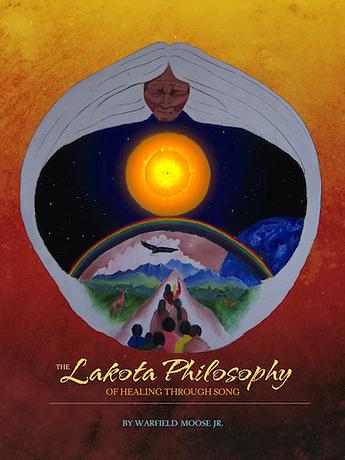
Our singers are very important people. Recently, I was asked to write a review of the CD composed by my good friends Warfield Moose, Jr. and Shilo Clifford. The CD is accompanied by a book written by Warfield and is titled “The Lakota Philosophy of Healing through Song.” The book contains beautiful images of Lakota people and places along with the stories behind each of the 13 songs.
A forward by the late Albert White Hat, Sr. states in part “When Warfield’s dad went to the spirit world, my nephew came to work at St. Francis. We were having an Inipi, a sweat ceremony, and he came over and really honored me. He talked about his dad, who was his hero and the person he learned everything from. He said, my father is gone and I need an uncle. So would you mind if I called you uncle? It was a wonderful gift he gave me that day, to acknowledge me as a relative.”
“Leksi Albert and I would sit hours and hours talking about healing ourselves through songs and he told me we are all healers and the songs I sing will heal people just by listening. He said I didn’t have to meet everybody who listens to this CD but they will know you and they will get healing by singing your songs,” Warfield Moose, Jr.
The following paragraphs give the song titles and a short quote from the book.
Honoring My Father – “I dedicate this song to my father and all fathers who protect and guide their children. Sometimes we have to sing songs for them because they help us to become ikce wicasa – common men.”
Fire Without End – “This was a beautiful night when the spirit of the peta (fire) and the inyan (rock) gathered together to hear our voices through prayer and song. Hoka hey.”
Living – “When the Sacred White Buffalo Calf Woman brought the cannupa (sacred pipe) to our people, it was a time when we were strong in our prayers. Songs were composed in honor of this gift and Living is one of them.”
Green Grass – “My hope is this song will help people to heal and treat one another with love and respect.”
Mother – “To the Lakota people, Ina and Unci, Mother and Grandmother, are held in the highest regard because of the compassion and wisdom they bring to their families and this world.”
Cannupa Olowan – “My father explained that I should not call myself a pipe carrier, because it is the pipe that carries us. With our cannupa, we pray for all of the ones who need help: the sick, the orphans and those in prison. We pray for all walks of life and people, regardless of what kind of people they are. I see it as unconditional love and that’s why the cannupa is holy.”
Grandmother – “When I was young she took me to a healing ceremony in a darkened room. My grandmother explained that sometimes our eyes get us into trouble and we see things that hurt or bother us. When we aren’t able to see anything, our heart teaches our mind to trust and guides us to see good things.”
Has No Horse – “Our children, grandchildren and future generations have much to learn about our culture, history and language – but that’s the good part – because these teachings never end. There will always be something to come back when we need answers in our lives.”
Red Day – “There are people who appreciate every day they wake up to see the sun. My great grandfather, Frank Short Horn, whose Lakota name was Iyomakpe (I Am Happy), was such a person. My mother tells me a story about him, and how each morning he would use cedar to smudge throughout his home. He would cry and pray, thanking the Creator for a new day and offering prayers for our future generations.”
This Day I Pray – “You can get a better understanding of what is in a person’s heart by listening to how they speak to Tunkasila. My grandmother taught me that how we conduct ourselves is a reflection of our ancestors and relatives who raised us. I want to conduct myself in a way that honors the teachings of my parents and grandparents.”
Hoye Wayelo – “Whenever I sing Hoye Wayelo, I remember all of the young people who sing from their hearts without concern for whether they are making mistakes or trying to impress anyone.”
Wopila – “To the Lakota people, all we have, we give. We give so much that before someone is able to do something for us, we give to them. That is how we see Tunkasila: we have no expectations because we know in our hearts what we give of ourselves we have already received through the Creator.”
Remember Me – “This song was composed in the fall of 1997 and now it is sung everywhere – at many memorials and Sundance ceremonies. It makes me happy to hear young people carrying on this song. My wish is that it is sung how I composed it, with these teachings in mind. One of my father’s teaching says that people change, but not the ceremonies or the songs.”
These songs brought great encouragement and healing to me. I want to acknowledge and thank all the people who made this awesome project possible. I appreciate the opportunity to hear the songs and read the book. For more information please visit www.warfieldmoose.com and www.shicliff.com
I appreciate Warfield and Shilo allowing me to share my thoughts about their project. I also want to say Wopila to them for their tireless efforts in bringing healing to the people.
Mitakuye Oyasin.
 Sicangu News