Hostile Work Environments are Harrassment

Hostile Work Environment


By Vi Waln

Working in a hostile environment affects you more than you realize. I’ve experienced what it’s like to work for organizations that condone hostile environments. It isn’t fun.

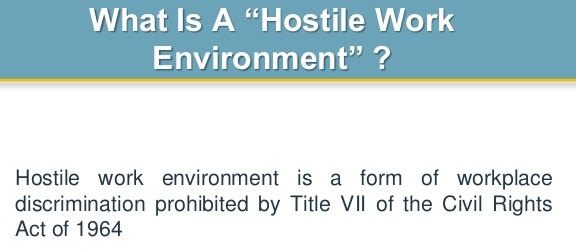
Today, I would estimate that 99.9% of employed people on the homelands are subject to hostile environments at work. Sometimes the hostility comes from your supervisor, other times it comes from your co-workers. A hostile work environment is basically harassment. Consequently, hostile situations might be deliberately created to force you out of your position.

For instance, according to Wikipedia:

A hostile work environment may also be created when management acts in a manner designed to make an employee quit in retaliation for some action. For example, if an employee reported safety violations at work, was injured, attempted to join a union, or reported regulatory violations by management, and management’s response was to harass and pressure the employee to quit. Employers have tried to force employees to quit by imposing unwarranted discipline, reducing hours, cutting wages, or transferring the complaining employee to a distant work location.

There are specific instances on Rosebud where the examples outlined on Wikipedia’s site are happening now. Unfortunately, management usually doesn’t care about you. If your presence threatens management, they will allow their personal insecurities, or will carry out orders from higher ups, to find a way to get rid of you.

A common instance could involve a supervisor who distorts a report made by an employee. For example, this might happen when an employee writes up the supervisor for a violation. Instead of working to get past the incident to improve the overall work environment, the supervisor might decide to turn the situation around and paint the employee out to be the bad guy. The employee is usually fired soon after this.

Supervisors, directors or managers would do well to help their employees improve their performance, instead of trying to find ways to get rid of them. Employees who have been with the organization for a long time are obviously committed to their jobs. There is no one immune to problems in their personal or family lives; a good supervisor will realize this and work with their committed employees.

Today, however, it doesn’t really matter if you’ve been in your position for a long time. You might think your years of service will work to guarantee your position at an organization. There are times when management will go after the employees who have been with the organization the longest, with the intent of pushing them out.

When management seeks to get rid of a long-time employee, they are obviously not willing to devote the time or effort to help the staff member improve. Good management seeks to build up their employees. I definitely wouldn’t want to work for someone who wouldn’t hesitate to find a way to terminate me the first chance they got.

Another example of a hostile work environment is when you suffer from actions by your co-workers. I have had first-hand experience with this one. I’ve always been a person who is not afraid to honestly verbalize what I think. Even though it may make my co-workers angry, I believe I have to speak up for myself.

Consequently, I once worked at a job I really enjoyed. At that time, management believed in my ability to get things done, so I worked with minimal supervision. Soon, two of my co-workers took issue, for reasons unknown to me, with my job performance and basically ganged up on me. They started running to the boss with allegations about me. It got so bad that I was being called into my supervisor’s office to explain myself. I grew weary of being targeted and eventually left the job.

If you are being victimized by management or your co-workers, I would suggest you begin looking for a new job. It isn’t worth your mental or emotional health to continue working for an organization that obviously doesn’t want you there. Change is difficult but it has to be faced by many of us.

An alternative to seeking a different job is returning to college. There are many opportunities for us to seek a college degree. We have our local tribal colleges waiting for us to enroll. There are also countless online opportunities for you to obtain a college education. Go back to school and become educated so you can one day work to help your employees improve, instead of looking for ways to fire them.

There comes a time in life when you have to put yourself first. Staying in a job just because you’ve been there for many years is not good, especially if management or co-workers are intent on sabotaging you. There is always something better out there, you just have to find it.
Sicangu Youth Host Meeting with Carlisle Descendants

030
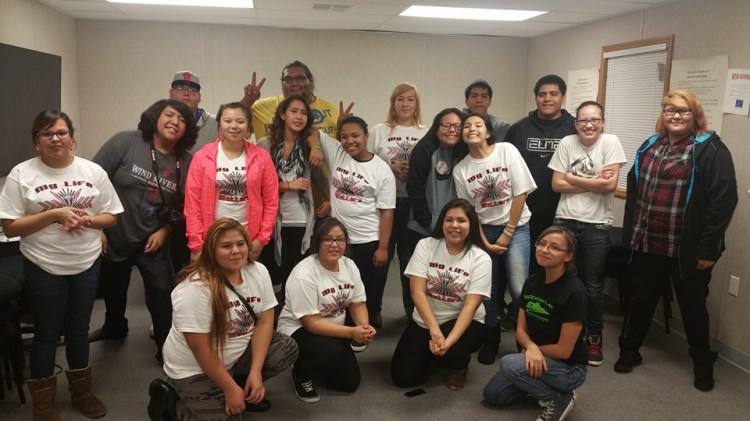
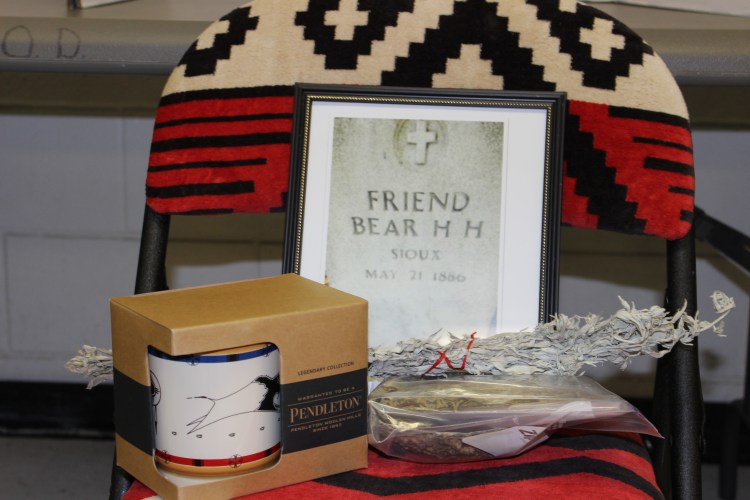
The Sicangu Youth Council prepared a place of honor for each of the 10 children and teenagers who are buried in the cemetery at Carlisle, Pennsylvania. Each chair is covered with brightly colored cloth. A picture, cup, sage, abalone shell and cedar are also part of the chair. The chairs will be kept by the youth council until the remains of these children and teenagers are returned for reburial in our homelands. Photo by Vi Waln


By Vi Waln

ROSEBUD – The first meeting of Sicangu Lakota descendants of children who are buried in Carlisle, Pennsylvania was emotional, educational and empowering.

“Our children went to the youth conference in Washington DC last summer,” stated Russell Eagle Bear, who serves as Rosebud’s Tribal Historic Preservation Officer. “On the trip back they visited the cemetery at Carlisle, Pennsylvania where they experienced something deep and powerful.”

The meeting was held to share information about the Rosebud students who attended Carlisle and died there. At least 10 students, who are buried at Carlisle, have been identified with ties to Rosebud. The Sicangu Youth Council is seeking the help of descendants of these students in order to bring their remains home. The group has obtained the support of the Great Plains Tribal Chairman’s Association.

“I am sure those children at Carlisle, as well as students at other boarding schools, said prayers every day to come home,” stated Sandy White Hawk of the National Native American Boarding School Healing Coalition. “It has taken this long for those prayers to be answered. Your work is vital because it’s going to heal that part of us that hasn’t been talked about and hasn’t been healed ceremonially. You are the answer to those ancestors’ prayers.”

“It must have been heartbreaking for parents. It was a shock for these children, they didn’t understand what they were going to go through. I’m hoping some other relatives recognize the names and look at their family tree to help us identify the descendants of these students,” Eagle Bear told those who had gathered in the tribal council chambers.

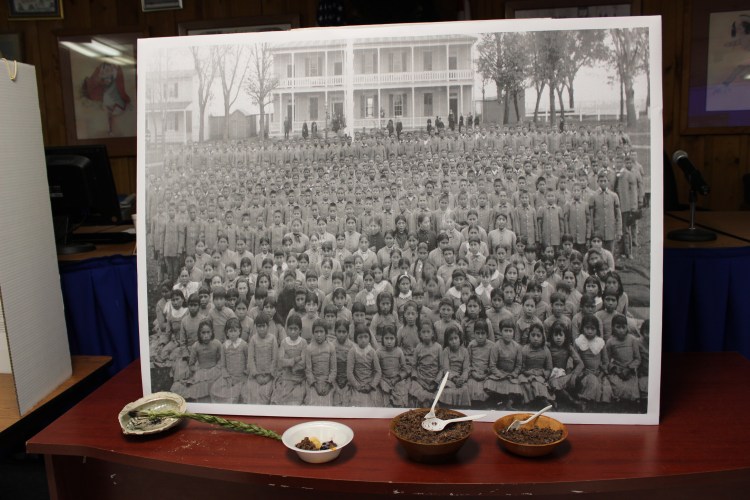
“I am here for Friend Hollow Horn Bear,” stated Duane Hollow Horn Bear. “She was an older sister to my grandfather who raised me. We need to know what happened to these children, we need to heal the anger and resentment we have around what happened to us. We have suffered significant losses, including our culture, history and children. When you look at those pictures, you don’t see one child smiling. That’s because there was nothing to smile about.”

024
“When you look at those pictures, you don’t see one child smiling. That’s because there was nothing to smile about.” Duane Hollow Horn Bear, Grandson of Friend Hollow Horn Bear. Photo by Vi Waln

Hollow Horn Bear described his experience at St. Francis Mission Boarding School. “I received 50 swats with a wooden paddle when I was 10 years old. This was for taking ½ of an apple out of the dining room. I took the apple because I didn’t have any money to buy popcorn.”

“Because of my experience, I believe I have knowledge of what my grandmother went through,” continued Hollow Horn Bear. “We carry that pain. We want to heal. We have to look at all the losses we suffered and process them. We need to heal and this is a big part of it.”

“This is going to start a movement to heal historical grief,” Eagle Bear said. “I’m thankful our young people are stepping up to lead this, we need to listen to them and give them the guidance they need. The family tree I did in a class at Sinte Gleska University brought awareness to me about my relatives. I’m hoping other relatives or descendants come forward to guide the youth.”

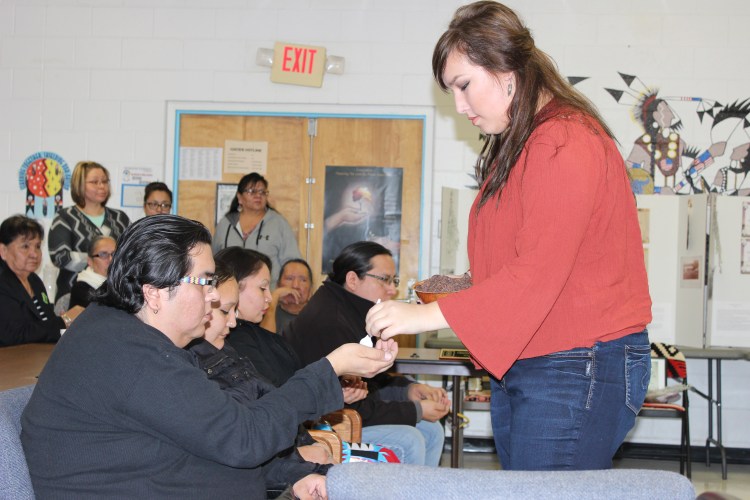
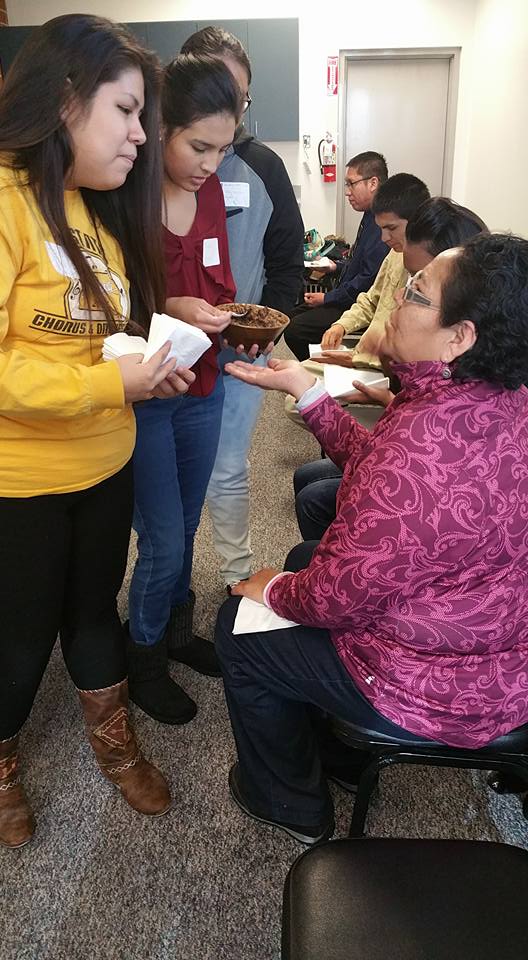
The members of the Sicangu Youth Council who were present at the meeting were Jayden Rose Whiting, Christopher Eagle Bear, Sydney Horse Looking, Bailey Arrow, Shylee Brave, Iwoblu Big Crow, Asia Black Bull, Maddie Big Crow, Lana Murray and Thomas Big Crow. The young people read the names of the deceased children and other information for the group. They also distributed wasna to everyone present. Some of the members described the emotional and spiritual experience they had while visiting the cemetery.

010
Sicangu Youth Council member Sydney Horse Looking gives spiritual food (wasna) to Brandon Bear Heels. Photo by Vi Waln

A power point presentation and video were shown to all. Prayers and songs were led by Sage Fast Dog and Brandon Bear Heels. A meal was served to all following the presentation.

Rosebud tribal members are asked to look into their family tree to determine if they could be relatives of the students who attended Carlisle. The following 10 children and teenagers are buried in the cemetery, all have ties to Rosebud.

• Dora (Her Pipe) Brave Bull, a 16 year old female student who arrived at the school on 10/06/1879 and passed away on 04/24/1881.

• Ernest Knocks Off-White Thunder, an 18 year old male student who arrived at the school on 10/06/1879 and passed away on 12/14/1880.

• Lucy Pretty Eagle (Takes the Tail), a 10 year old female student who arrived at the school on 11/14/1883 and passed away on 03/09/1884.

• Warren Painter-Bear Paints Dirt, a 15 year old male student who arrived at the school on 11/30/1882 and passed away on 09/30/1884.

• Friend Hollow Horn Bear, a 17 year old male student who arrived at the school on 11/14/1883 and passed away on 05/21/1886.

• Young Eagle-Foot Canoe, a 14 year old male student who arrived on 11/14/1883 and passed away on 06/28/1886.

• Dennis Strikes First-Blue Tomahawk, a 12 year old male student who arrived on 10/06/1879 and passed away on 01/19/1881.

• Rose Long Face, an 18 year old female student who arrived on 10/06/1879 and passed away on 04/29/1881.

• Maud Swift Bear, a 15 year old female student who arrived on 10/06/1879 and passed away on 12/14/1880.

• Alavan or Alvan (One That Kills Horse), a male who passed away on 03/22/1881.

If you have any questions or would like more information on how to look at your family tree, please contact Marcida Eagle Bear at (605) 441-5668 or the Tribal Historic Preservation Office (605)747-4255.

Human Trafficking and Slavery are Very Real

human+trafficking17

By Vi Waln

January is National Stalking Awareness Month. President Barack Obama issued a Presidential Proclamation stating: “Every person deserves to live freely and without the fear of being followed or harassed. Stalking is a violation of our fundamental freedoms, and it insults our most basic values as a Nation. Often perpetrated by those we know — and sometimes by strangers — stalking is a serious offense that occurs too frequently and goes unreported in too many cases.”

President Obama also proclaimed January as National Slavery and Human Trafficking Prevention Month. He states “One hundred and fifty years ago, our Nation codified the fundamental truth that slavery is an affront to human dignity. Still, the bitter fact remains that millions of men, women, and children around the globe, including here at home, are subject to modern-day slavery: the cruel, inhumane practice of human trafficking. This month, we rededicate ourselves to assisting victims of human trafficking and to combating it in all its forms.”

Lakota people living on the homelands are in denial about the prevalence of both stalking and human trafficking. Despite the denial you might have about stalking or human slavery and trafficking, they are very prevalent in our area. Stalking, slavery and trafficking could even be affecting your relatives.

Stalking is not limited to a man following a woman around. Men will stalk men and women will stalk women. This crime is committed blatantly every day here on our homelands. Law enforcement needs to take reports of stalking on our homelands more seriously.

Also, with the growing number of people addicted to various kinds of drugs on our homelands, we will likely see even more instances of human trafficking. Human trafficking is slavery. People are basically kidnapped and then sold to others for sex. There is no discrimination in human trafficking. Men, women, teenagers and children are at risk of being exploited.

innocents-at-risk-human-trafficking-facts-02

In October 2014, I attended a Department of Justice Consultation on the Violence Against Women Act. Tribal leaders from several tribes were in attendance at this meeting. Brendan Johnson was our US Attorney at that time. He was instrumental in prosecuting several offenders involved in human trafficking. Here is an excerpt of his remarks from that consultation:

“Some of the women who have disappeared have been a part of commercial sex trafficking. Here in South Dakota there have been about 20 different individuals who have received federal life sentences for commercial sex trafficking, there were 3 of them in the last 4 years. We have had close to a 100 victims of commercial sex trafficking here, 40-50% of those victims have been Native American females.”

“Two of those victims were from the Rosebud Reservation. They had just arrived in Sioux Falls and didn’t have a penny in their pocket. The trafficker picked them up on Minnesota Avenue just by the Wendy’s restaurant and during their time there he would give them alcohol and drugs. Then he would bring men over from the meat packing plant to have sex with these women and they would pay him to have sex with them. If they refused he would rape them. This is something we need to work on together, we all have a role to play in stopping the sex trafficking of Native American women.”

Many of our women leave the homelands to find work in Sioux Falls, Rapid City, Pierre and other metropolitan areas. Their migration to these places is not without risk. Like Johnson stated, many arrive in these cities broke and without a place to live. They are vulnerable to active pimps, who will stalk them to take advantage of their homelessness, as well as their alcohol or drug additions, to immediately force them into sex slavery.

Our people are the most valuable resource we have. There are so many instances occurring where Lakota people are going missing. Some of them may have been kidnapped and sold as human slaves. Children are missing from countless communities in this country. Unfortunately, many of these missing children, teens and adults are likely being trafficked for profit as human slaves.

Our women and children are sacred. They do not deserve to be stalked or trafficked. I encourage you to help your relatives as much as you can. If they move to the city, be sure to check on their well-being with a phone call or a visit. Contact the authorities if you believe a relative or someone else is being held against their will.

Human trafficking and slavery are very real here in South Dakota. Educate yourself and your family members about stalking, human trafficking and slavery. The continued denial of these crimes has to end.

Tribal Youth Need Your Support

PrattPupilsinFrontofPratts'QuartersCarlisleIndianSchool1885L
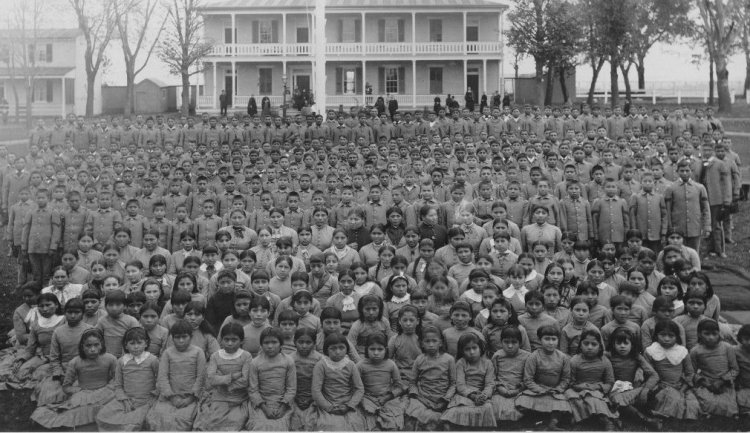
Student body assembled on the Carlisle Indian School Grounds, circa 1885. Photo courtesy of Carlisle-www.army.mil

By Vi Waln

I was never an advocate for boarding schools. I’ve heard people talk about the terrible experiences they had at boarding school. I believe the boarding school experience caused unnecessary trauma to some of our people.

Carlisle Indian Industrial School was the very first boarding school established for our people. It was in operation from 1879 to 1918 in Carlisle, Pennsylvania. This school was the model for all the boarding schools operated by the Bureau of Indian Affairs.

Spotted Tail was one of the first to send his children to Carlisle. Luther Standing Bear was also a student at Carlisle. Jim Thorpe is a famous athlete who attended Carlisle.

I doubt that many of us have given any thought to what this first boarding school was really like at the turn of the century. Carlisle, Pennsylvania is nearly 1,500 miles from Rosebud, South Dakota. Online sources, such as Wikipedia, paint the school at Carlisle as a military type organization, where tribal students suffered corporal punishment for simply being themselves.

Wikipedia also states that 10,000 tribal children from across the country were sent to Carlisle to get an education. Yet, only 158 students actually received a diploma. The education they received was to prepare them for life in American society. Our people went there to be stripped of their culture, language and identity. In return, they would come home speaking, reading and writing English.

But some of them didn’t come home. Richard Henry Pratt was a retired military officer put in charge of the Carlisle Indian Industrial School. One of Pratt’s rules required parents to sign a consent form stating students were to stay at the school for 5 years. There was no going home when it didn’t work out for them. According to Charles Eastman, the only way Pratt allowed students to return home was if “they were ill, unsuitable mentally or a menace to others.”

Some students died while attending Carlisle. Nearly 200 tribal students are buried in a cemetery on the current site. These are children who were removed from their families and sent far away in order to learn how to be like the white man. Reportedly, these children died from illnesses. But I believe some of these children died from homesickness and broken hearts. I also believe some were tortured to death.

I can’t imagine riding a train nearly 1,500 miles from home in order to be educated. My guess is the staff at the school were instructed to beat the Indian out of these students. Again, we’ve all heard horror stories about the abuse suffered in boarding school. This is the institution all of the other boarding schools were modeled after. I would bet money that it was the most abusive of all.

Last summer, the Sicangu Lakota Youth Council visited the place where Carlisle Indian Industrial School was located. The place where the school was is now designated a National Historic Landmark. The United States Army War College is also located on the site.

The visit to Carlisle touched the hearts and spirits of our young people. Like me, they couldn’t imagine being torn from their families to be placed in a boarding school 1,500 miles from home. Our young people spent time in the cemetery where nearly 200 children are buried. It was an emotional trip to Carlisle. They offered prayers and songs. They left sage and candy on the graves. But they wanted to do more.

Now, they have formed an alliance with the Northern Arapaho Tribal Historic Preservation Office to work on getting the remains of some of those children returned to the tribes they were removed from over 100 years ago. However, the Department of the Army has outlined conditions which seem impossible to meet.


SLYC II
Sicangu Youth Council members provided spiritual food to members of the Northern Arapaho Tribe in a recent visit to Wyoming. The tribes will work together to have the remains of several children who died while attending the Carlisle Indian Industrial School disinterred from a cemetery and returned to their homelands for a traditional reburial. Photo courtesy of Sicangu Youth Council.

There were 10,000 students from over 150 tribes who attended Carlisle. If each one of those 150 tribes would commit to writing a letter to both their state legislators and President Barack Obama, our young people might be able to get those human remains brought home to where they belong. Tribal people believe President Obama can be influential in this process. He could use his authority to remove the barriers put up by the Department of the Army.

Many of us believe the spirits of those children who want to have their remains returned to the land they were forcibly removed from, will help our young people find a way to do so. If you would like to help, please attend the meeting scheduled for Friday, January 22, 2016 at 4pm in the Rosebud Sioux Tribal Office. Our youth need your support.

Sicangu Youth Council Works to Have Remains Returned

SLYC I
Members of the Sicangu Youth Council are pictured with young people from the Northern Arapaho Tribe of Wyoming. The group will work together to bring back ancestral remains buried at a National Historical Landmark in Carlisle, Pennsylvania. Courtesy photo.


By Vi Waln

ROSEBUD – Spirit is believed to be guiding the efforts of a group of young people in their quest to have human remains disinterred and returned to tribal lands.

The Sicangu Youth Council has set an intent to pursue the return of human remains of several children buried in Carlisle, Pennsylvania. The group requested support from the Rosebud Sioux Tribal Council through a resolution, which was approved on January 6, 2015.

This week, the group will seek the support of the Great Plains Tribal Chairman’s Association. Efforts to have remains returned to tribal homelands stand a better chance of success when the tribes who have ancestors buried at Carlisle join this endeavor. Over 10,000 tribal students from nearly 150 tribes in America attended the Carlisle Indian Industrial School.

The group believes President Barack Obama will listen to leaders from all the tribes affected when they come together and speak with one voice on this issue. That is, when all 150 tribes commit to writing letters to their state legislators, as well as President Obama. He could use his authority to remove any barriers facing the return of these human remains.

The youth council members went through an emotional and spiritual experience when they visited the cemetery in Carlisle last summer. Children and teenagers their age, or younger, were forced to attend the school. These students who attended Carlisle were separated from their families for years, some never came home.

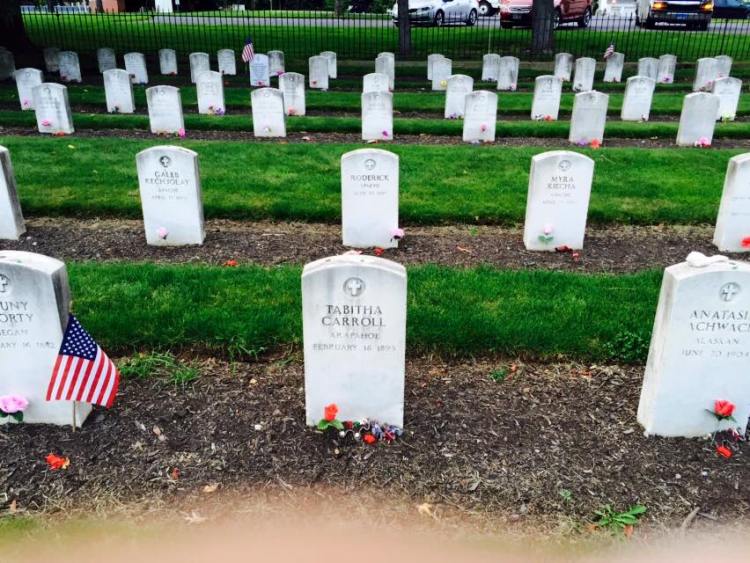
Nearly 200 students who died at Carlisle were buried there. Members of the Sicangu Youth Group learned that the cemetery was moved twice. Those students were denied a traditional burial ceremony in their own homelands. Today, the cemetery is in an area designated as a National Historical Landmark. It is located next to a busy intersection in downtown Carlisle. The site is visited by tourists with no familial ties to the children buried there.

In 2007, the Northern Arapaho began seeking the return of the remains of at least 3 of their tribal students who are buried at Carlisle. Several members of the youth council recently traveled to the Northern Arapaho Reservation in Wyoming to meet with Yufna Soldier Wolf, Director of the Northern Arapaho Tribal Historic Preservation Office (NATHPO). They also spent time with members of the Arapaho youth group.

The efforts of the Northern Arapaho were stalled with a letter from Thomas Kane, who served as the Installation Legal Officer of Carlisle’s Army War College. The letter denied the request for disinterment of remains of a Northern Arapaho ancestors.

Kane’s letter, dated September 25, 2007, reads in part “I can understand and appreciate your desire to move the remains of your family member to your local burial site; however this installation has serious concerns related to this proposal. The most obvious is that this cemetery has become part of our community and is a historic site.”

On January 8, 2016, Soldier Wolf composed a letter to LTC Greg W. Ank, Garrison Commander of Carlisle. She wrote “our ancestors should not be a tourist attraction. Our ancestors are no longer considered objects of research; they will no longer be considered road side attractions. These children were people; they were sons, daughters, nieces, nephews, future war chiefs, future mothers, grandmothers, grandfathers, and care takers of this land. For them to be taken away and never given back is appalling.”

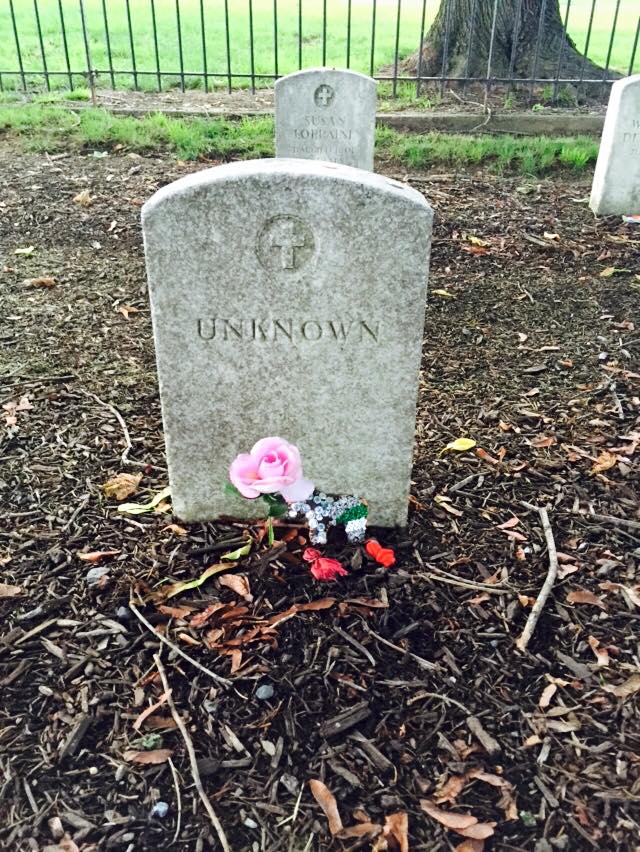
The school records kept by Carlisle are sketchy, especially in regards to the names of the children buried in the cemetery. There are over 20 graves with Unknown carved on the headstone. Research efforts by both the Rosebud and Northern Arapaho THPO offices have been frustrating. One burial record simply lists the name Alvan. The record shows Alvan was Sioux and departed (died) on 03/22/1881. Alvan is buried in plot #:a-38. No other information is available.

According to Soldier Wolf’s letter, Rose Salamanca, a Conciliation Specialist in the Community Relations Service of the Department of Justice, has expressed her willingness to work with the NATPHO in facilitating a meeting for representatives from tribes and communities. This meeting would be held to ensure the processes of this endeavor are in compliance with the Native American Graves Protection and Repatriation Act (NAGPRA).

On the Rosebud, a meeting will be held at the Tribal Office on Friday, January 22, 2016 at 4pm. The public is invited to attend. If you have any questions or would like more information, please contact Marcida Eagle Bear at (605) 441-5668 or the Tribal Historic Preservation Office (605)747-4255.


An Invitation to Tribal Citizens, Medicine Men, Spiritual Leaders and Descendants

11225182_171070633226196_2964514858417508092_n
Some graves of Indian children buried at Carlisle are marked with a headstone that says “Unknown.” Courtesy photo.

By Vi Waln

ROSEBUD – The Rosebud Sioux Tribe invites all tribal citizens, relatives, medicine men, spiritual leaders and Descendants to a discussion about the Sicangu Lakota students who are buried in a cemetery in Carlisle, Pennsylvania.

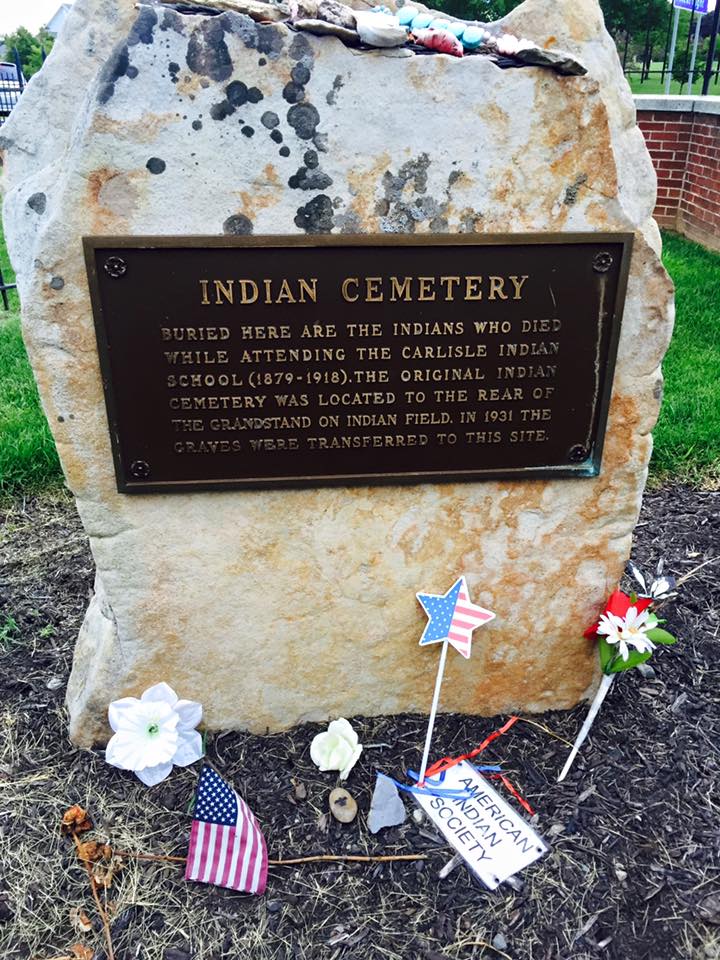
From 1879-1918, many tribal children and teenagers were sent to the boarding school at Carlisle. Nearly 200 of these students, with ties to at least 50 tribes across the United States, died and were buried in Pennsylvania.

11903945_171070659892860_4678468195971460128_n
Nearly 200 children and teenagers from several Indian tribes are buried in a cemetery next to a busy intersection in Carlisle, PA. Courtesy photo.

A group of young Sicangu Lakota citizens has joined with the Northern Arapaho Tribe to seek the return of these remains of relatives. The Northern Arapaho have hit obstacles with the Department of the Army regarding the disinterment of human remains. Consequently, the Sicangu Lakota and Northern Arapaho Tribal Historic Preservation Office are now asking for the support of other tribes in the United States to join in this endeavor.

The efforts of our young people to have the remains of these relatives returned may have a higher chance of success when elected tribal leaders, as well as tribal citizens, implore President Barack Obama to influence the decision making process. For instance, a letter writing campaign directed at President Obama by tribal citizens and relatives of the nearly 200 tribal children still buried at Carlisle could work in favor of this endeavor.

Locally, a meeting will be held on Friday, January 22, 2016 beginning at 4pm at the Tribal Headquarters in Rosebud, SD. The Sicangu Lakota Youth Council extends a special invitation to the relatives of children currently buried in Carlisle, Pennsylvania. Nine children have been identified as having ties to the Rosebud Sioux Tribe. Their personal information is listed on the Carlisle school records as follows:

• Dora (Her Pipe) Brave Bull, a 16 year old female student who arrived at the school on 10/06/1879 and passed away on 04/24/1881.

• Ernest Knocks Off-White Thunder, an 18 year old male student who arrived at the school on 10/06/1879 and passed away on 12/14/1880.

• Lucy Pretty Eagle (Takes the Tail), a 10 year old female student who arrived at the school on 11/14/1883 and passed away on 03/09/1884.

• Warren Painter-Bear Paints Dirt, a 15 year old male student who arrived at the school on 11/30/1882 and passed away on 09/30/1884.

• Friend Hollow Horn Bear, a 17 year old male student who arrived at the school on 11/14/1883 and passed away on 05/21/1886.

• Young Eagle-Foot Canoe, a 14 year old male student who arrived on 11/14/1883 and passed away on 06/28/1886.

• Dennis Strikes First-Blue Tomahawk, a 12 year old male student who arrived on 10/06/1879 and passed away on 01/19/1881.

• Rose Long Face, an 18 year old female student who arrived on 10/06/1879 and passed away on 04/29/1881.

• Maud Swift Bear, a 15 year old female student who arrived on 10/06/1879 and passed away on 12/14/1880.

11913983_171070696559523_7639736844057618412_n
From 1879-1918, many tribal children and teenagers were sent to the boarding school at Carlisle. Nearly 200 of these students, with ties to at least 50 tribes across the United States, died and were buried in Pennsylvania. Courtesy photo.

Please join members of the Defending Childhood Initiative’s Sicangu Lakota Youth Council, the Tokala Inajinyo Suicide Prevention Peer Youth Mentors and the RST Tribal Historic Preservation Office at this very important meeting. The work being done to heal and overcome the effects of historical trauma by our young people is crucial. They need your support. The cultural healing of our children is essential for our people, as well as our unborn generations, to move forward in a healthy manner.

If you have any questions or would like more information, please contact Marcida Eagle Bear at (605) 441-5668 or the Tribal Historic Preservation Office (605)747-4255.

Photos courtesy of the RST DCI Sicangu Youth Council Facebook Page

The Political Monster of Corruption

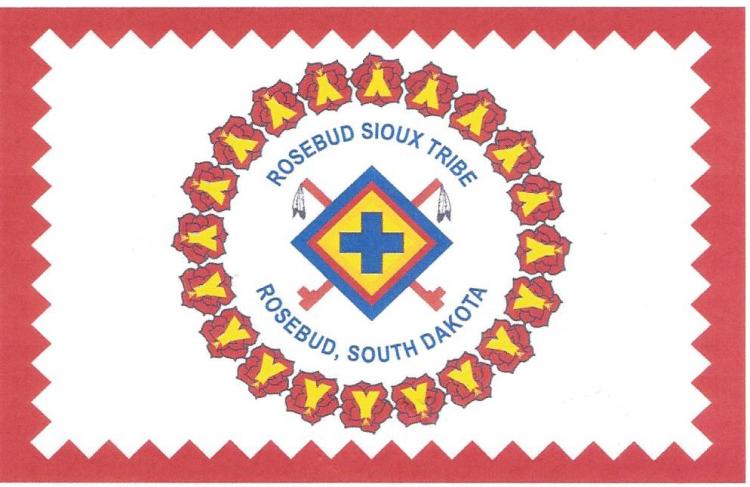
Rosebud Sioux Tribal Flag0002

By Vi Waln

I am a tribal employee. Before I was hired in my present position, I served on the tribal grievance committee. I’ve also served on many other tribal boards, committees and commissions. As a journalist, I sat in on many tribal council and committee meetings. Thus, I’ve studied how tribal personnel issues are handled from many angles. Unfortunately, I’ve witnessed countless instances of excellent employees losing their jobs over petty politics.

When you are employed at a job on your own reservation, you often find you have a difficult time. That is, things can get political really fast when you are a tribal employee. In many instances, good workers are treated unfairly due to corruption and the destructive nature of tribal politics. Oftentimes, employees are fired when they attempt to do the right thing by reporting the wrongdoing of a supervisor or co-worker.

There are also many times when tribal employees have had their rights blatantly violated on Rosebud. Yet, nothing seems to be done about the wrongs committed by people in power. When employees are treated unfairly, perhaps even wrongfully terminated from a job, they are often completely ignored by the people charged with the responsibility to make the situation right.

It’s no fun when you’re frustrated over a situation beyond your control. People who are wronged by tribal directors, or elected officials, sometimes just give up seeking justice for their situation. I don’t blame them. It takes a lot of energy to stand up against the reservation monsters of corruption and tribal politics.

For example, the story I did on how the Chief of Police’s employment was handled has been read by many people. I applaud Kevin Swalley for his courage in continuing to fight for the job he was hired for over a year ago. It isn’t easy standing up for yourself against an entire tribal administration. He is not alone.

Last summer, I had a conversation with a former tribal employee who resigned because he grew weary of the corruption and politics he witnessed for many years at his workplace. He told me some very interesting things about how federal property and money was being misused. He did post some information on social media. The result of his social media post prompted a discussion on cyberbullying at a tribal council meeting.

I didn’t see any evidence of cyberbullying in his social media post. I admired his courage in putting the information out there for us to read. We deserve to be kept informed about what is happening in our tribal programs. So, when directors and elected officials fail to tell their people what’s really going on, it’s generally up to you and I to provide information for everyone to read. We are the Rosebud Sioux Tribe. We all have a right to know what happens in our tribal programs and government.

Last week I got an email from an employee who was terminated from his job when he tried to file a complaint about his supervisor. His email stated in part “I applaud you for having the courage to tell the Oyate of the tribe the truth of what is going on. I would like to meet with you about another story which involves a corrupt director and a corrupt tribal president. I have all documentation to prove the entire story.”

I also spoke with a tribal director who was recently terminated from his position. Apparently, he fired an employee for reasons he didn’t divulge to me. He told me the terminated employee went straight to the tribal president. Soon, the fired employee was reinstated in another position and the tribal director was terminated. The director was also told by a tribal official in the personnel department that he could not file a grievance against the tribal president.

However, the Rosebud Sioux Tribe Personnel Policies and Procedures does state in part: “The decision of the Tribal President to suspend or terminate may be appealed to either the Tribal Council (as scheduled by the Tribal Secretary) or to the Grievance Committee.” (p. 40)

There are also employee rights being violated every day in tribally chartered organizations. Some of the things that go on in our tribal programs and chartered entities would make you sick if you knew about them. I grow weary listening to wronged people tell me their stories.

Unfortunately, there are many people sitting in positions of power on Rosebud who lack personal integrity. Many of their actions are unethical. There are elected officials and tribal directors who condone wrongdoing.

The tribe tends to treat their own people very badly. This isn’t right. We must do right by our people. We could be encouraging our people to be honest and ethical in their jobs. But instead our excellent workers are terminated, in many cases for attempting to report wrongdoing in the program they work for. It doesn’t have to be this way.

We are responsible for showing our children how to do the right thing. But many of us are not acting very responsibly. It’s up to each one of us to ensure our tribe moves forward with integrity. Our children deserve adults who act ethically in all they do. It’s time to stop disappointing them.

If you believe you have been unjustly fired from your tribal job, I strongly encourage you to file a grievance. Don’t give up. Keep fighting for your rights, no matter how long it takes. Justice is often slow on the reservation, but if you don’t give up, things will work out in your favor.

The star players on the corruption and tribal politics teams are counting on you to drop the ball. They want you to give up your pursuit of justice. Don’t let them win. Karma always sees to it that people get exactly what they deserve.

Rosebud Chief of Police Victim of Politics

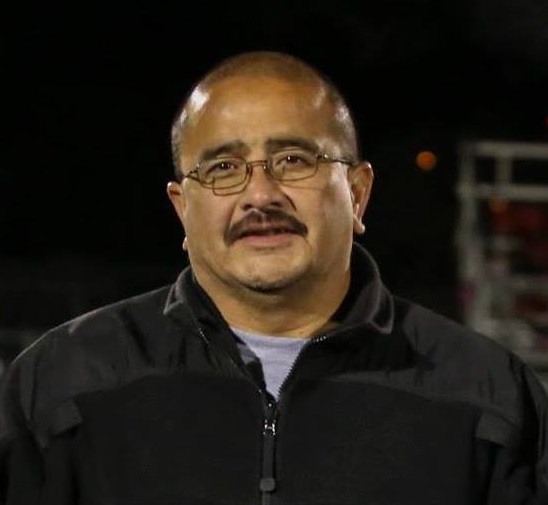
Kevin Swalley Sr

Kevin Swalley, Sr., a Rosebud Sioux Tribal member, was hired as the Chief of Police in November 2014 by Tribal Council motion. He was never allowed to start his new job and has spent the last 13 months trying to get his issue resolved. His challenge of the hiring of a non-member has been ignored by tribal officials. Courtesy photo. 

By Vi Waln
Times Correspondent

ROSEBUD – A Rosebud Tribal member who was hired as the Chief of Police over a year ago, appears to be a victim of tribal politics as he has never been able to start his job.

Kevin Swalley, Sr. was selected as Chief of Police by the Rosebud Sioux Tribal Council (RSTC) on November 18, 2014. An excerpt of the hiring action reads “Motion to seat Kevin Swalley as Chief of Police.” The vote was 13 in favor, 0 opposed and 1 not voting.

The job offer was contingent upon Swalley receiving a favorable background adjudication. The process of conducting background investigations on tribal police officers often takes several months. He did receive a favorable adjudication, dated July 20, 2015, in which “a final recommendation for employment suitability and/or eligibility for a law enforcement position has been made.” A copy of this letter, along with several other documents, was provided to the Tribal Council last week.

The documents include an excerpt from a February 12, 2015 tribal council meeting which reads: “Motion to detail Marlin Enno to the Chief Administrator at Rosebud Law Enforcement Services and his current position at Adult Corrections be held until the end of this detail. He [shall] receive the Chief of Police salary and the term of this detail not to exceed 6 months. The detail [shall] be effective immediately and the supervision of Mr. Enno [will] be with the Vice President.” The vote was 16 in favor, 0 opposed and 1 not voting.

In the past, the RSTC has placed other people who’ve been hired as Chief of Police into the Chief Administrator position at the police department. This action is generally done when an applicant is waiting for his background investigation to be adjudicated favorably. The Chief Administrator job has also been held by people whose law enforcement qualifications are questionable.

Despite Swalley’s favorable background adjudication, on July 24, 2015 the tribal council approved a “Motion to advertise the [law enforcement] Chief Administrator’s position for 14 days.” Another motion from the same meeting reads “Motion to extend Mr. Enno’s detail until the position is filled.”

In a December 3, 2015 letter to the tribal council, Swalley writes that on May 20, 2015 he challenged “the fact the qualifications were lowered to meet M. Enno’s qualifications, [the Chief Administrator] position was not advertised and [Enno] is not a tribal member. President Kindle refuses to address [the] challenge. There were several other RST members who also challenged Enno. [These issues were] Not addressed by the President.”

The Rosebud Sioux Tribe’s Personnel Manual allows qualified tribal members to challenge non-tribal members hired for any position. For instance, “If a Tribal member candidate and a non-member candidate(s) compete for the same Tribal job and a non-member candidate is hired, the Tribal member may appeal the hiring decision to the RST Personnel Committee on the ground the Tribe’s Indian preference policy was violated.”

The personnel manual also states “a non-member shall enter into a written agreement with the Tribe by which the non-member agrees to resign from his/her position upon notice by the Human Resources Director that an RST tribal member who meets the minimum qualifications for the job in question seeks to be retained for such job.”

Swalley also wrote that he “challenged the fact that I had been [technically] hired for the Chief Administrator position, [job title changed from Chief of Police], on 11/18/2014. This motion to hire me was never rescinded. I am more qualified and I am a RST member. This challenge was done prior to interviews. President Kindle refused to address this challenge.”

On September 8, 2015, Swalley again “challenged Marlin Enno for the Chief Administrator position, this position [was originally the Chief of Police job and] was already given to me by motion 11/18/2014 [and was never rescinded]. I am a RST member and my qualifications exceed those of Marlin Enno. President Kindle refused to address this challenge.”

Swalley also submitted an ethics violation on September 8 in reference to all the challenges and violations of the RST Constitution and federal civil rights violations he has suffered. None of his issues have been adequately addressed. He also states in his December 3 letter that he had several discussions with the RST Personnel/Human Resources Director and “did request in writing the disposition of both the ethics complaint and ALL my challenges. The challenges and ethics complaint have still not been addressed.”

He has approached both the Personnel and Judiciary committees with his issues. He has also spoken with several council members, yet his complaints have never been addressed.

“I am requesting my challenge(s) and ethics complaint be addressed in council due to the fact that the [Personnel] Director [Linda M. Honahni] and President William Kindle refuse to address these issues,” Swalley wrote in his December 3, 2015 letter to the tribal council, administration and the personnel department.

Ottawa To Make MMIW Inquiry’ Announcement On Tuesday

Red Power Media, Staff's avatarRED POWER MEDIA

Announcement about missing, murdered women inquiry coming Tuesday Announcement about missing, murdered women inquiry coming Tuesday

Ottawa To Make MMIW Announcement 

Indigenous Affairs Minister Carolyn Bennett is scheduled to make an announcement Tuesday on the subject of a national inquiry into missing and murdered indigenous women.

According to CTV News, Bennett will be flanked by Justice Minister Jody Wilson-Raybould and Status of Women Minister Patricia Hajdu.

Following the announcement, Prime Minister Justin Trudeau is expected to address a group of First Nations leaders who have gathered in Ottawa.

Bennett said earlier last week that the government plans to launch pre-inquiry consultations, with the victims’ families and other stakeholders, in the near future.

She indicated that the consultation is vital to address core issues related to the inquiry, such as its design, the amount of commissioners, the length, the number of families involved and the terms of reference.

Bennett has said that she hopes to model the government’s…

View original post 75 more words

Emergency Room Closure Might Save Lives

007
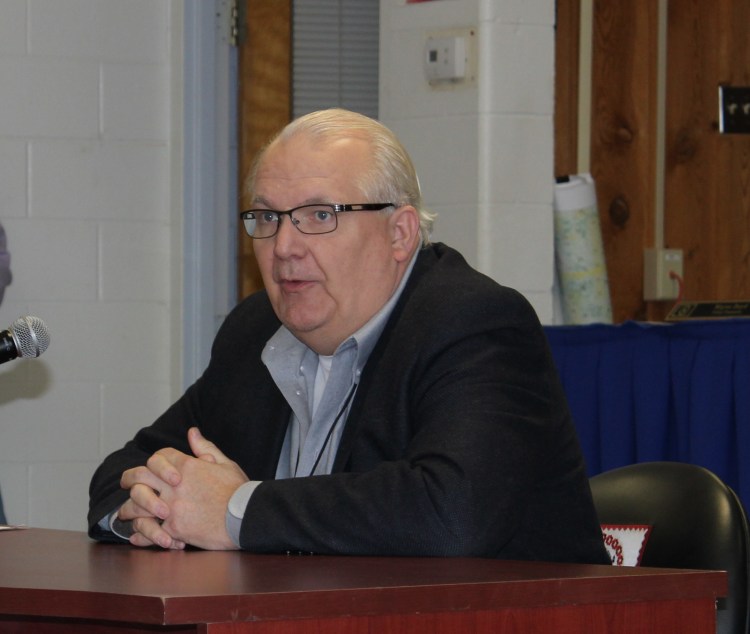
Dr. Mark Jackson, Chief Medical Officer of the Great Plains Region, answers questions regarding the diversion of Rosebud’s Emergency Room to an Urgent Care Clinic at the December 5 tribal council meeting.

By Vi Waln

The Emergency Room (ER) at the Rosebud Comprehensive Health Care Facility was diverted to Urgent Care on December 5. The upper echelon of the Indian Health Service (IHS) determined what many of us already knew; Rosebud’s ER is not a safe place for patients to seek medical treatment. This is nothing new. In fact, many people who were improperly diagnosed at Rosebud’s ER in the past, were sent home to die.

Rosebud’s Tribal Council held a special meeting on December 5 to hear from Dr. Mark Jackson, Chief Medical Officer of the Great Plains Area Office in Aberdeen. Dr. Jackson, along with Area Director Ronald Cornelius, made the final decision to divert the Rosebud’s ER to Urgent Care. The diversion was effective at 6pm on Saturday, December 5, 2015.

I attended part of the Rosebud Sioux Tribal Council meeting on Saturday. I do think Dr. Jackson is an excellent public speaker. He seemed very diplomatic and had many good words for the Tribal Council. Trouble is, I didn’t believe anything he said. Without fail, Indian Country can count on the promises made by a federal bureaucrat to be broken.

So, we no longer have an ER at Rosebud. Basically, the ER was downgraded to an after-hours clinic. Wikipedia defines urgent care as “a category of walk-in clinic focused on the delivery of ambulatory care in a dedicated medical facility outside of a traditional emergency room. Urgent care centers primarily treat injuries or illnesses requiring immediate care, but not serious enough to require an ER visit.”

Apparently, this decision was due to an inspection conducted last month on Rosebud’s facility by the Centers for Medicare and Medicaid Services (CMS). CMS provides oversight for medical services provided by the IHS. The recent findings by CMS resulted in a notice to discontinue Medicare payments to Rosebud Hospital, due to unsafe conditions for patients. The facility has until December 12 to come into compliance with deficiencies.

President William Kindle, along with members of the Rosebud Sioux Tribal Council, were notified of the ER closure at 4pm on Friday, December 4, 2015 by telephone. Rumors ran rampant throughout the weekend about the closure, or diversion as it was referred to by Dr. Jackson. The closing of our ER at Rosebud on short notice is a fine example of how we are at the mercy of the federal government and their employees. That is, a decision by a couple of IHS bureaucrats in Aberdeen has affected thousands of Lakota people lacking health insurance, who depend on the Rosebud Hospital for emergency care.

How rude for the IHS higher ups to give the Tribe such short notice. There was no attempt by the federal government to publicly inform our people who use the Rosebud Hospital about how the closure will affect them. The IHS higher ups basically left it up to our tribal leadership to explain to people what happened and how they will be affected. The way the decision was made and how our leadership was informed wasn’t right, it was downright abusive.

Still, the actions of the federal government don’t surprise me anymore. After all, they never cared about us, we are simply their wards. Just because they are obligated to provide for our health care needs doesn’t mean they actually care about us. This is obvious through the health care services, or the lack thereof, that we have received since being put on these reservations the government forced on us.

What’s even worse is we have some tribal people working right here in Rosebud who are supposed to ensure our hospital is top notch. Now, we all know that IHS hasn’t been fully funded for years. Still, the local and regional Bureau of Indian Affairs (BIA) and IHS employees make damn good money. They are also enjoy premium health insurance coverage, as well as a generous retirement. Yet, the lack of education, as well as the downright incompetence of key employees, is apparent by their obvious inability to keep our hospital in compliance with CMS requirements.

I’ve realized through my experience with the local IHS that many federal employees are also extremely rigid. That is, some are completely focused on their pay grade, cash awards and the government regulations they are required to follow. So, enforcing government regulations in order to move up the pay scale ladder is often more important than making sure the people’s health care needs are met.

There are some hard working people employed in the local federal system. Maybe the federal government should put those employees who genuinely have the patients’ best interests at heart in charge of the Rosebud Hospital. I can’t apologize to the federal employees working on my reservation if I’ve offended any of them with this, or any other column I’ve penned. Writing the truth will always offend some people.

Finally, this week will mark the 18th birthday of my first-born Takoja. Sadly, she won’t be enjoying cake and ice cream at a birthday party with her extended family. She no longer walks Mother Earth because Rosebud Hospital sent her home to die when she was only 5 years old. So, the closing of Rosebud’s ER might actually be a blessing in disguise. That is, sending our Lakota people to other health care facilities could save their lives.

Vi Waln is Sicangu Lakota and a correspondent for the Lakota Country Times. She can be reached at viwaln@sicanguscribe.com