
Never Doubt the Prayer of an Innocent Child
By Vi Waln
Kudos to the Sicangu Lakota Youth Council. For nearly a year, these young adults have worked passionately on an issue of great importance to us all. Their prayers and determination are what led several tribes to a meeting with the Department of Defense last week. Through the efforts of our young adults, several children buried in a cemetery in Carlisle, Pennsylvania will be disinterred and brought home for reburial.
It all began last summer when students from Rosebud traveled to Washington, DC to attend the White House Tribal Youth Gathering. As the students planned their trip, they laid out an itinerary to include visits to the National Museum of the American Indian and Georgetown University. A trip to be remembered for sure.
Yet, the most memorable stop for them was the cemetery at the former Carlisle Indian Industrial School. Over 10,000 children from 150 tribes were sent to Carlisle. The school was in operation from 1879 through 1918.
Visiting the cemetery was an emotional and spiritual experience for the Lakota youth. Children and teenagers their age, or younger, were forced to leave their homes on the Rosebud to attend the school. Many students who attended Carlisle were separated from their families for years. Nearly 200 students who journeyed to Carlisle never saw their relatives again. Those students died and were buried near the school.
These tribal children were denied a traditional burial ceremony in their own homelands. Today, the cemetery is designated as a National Historical Landmark. It is located next to a busy intersection in downtown Carlisle. The site is visited annually by tourists with no familial ties to the children buried there.
The group from Rosebud offered prayers at the cemetery last summer. They also placed sage and candy on each grave. The spirits of the children seemed happy with the gifts; this was evident through a swarm of fireflies appearing in the cemetery.
We hear all the time about how sacred our children are. The children who are buried in the Carlisle cemetery are also sacred. I believe many of those children did not die not from illnesses as reported by school officials. Most of the children buried at the cemetery in Carlisle died from homesickness and broken hearts. I have no doubt that our Itancan who sent their children to be educated at the boarding school so far away entertained second thoughts about their decision.
Carlisle was opened only 3 years after the Battle of the Little Big Horn. America was still angry about the defeat they suffered in Montana by the Lakota, Cheyenne and Arapaho. I question the historical accounts that state our leaders willingly sent their precious children to be educated at Carlisle.
We have always been a highly spiritual people. I have no doubt those innocent Wakanyeja prayed every single day to go home. Each one of those children had an Ina, an Ate, an Unci and a Lala, as well as an extended Tiospaye, who also prayed for their safe return home. But nearly 200 of those children did not get to make the trip home. As a result, there was never any closure for the families whose children are buried in Carlisle.
It was those prayers of ancestors that touched the minds and hearts of our Sicangu Lakota young people as they walked through that cemetery last summer. Our contemporary youth empathized with the children who were sent to that faraway place at the turn of the century. Today, many of our Lakota students can’t fathom being torn from the love of their families and ordered to attend a boarding school nearly 1,500 miles away from home.
The prayers of our ancestors have manifested through the love of our contemporary children. That is, the Department of Army has promised to financially support the disinterment and return of the remains of our children, as well as the children of other tribes, who are buried in the Carlisle cemetery. It might be a long process, but those children buried in Pennsylvania will eventually be returned to their homelands.
This is an example of why we call our children sacred. Innocence holds great power. It was the minds and hearts of the members of the Sicangu Lakota Youth Council that heard those ancestral prayers uttered over 100 years ago. Our contemporary children have shown great love for their ancestors.
Wopila to the members of our Sicangu Lakota Youth Council, today they are an example of what being a good ancestor really means. They have helped the prayers of our ancestors become reality. The children who were sent away long ago, only to die in an unfamiliar place far away from their families, are coming home.
Do not ever doubt the prayer of an innocent child.
Lakota Elder Games Encourage Healthy Lifestyle
By Vi Waln
ST. FRANCIS – Tribal citizens of all ages will gather here this week to celebrate 30 years of physical activities geared to encourage local elders to “Stay Active – Stay Healthy.”
The annual event, first held in 1986, welcomes local elders and families to participate in an afternoon of track & field events. The public is welcome to come and support local elders who will participate the following events: 50 yard walk, 100 yard walk, ¼ mile walk, 50 yard run, 100 yard run, ¼ mile run and ¼ mile relay. Field events include horseshoes, softball throw and basketball throw. Hand games, a 3-legged race and sack races will be offered for children.
This event, referred to as the Elder games, will be held at the old track field at St. Francis Indian School. The event was created in 1986 by the Sicangu Elderly Concerns group. These activities are supported entirely by volunteers and local businesses. According to a press release, the event neither solicits nor accepts any public funds whatsoever.
Registration begins at 11:00am on Saturday, May 21, 2016. An opening prayer will be offered at 12:00 noon by Chief Roy Stone, Sr., Elderly Concerns Board Member and Spiritual Leader. Ann Roubideaux, also a member of the Elderly Concerns Board, will give the welcome address.
Track & field events will begin at 12:30pm. Other events will be held as time permits. There will be something for everyone interested in participating. Awards will be given to the following age divisions for both men and women: 50-59, 60-69, 70-79 and 80 & over. It is interesting to note that many former volunteers are now active participants and their children currently serve as volunteers.
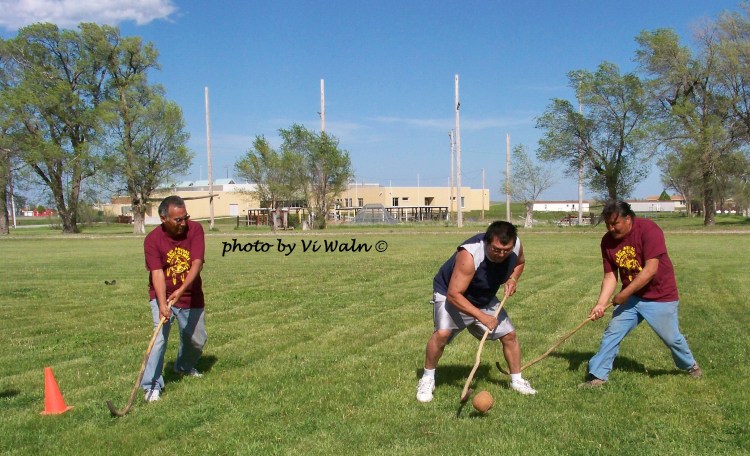
A traditional Lakota Shinny game will take place after the track and field events. A meal will also be served. Certificates and medals, along with special recognitions, will be presented immediately following the day’s events.
Everyone over 50 years of age is invited to come out to participate in the track & field events. You are invited to attend this event to support your local elders. People interested in volunteering their time are asked to report to the registration table at 11am on Saturday, May 21.
For more information, please contact Elder Games Committee members Wendell Big Crow at 828-3095, Lynelle Hairy Shirt at 828-7575 or event coordinator Chris Horvath at 856-2547.
Come out and have a good time.
Rebuilders Meet in Spearfish Canyon
By Vi Waln
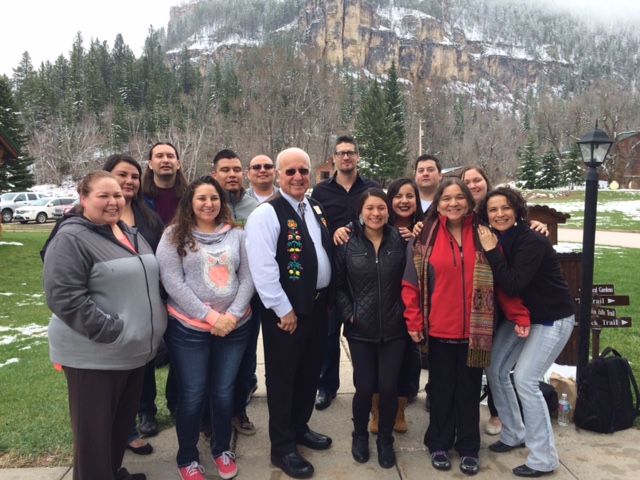
SPEARFISH CANYON – Cohort 7 of the Native Nation Rebuilders recently participated in a 3-day session here, which focused on community assessment and a case study of tribal governance.
The highlight of the session was a presentation by John “Rocky” Barrett, Chairman of the Citizen Potawatomi Nation (CPN). Barrett, who began as CPN Vice-Chairman in 1973, stated the tribe had 2.5 acres of land and $550 in the bank when he initially took office. The tribal headquarters was located in an abandoned mobile home once occupied by the Corp of Engineers.
“I am the 8th generation of my family to be Chairman of my Tribe,” Barrett stated. Today, the CPN owns and operates the First National Bank and Trust. They own $310 million in assets and their bank has a $500-million-dollar lending capital. He attributes the tribe’s economic success to the re-investing of all revenue brought in by their gaming operations.
The Native Nation Rebuilders (NNR) program is sponsored by the Bush Foundation, the Native Governance Center and the Native Nations Institute. The program selects several citizens each year to participate in a cohort. Each cohort is selected from applicants who are members of 23 tribes.
Cohort members come together to learn new ways of strengthening tribal governance. They study innovative tribal governance practices, while strengthening their leadership skills. Each member is passionate about building a brighter future for their respective tribe.
Cohort members, referred to as Rebuilders, must make a 2-year commitment to participate in the program. During their first year, Rebuilders develop their knowledge, skills and connections to effectively lead nation-building efforts. During year 2, Rebuilders develop and implement an action plan within their community to accomplish local nation-building projects.
The Rebuilders of Cohort 7 include 20 citizens from the following tribes:
Standing Rock: Alayna Eagle Shield, Eric Grey Cloud, Nacole Walker, Pearl Walker-Swaney and Sunshine Carlow.
Turtle Mountain Chippewa: Travis Albers, Jayme Davis, BJ Rainbow, Kenneth Davis and Janie Schroeder-Herman.
Mandan, Hidatsa and Arikara: Allan Demarey, David Walker, Jess Hall and Amber Finley.
Fond du Lac Band of Chippewa: Herb Fineday, Jr. and Donna Ennis.
White Earth Band of Ojibwe: Margaret Rousu.
Bois Forte Chippewa: Nicole Pieratos.
Sisseton-Wahpeton Oyate Tribe: Josh Flute.
Rosebud Sioux Tribe: Viola Waln.
The Native Nation Rebuilders project encourages applications from enrolled members of the 23 tribes that share geography with Minnesota, North Dakota and South Dakota. Rebuilders must have a strong interest in tribal governance, commit to attend 4 in-person session and complete assignments between sessions. Applicants must be at least 25 years old by the date of the first session and currently reside in Minnesota, North Dakota, South Dakota or one of the 23 Native nations.
The application period for Cohort 8 will open this summer. Applicants must complete an online application. In addition, references from 2 non-relatives who have knowledge of the applicant’s values, character and goals are also required.
For more information on the Rebuilders Fellowship, visit the Native Nation Rebuilders
Child Pornography has been going on for Decades
By Vi Waln
“Many people don’t want to believe that child abuse exists, or are only willing to believe that certain kinds of abuse go on. They don’t want to consider that something so horrific, and yet so widespread, is taking place in their community, perhaps only a door away from them, a few steps from their lives – or even in their lives if they would only open their eyes.” Laurie Matthew
In researching the United States Attorney’s website, I found there have been 11 sexual assault cases brought against men from the Rosebud Reservation since January 2016. In an absolutely heinous case involving the sexual assault of minors, last week a Rosebud man was sentenced to nearly 20 years in prison. His crimes included Sexual Exploitation of a Child, Distribution of Material Involving the Sexual Exploitation of Minors, and Failure to Appear.
According to the website, this predator “received and distributed numerous images of child pornography and depictions of minors engaging in sexually explicit conduct on different dates.” He sexually assaulted innocent minors by sharing pictures of them with other predators on the internet. After his court appearance, he was placed on electronic monitoring and released to a family member. Shortly after this conditional release, the predator “absconded from his release and electronic monitoring.” He was subsequently apprehended in Miami, Florida.
In addition, last month a Selby man was sentenced to 40 years in prison for Sexual Exploitation of a Child and Distribution of Material Involving the Sexual Exploitation of Minors. This predator was a former State’s Attorney. According to the news release issued by the US Attorney, this man “refers to himself as a pedophile and indicated he has been dealing with his attraction to and acting out upon minors for a number of years. . .He admits he loses control at times and that is when he molests minors and says he sometimes satisfies his desire for children by looking at child pornography.”
Even though there have already been 11 cases, which warranted federal prosecution from Rosebud, so far this year, I’m sure there are many more happening as you read this. There are children and teenagers living on our homelands who are suffering from active, on-going sex crimes perpetrated by a relative or someone close to the family. Some victims have been living with this abuse for years. They remain silent about these sexual assaults because of the threats made by the predator.
There are also women and men living on our homelands who’ve suffered violent sexual assaults, yet nothing was done about it. I believe many sex offenders, especially those who victimize children, got away with their crimes. I know some child rapists living on the Rosebud who were never prosecuted. They continue to walk free. Some of them have jobs working with tribal entities. They were never prosecuted because the victim was too afraid to turn them in to law enforcement.
In his proclamation designating April 2016 as National Sexual Assault Awareness and Prevention Month, President Barack Obama called sexual assault crimes a “human rights violation.” Men, women, teenagers and children will continue to suffer from sexual assaults unless we take action to stop rapists. And as much as we all are comfortable in our denial, we have to take responsibility in recognizing the sexual assaults happening within our own family, home or community.
Even though the sexual crime of child pornography has been going on for decades, the internet has provided a new way for these predators to interact with one another. In addition, the ever rising incidents of human trafficking has also subjected our people to violent sexual crimes. That is, men, women, teenagers and children continue to be exploited every day in human trafficking rings.
It is our responsibility to help our people seek justice for sexual assaults. If a child or teenager is being sexually abused in your home by your companion or another relative, and you know about it but refuse to notify authorities, it might as well be you inflicting those terrible crimes on that young person. Sexual abuse and assaults cause extreme mental and emotional problems for victims. Many of our people today are walking around with all kinds of personal problems. What many of them don’t realize is their issues stem from a past sexual assault, or maybe even sexual abuse suffered as a child. Incidents of child sex abuse can be blocked from the survivor’s memory as a way to cope.
“. . .If anyone reading this is going through what I went through, please take my advice: No matter how bad or good the rapport is between you and your family members, do not wait until the abuse destroys you to tell someone. . .If one person doesn’t believe you, tell someone else. Keep telling until someone listens. I know it’s painful to tell, but what you’re living with is far worse.” Anna, 15, sexual abuse survivor
Rosebud Sioux Tribe Seeks Assistance in Updating Education Code
By Vi Waln
ROSEBUD – Staff members from the Tribal Education Department attended a community meeting here to present plans to update the Education Code (Code), which was enacted in 1991.
A power point presentation provided an outline of the Code for community members to view. Tribal Education staff plans to schedule other meetings with tribal citizens over the next several months to seek input, as well as volunteers, to assist with the update process.
This work is made possible through a Bureau of Indian Education (BIE) Tribal Education Department (TED) Grant awarded to Rosebud. Other tribes who received funding are Standing Rock, Navajo Nation, Hopi, Santa Clara Pueblo and Acoma Pueblo. The 3-year grant will enable staff and tribal citizens to work on recommending changes to the Code. Deborah Bordeaux was recently hired as TED Grant Manager.
Drafted into law in 1991, the Code lists 3 purposes:
(1) Preserve, protect, and perpetuate the Tribe. Provide the necessary resources to preserve, protect, and perpetuate the Rosebud Sioux Tribe with its human and land resources;
(2) Promote intra-government understanding and coordination. Provide a means to promote understanding and coordination of branches, agencies, and entities of the Rosebud Sioux Tribal Government on the purposes, standards, and functions of education on the Rosebud Sioux Indian Reservation; and
(3) Make education a good experience and good preparation for life. Make education on the Rosebud Sioux Indian Reservation a good experience and provide a means to prepare tribal members for life on and off the Reservation.
The Code also established the Tribal Education Department. The purposes were used to develop a Mission Statement, which reads “It is the mission of the Education Department to protect and perpetuate the Rosebud Sioux Tribe; to promote intragovernmental understanding and coordination; and to make education a good experience and a good preparation for life.”
The funding will assist the Education Department in strengthening the code through further development with input from local citizens. Volunteers will meet to formulate recommendations in guiding the revision of the Code. This process will allow the tribal membership to actively participate in reforming the Code to better meet the needs of local students. In addition, this process will allow tribal citizens to gain more understanding of how they are affected by the Code.
A major goal of the revision process is to empower local tribal control of the educational systems serving Lakota children on tribal land. That is, this process will empower the Education Department to further develop expanded control over tribal education. This will be accomplished through discussions with all tribal education entities. The Education Department hopes to establish an Education Consortium, which will include all public, private and tribal schools serving local students.
During the grant period, the Education Department will also provide opportunities to coordinate services with all education providers within the exterior boundaries of the Rosebud Reservation. Meetings will be held to provide educational entities with a better understanding of school governance, administrator mentoring, school finance, business management, human resources, strategic planning, facility planning and policy development as they pertain to the Code.
The Code can be accessed online by visiting the Tribal Education Department website at:
http://www.rst-education-department.com/education-code/
The public is welcome to leave comments about the Code on the website. For more information, or to sign up as a volunteer to work on the revision, please contact the Education Department at (605) 747-2833.
Lower Cut Meat Creek Day School To Be Featured in Book
By Vi Waln
ROSEBUD – A day school operated on the Rosebud Reservation at the turn of the 19th century will be featured in an upcoming book authored by museum curators.
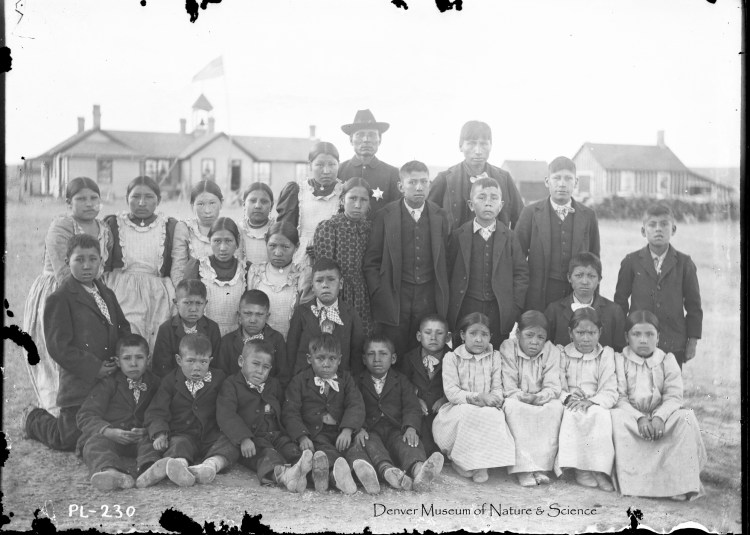
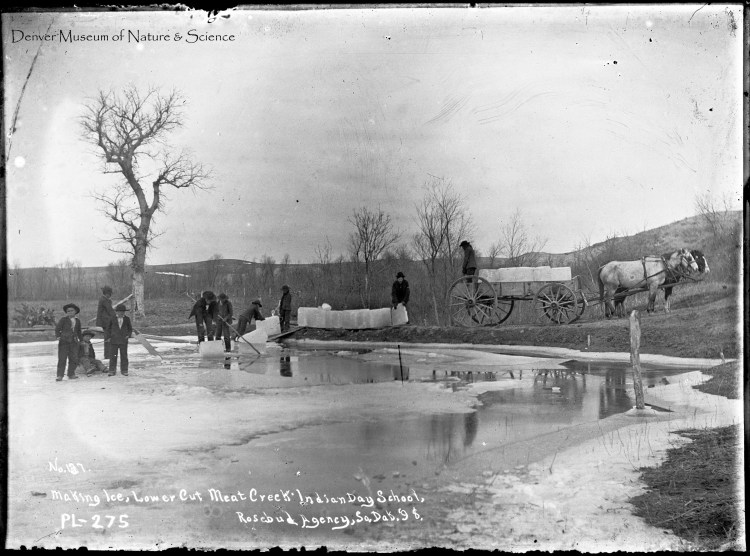
The Lower Cut Meat Creek Day School was 1 of 21 day schools operated by the Indian Agency. The small building was located north of the present day Parmelee community and provided educational services to several Lakota students in the late 19th century. Lindsay Montgomery, a post-Doctorate researcher at the Denver Museum of Nature & Science, met with descendants of students who attended the day school to provide information. She is collaborating with Curator Chip Cowell on the project.
The book is based on the collection of Jesse H. Bratley, who served as a teacher at the school during 1895-1899. His wife, Della (Ransom) Bratley, helped with the female students. During his time on the Rosebud, he took over 100 photographs and collected hundreds of items from the local people, including Swift Bear’s Winter Count depicting 100 years of Lakota history.
He also wrote an extensive autobiography, which included accounts of his experience at Rosebud. Montgomery provided copies of the portion of Bratley’s autobiography (pages 104-114) which detailed the time he spent at Lower Cut Meat. Excerpts of his writing is included in the following paragraphs.
The couple had 3 children during their time at Lower Cut Meat. They had a set of twin girls, Helen and Hazel, as well as a son named Homer. Helen died shortly after she was born. The couple buried her near Chief Spotted Tail’s grave in Rosebud, SD. The grave is unmarked.
Students who attended the school ranged in ages from 6 to 17. The school day began at 9am and ended at 4pm. Mornings were dedicated to learning subjects like reading, writing and math. Lunch was provided to all the students. The younger children were sent home at 2pm. The older students worked until 4pm.
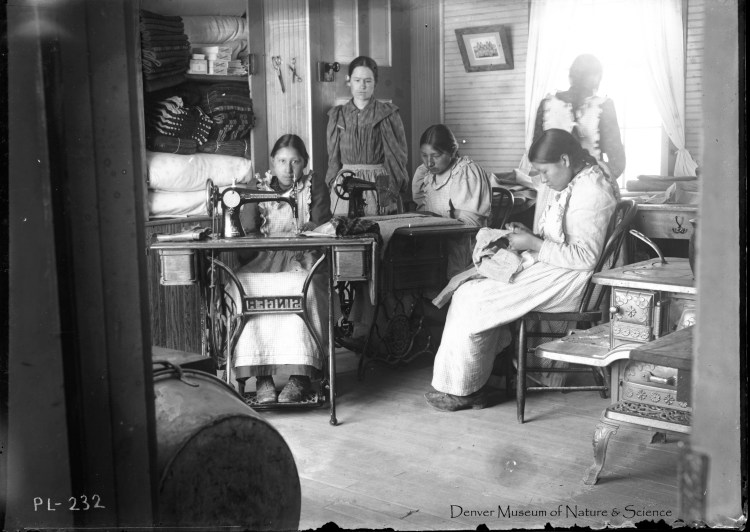
The older girls spent their afternoons sewing. Mrs. Bratley helped them make clothing for the girls and for the smaller boys. They also made sunbonnets for the girls. Ready-made shirts and suits were furnished for the older boys.
The older boys worked outside in the afternoons. Bratley led them in building both a carpenter shop and a blacksmith shop. The boys made tables and stools for the students to take home.
He also taught the older boys how to irrigate crops by digging ditches. The school had a substantial garden. Potatoes, tomatoes, celery and cabbage were all added to the noon lunches for students.
He also enlisted the help of the older boys to build a pond to collect the run-off from the creek when the snow melted. He built an icehouse and the group harvested the ice from the pond each winter. In his autobiography, Bratley wrote “we had ice continuously to the end of the four years we were at this school. Our milk house was in front of the ice house and we set our milk and butter in the drain from the ice. The ice was something that no other of the twenty schools had” (page 106).
Following the orders of the Indian Agent, Bratley and his wife also bathed all the children every Monday morning. One of his accounts reads: “One time, when I was bathing the boys in the shop, I noticed a very white spot on the right thigh of Sammy Plenty-Holes, a six-year-old boy. I asked him what caused the white spot. He said, ‘I was shot.’ The bullet passed through his leg where the two white spots indicated.”
“I inquired of the mother, Mrs. Plenty-Holes, how it all happened. She said she was with Sammy, who was nearly one-year-old, in the Wounded Knee Battle, December 29, 1890, in which three hundred or more Indians were killed. . . Mrs. Howling-Elk, who received thirteen bullet holes, and her wounded baby, laid three days in the snow drifts and both survived. Sammy’s mother’s name was changed to Plenty-Holes on account of the thirteen wounds” (pages 108-109).
For more information on this project, please email Lindsay Montgomery at
Children Deserve Protection
By Vi Waln
One summer I went to visit an elderly couple at their home. It was hot. They did not have air conditioning, so the front door was wide open. There was no screen door. They had custody of three small grandchildren. Two of the children were toddlers and one was a baby.
The baby was laying on the couch with just a diaper on. She had a bottle in her mouth. She was covered with house flies. The flies crawled on her but she seemed oblivious to them as she sucked on the bottle. The grandparents seemed not to notice.
I wondered where the parents of the children were. The couple was elderly. I am sure they did what they could to care for the children, but they were elders. Our elders can only do so much. I don’t think it’s fair when young, able parents burden their mothers or fathers with the responsibility of caring for small children.
April is National Child Abuse Prevention Month. There are countless instances of child abuse happening on our lands. The trauma afflicted upon our children affects them throughout their entire life. Abuse scars children in more ways than we realize. Abused children generally grow into adults who abuse their own children.
Last week, a video circulated on social media sites showed a school principal paddling a 5-year-old student. The footage of this incident was taken by the boy’s mother. She indicated it was either allow the paddling or her child would have been suspended.
I didn’t watch the video. Depictions of violence against children make me sick. Even though the mother gave her permission for the man to hit her child, I still believe it was a form of child abuse. When this child is an adult, he will be able to view the video on the internet. I wonder how that will make him feel.
Many people agree with the beating the principal gave the child. In fact, there are many parents out there who believe corporal punishment is acceptable. Many parents use corporal punishment on their own children. I believe “disciplining” your children by hitting them is abuse. When children are subject to corporal punishment, they grow up into mean adults.
April is also Alcohol Awareness Month. Alcohol is a drug. Some people condone the use of alcohol because it is legal. But a drug is a drug. Whether it is legal or illegal, drugs will ruin lives.
Many of us have been affected by alcohol, either through our own drinking or by a close family member who drinks. The National Council on Alcoholism and Drug Dependence (NCADD) website states “more than 7 million children live in a household where at least one parent is dependent on or has abused alcohol.”
Alcohol and other drug use is often linked to child abuse. For instance, last week 3 women were arrested in Sioux Falls, SD. The women were intoxicated and driving around with 6 children, who ranged in ages of 6 weeks to 8 years old, in the vehicle. The women were each charged with 6 counts of cruelty to a minor. The children were placed in protective custody by the Department of Social Services (DSS).
Unfortunately, this is a prime example of why April is designated as National Child Abuse Prevention Month and Alcohol Awareness Month. These children were abused because of the alcohol use by their mothers. It’s a traumatic experience for children to be taken from their parent and placed in the care of DSS.
Some children who are placed in foster care never see their parents again. The last memory of their mother or father is one where the parent was intoxicated or acting violently. That memory is imprinted on their brain for the rest of their life. Experiences like the one those 6 children went through could scar them for the rest of their lives.
Alcohol and drug use have caused many of our children needless pain and suffering. Oftentimes, the parent’s choice to “party” changed the lives of their children forever. The child stands a great chance of growing into an adult with a myriad of mental health issues, which may prompt them to abuse alcohol and drugs. So, the vicious cycle of addiction continues.
Our children deserve to grow up in a sober home with parents who are supportive and loving. You have the power to change your life today. Seek help if you are lost in addiction. Your children are depending on you to protect them. They don’t want to grow up with strangers. Please don’t disappoint them.
Rosebud Meets with top level Indian Health Officials
By Vi Waln
ROSEBUD – Members of the Rosebud Sioux Tribal Health Board recently spent over 4 hours discussing the future of the Rosebud Hospital with several officials from the Indian Health Service (IHS).
The Emergency Room at the Rosebud Hospital has been closed since December 5, 2015 after officials from the Centers for Medicaid and Medicare found at least 3 patients had been exposed to unsafe conditions. The 3 cases involved a cardiac patient, an OB patient and trauma on a pediatric patient.
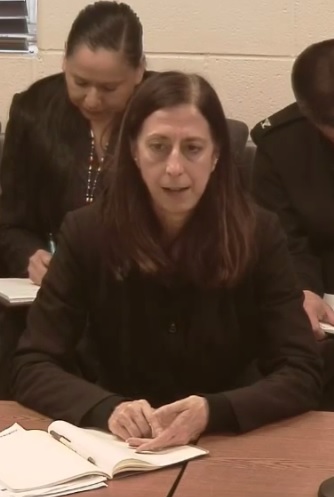
“I want to say at the outset, the conditions at the hospital and what has happened with CMS are unacceptable. We are committed to making change and that’s why we’re here,” stated Mary Smith, Principal Deputy Director of the Indian Health Service. We have been working on the corrective action plan. We do want to open the Emergency Department as soon as possible. It is one of the highest priorities at IHS.”
“We want to open the emergency department when we have a full staff of physicians and nurses, when we are able to meet the CMS requirements and when we will be providing high quality patient care, that is our goal and you deserve no less. That’s why we’re here,” Smith continued.
“We are committed to opening the [Emergency Room] as soon as possible,” Smith told Health Board members. She was unable to give a definite date when the ER would be open. IHS has issued a request for proposals (RFP) to contract out and manage of the Emergency Departments at Rosebud, Pine Ridge and Winnebago. IHS hopes to award the contract in June.
Since the diversion took effect, patients needing care for serious conditions are transferred to off-reservation facilities. Many are taken directly by ambulance to hospitals in Winner, Martin or Valentine. The ER diversion has taken a toll on both the ambulance staff and vehicles.
“We ran 6 ambulances into the ground,” stated Willie Bear Shield, Chairman of the RST Health Board. “We need 2 handicap vans for transport. We still hold your agency for their word that all costs would be taken care of while we were in this immediate jeopardy status.”
The diversion of the emergency room came on the heels of a Notice of Intent to Terminate the Medicare Provider agreement, sent to the Rosebud Hospital from CMS last fall. CMS initially determined that the deficiencies identified in their recent survey were so serious that they constituted an immediate and serious threat to the health and safety of any individual who comes to the hospital to receive emergency services.
CMS subsequently granted at least 2 extensions to the Rosebud Hospital to correct deficiencies. The most recent extension was granted on March 4, 2016. The letter states in part “CMS therefore agrees to extend the termination date of the hospital’s Medicare Provider Agreement from March 16, 2016 to May 16, 2016. However, in the event that IHS and CMS are unable to agree on the terms of an SIA [Systems Improvement Agreement] for the Rosebud IHS Hospital and an SIA has not been signed by the close of business on April 29, 2016, CMS will offer no further extensions, and the Medicare Provider Agreement between CMS and the Rosebud IHS hospital will be terminated at the close of business on May 16, 2016.”
Voting Doesn’t Make You White
By Vi Waln
Tribal people born in this country weren’t considered American citizens until June 2, 1924. This means we’ve only been recognized as citizens of this country for 92 years. Some of us have grandparents who were granted American citizenship when they were children. Our great-grandparents were not considered American citizens, even though they were born and died on this continent. Consequently, citizens of the United States are granted certain rights and responsibilities. Our lives can definitely improve when we take advantage of all the rights that come with being a US citizen.
Despite our recognition as American citizens, there are many tribal people who would rather not acknowledge their citizenship. In fact, there are tribal people whom actively reject their citizenship. Many tribal people reject American citizenship as a form of protest against the US Government. I understand their position and tend to agree with many of them.
Still, we do live here in this country. Most of us aren’t planning to go anywhere. So, we do have the right to take advantage of certain privileges which are available to us as American citizens. I don’t see my tribal citizenship diminished by my choice to take advantage of the rights granted to American citizens.
One of the privileges we have as American citizens is our right to vote in tribal, county, state and national elections. Voting in elections doesn’t make you “white” or mean you are assimilated. Exercising your right to vote means you are taking an active role in determining who is elected to represent you.
There are many people in our county, state and country who don’t want tribal citizens to vote. It brings them great satisfaction to know tribal citizens won’t get out and vote. They also know that when tribal citizens do decide to take an active role in elections, we will have the collective power to easily elect candidates who will work hard to ensure that many issues facing tribes are improved.
You have the responsibility to decide who is put into office to make decisions for you and your family. Our children need all of us to vote. The quality of our lives, as well as our children’s lives, depends on voting in honest, qualified, ethical leaders who will act with integrity.
All across this country there are people who make a choice NOT to participate in the election process. We are currently in a Presidential Election year. Many of us are tired of the campaigning craziness we are watching in the news. Unfortunately, we still have 8 months to continue being bombarded with the often unscrupulous campaign antics of the current US Presidential hopefuls.
Even though I tend to disagree with the philosophy of political candidates on nearly all levels, I still exercise my right to vote. My vote counts because I am an important citizen with a voice that people need to hear. I vote in all elections I am eligible for – tribal, county, state and federal. My ancestors sacrificed their lives so we could continue to live on this Turtle Island. I am not about to disregard their sacrifice by refusing to vote.
Many of you believe your vote doesn’t make a difference. However, an example of the Native Vote making a difference in a key election was when Tim Johnson beat John Thune in 2002 for the US Senate seat. The voters on the Pine Ridge Reservation exercised their right to cast ballots during that election to put Johnson in office.
The voters living in Todd County have a chance to do the same this summer during the Todd County School Board election. Voters wanting to see change in their student’s classroom would do well to go to the polls and election qualified, educated people to the school board. I believe former educators are highly qualified to serve as school board members, as they have spent time as either teachers or administrators. Who else knows the needs of students better?
You have the power to elect people to the Todd County School Board who will look out for the educational interests of your students. School boards should not be political, but unfortunately they often are. Some school board members will discount the concerns you’ve voiced as mere rumors. When a governing body allows politics to drive their decisions, they will often overlook the people they are supposed to be serving. The students attending the Todd County School District need school board members who care about quality education.
The Rosebud Sioux Tribal Education Department, as well as the Education Committee, encourages all tribal citizens to register to vote today! Cast your vote in the June 2016 School Board Election. Vote for former educators who are familiar with your students.
The power of change is in your hands, don’t let it slip away.


You must be logged in to post a comment.