RST Council votes to remove tribal flag from state capitol

ROSEBUD – The Rosebud Sioux Tribal Council took action to approve several motions in response to disparaging allegations made against South Dakota tribes by Governor Kristi Noem.

The governor recently gave an address in a Joint Session of the Legislative Body after a visit to the Texas-Mexico border. Noem alleged “The drug and human trafficking pouring over the border devastate our people. Make no mistake, the cartels have a presence on several of South Dakota’s tribal reservations. Murders are being committed by cartel members on the Pine Ridge Reservation and in Rapid City, and a gang called the “Ghost Dancers” are affiliated with these cartels.”

The RST council approved a motion asking for a letter to be addressed to the governor asking for her support in requesting increased public safety dollars from the federal government. A discussion on public safety was held. A suggestion was made to file a lawsuit against the federal government on the need for increased funding. President Scott Herman plans to issue a state of emergency declaration on the need for increased public safety on tribal lands.

RST council members also received calls from tribal citizens expressing concerns about the allegations made by the governor. Tribal citizens were offended that the governor would make unfounded allegations regarding the presence of cartels and drugs on tribal lands. A motion was also approved for the Tribal President to write a letter of response to the bold statement issued by Gov. Noem.

The RST council also approved a motion to retrieve the Rosebud Sioux Tribe Flag from the South Dakota Capitol Rotunda. The RST Flag was one of two tribal flags posted in the Capitol Rotunda on January 10, 2024 as part of the State Tribal Relations Day. The tribal flag display in the Capitol Rotunda was approved through House Bill 1189 in 2021.

The RST council provides a live broadcast of their meetings on YouTube.

The Rosebud Sioux Tribal Council approved a motion to retrieve the RST Flag from the SD Capitol Rotunda. Courtesy photo.

Spotted Tail’s heirlooms displayed at Heritage Center

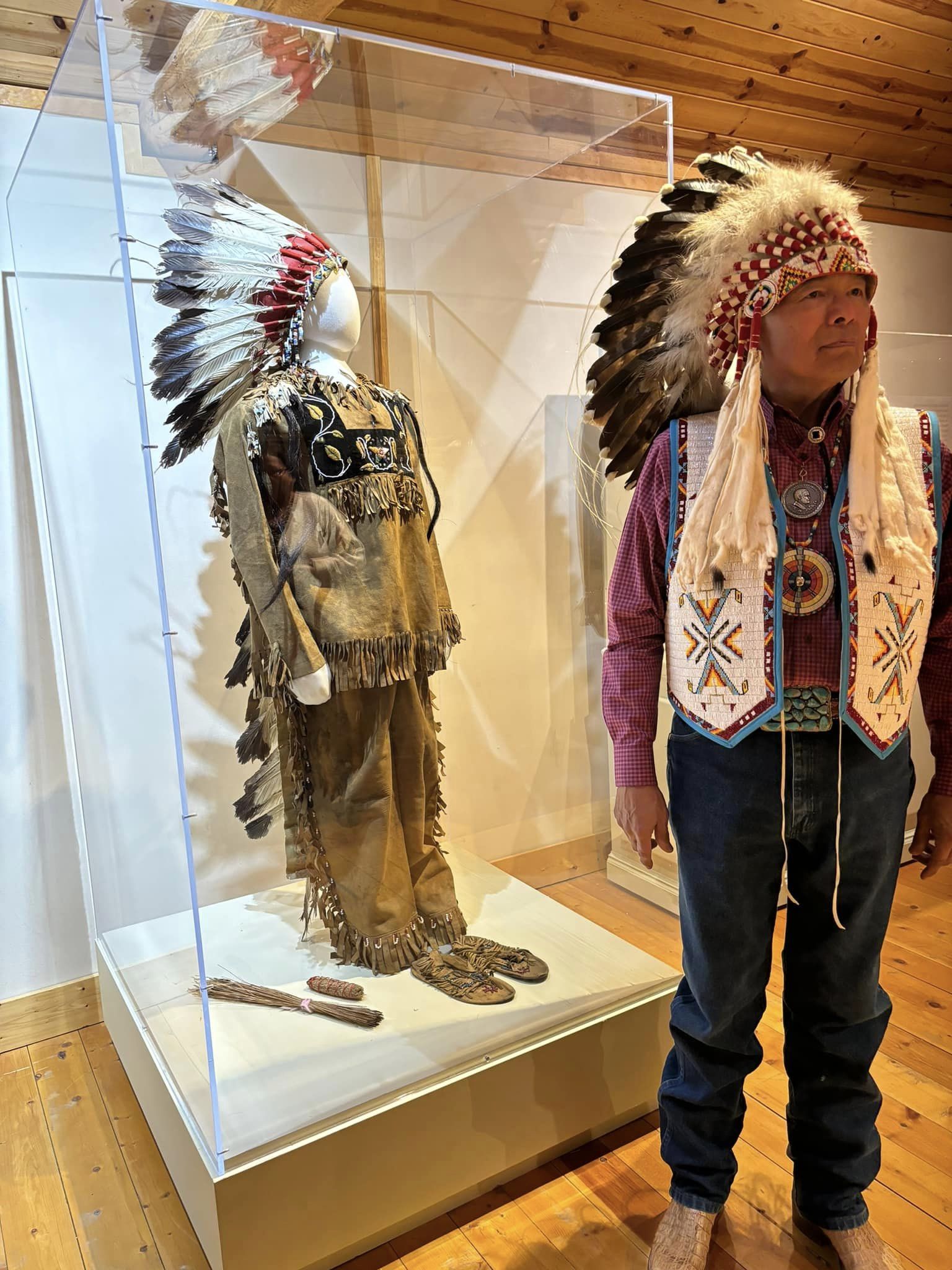
ANTELOPE LAKE CAMPUS – An eagle feather headdress belonging to Spotted Tail was among items on display in conjunction with the fifty-second annual Sinte Gleska University Founder’s Day celebration.

Chief John Spotted Tail stands next to a glass case containing the heirlooms of his great-grandfather Spotted Tail (1823-1881). Photo from Facebook.

“Legacy Returns” featured a collection of Chief Spotted Tail’s (1823-1881) personal items, including an eagle feather headdress, a wig fashioned from horse hair, beaded moccasins, pants, shirt and other belongings kept in a suitcase. Spotted Tail gifted the suitcase and belongings to a friend, US Army Major Cicero Newell, who was appointed to oversee the Rosebud Agency in 1879. Spotted Tail may have gifted his personal items to Major Newell because of the Agent’s leadership while at Rosebud.

Newell also wrote Life Among the Sioux Indians in 1890 and included accounts about the time he spent with the Sicangu Oyate and other tribes in the nineteenth century. Newell was critical of General George Custer’s failed attack at Little Big Horn and stated “his haste to get all the glory of killing these people, led [Custer] to make the attack against the orders of his superior officers.”

Newell’s family had kept the artifacts for over a century until a decision was made to return them to Chief Spotted Tail’s living descendants. Chief John Spotted Tail and his wife Tamara were invited to travel to LaCenter, Washington in August 2020 to accept the heirlooms back to Rosebud on behalf of the Tiospaye. The couple, along with several family members, also attended the public display of artifacts which belonged to Spotted Tail held at the Sicangu Heritage Center last week. The display of Spotted Tail’s personal belongings was the first time the heirlooms were made available for public viewing.

The event at the Sicangu Heritage Center kicked off a week of activities celebrating the 1970 founding of Sinte Gleska College, named after Chief Spotted Tail. The community college transitioned to university status with a Lakota ceremony held during the 1992 Founder’s Day activities. 

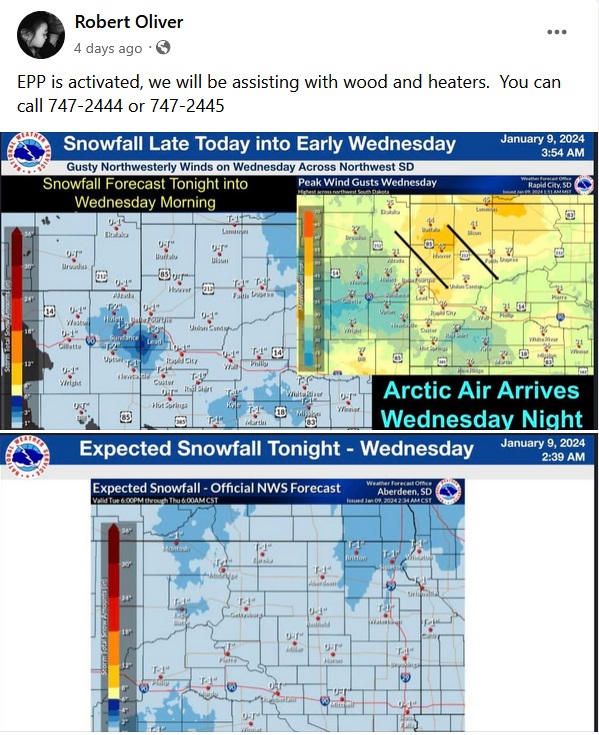
EPP activated to provide services

ROSEBUD – Emergency personnel responded to numerous calls from tribal citizens requesting assistance for help during several days of dangerous subzero temperatures and life-threatening wind chill warnings.

The Emergency Preparedness Program (EPP) is activated by the tribe in response to severe weather. EPP has a plan in place to respond to calls. The public was notified on January 9 that EPP had been activated. Several public buildings invited local residents to shelter if needed. The Antelope, St. Francis and Parmelee community halls were open to the public. Hot meals and drinks were provided.

Robert Oliver was appointed to oversee the Emergency Preparedness Program (EPP) to help the tribe get ready for inclement winter weather. He shared EPP plans with the tribal council at a meeting last week. Oliver reported a command center was set up at the Water Resources building and volunteers answered phone calls and completed request forms for local residents requesting assistance. Two lines were available for citizens to call (605) 747-2444 and (605) 747-2445.

EPP volunteers delivered wood to homes across the reservation. The staff also distributed a limited number of electric space heaters. The tribal council also authorized the purchase of additional electric heaters to assist citizens. In addition, the tribal council also approved action to provide one hundred gallons to homes that were completely out of propane.

The Low-Income Household Energy Assistance Program (LIHEAP) also distributed electric space heaters to homes on the Rosebud. An issue with housing units under the Sicangu Wicoti Awayankape (SWA) did not have adequate pipes and could not use their woodstoves. Many residents reported furnace problems when the cold arrived and the tribe assigned staff to investigate those heating issues.

The Rosebud Sioux Tribe Highway Safety officers shared a Facebook post urging residents to stay home. The frigid temperatures and wind chills of up to minus fifty-one degrees resulted in motorists becoming stranded due to their vehicles being unable to function during the cold. Officers responded to stranded motorists on the highways.

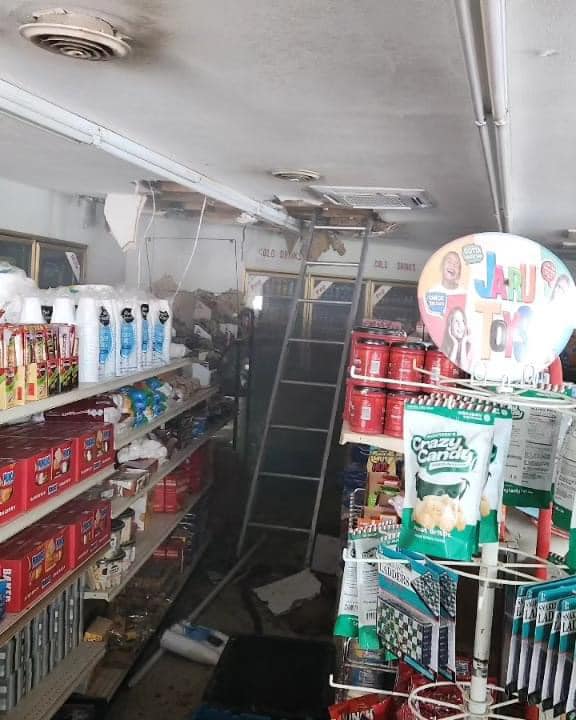
On January 13, the Rosebud Sioux Tribe Volunteer Fire Department responded to a fire at the PaulMart Convenience Store in Rosebud. Fire personnel located the source of the fire and moved quickly to put it out. A subsequent Facebook post by a PaulMart employee, relayed a message from owner Paul H. Paulhamus stating the smoldering fire in the attic of the store was out and the store would reopen after cleaning.

A fire in the attic of PaulMart store was quickly extinguised by the Rosebud Sioux Tribe Volunteer Fire Department. Courtesy Photo.

The tribal council discussion on the EPP program is available for viewing on the Rosebud Sioux Tribe’s YouTube channel.

Rosebud Casino upgrades electrical system

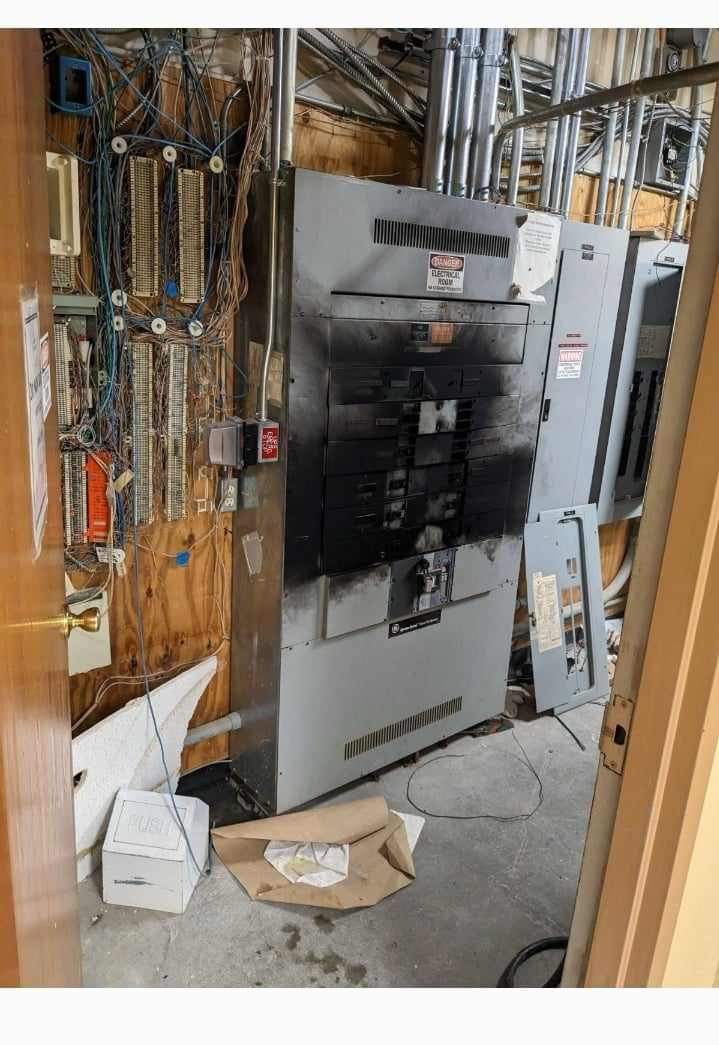
SD/NE STATELINE – Rosebud Casino was shuttered over the New Year holiday when an electrical panel blew up and disconnected all power to most areas of the facility.

This photo was widely circulated on Facebook following the closure of the Rosebud Casino. The photo allegedly shows the damage done to a main electrical panel after it blew up on December 28, 2023. Photo from Facebook.

Tribal officials initially requested to be off the air from the live YouTube stream to hear the report on the casino. However, council members insisted on a live stream to allow the people to hear about the damage the facility suffered.

“Well, I can give it to you in one sentence – your casino is dead,” stated Ken LaDeaux, General Manager at the Rosebud Casino. He spoke at a special tribal council meeting. “Initially when the power first went out it was an electrical panel that blew up. The person who was resetting the switch is lucky to be alive.”

“Everything we are dealing with [at Rosebud Casino] is high voltage electricity,” LaDeaux continued. Most of the areas of the facility were without internet, power and heat.

The casino accounting systems, surveillance systems and gaming floor were all inoperable during the power outage. The fuel plaza and hotel also had to close their doors because there was no internet to power the point-of-sale stations in those departments. Both the plaza and hotel were open at the time of the electrical damages report to the tribal council.

A post on the Rosebud Casino Facebook page on December 28 announced the closure of the facility. The

post was updated on New Year’s Eve and stated “The Rosebud Casino, Hotel, and Fuel Plaza are still

closed. We encourage you to visit Prairie Hills Casino & Golf Course during our main facility’s downtime.”

An update to Facebook on January 2 read “As we continue to navigate through the aftermath of the electrical overload. . .we want to provide you with the latest updates and developments. Our dedicated team has been working tirelessly to identify and rectify the cause of the overload. We have determined that a couple of faulty transformers were at the heart of the issue. Procuring these specific parts and conducting the necessary repairs has, unfortunately, extended the timeframe of our temporary closure.”

Rosebud Casino opened its doors in August 1994 with a small deli, two restrooms, a cage and a few slot machines. The facility operates under a compact with the State of South Dakota. Today, the casino is allowed up to one thousand slot machines.

The casino staff worked hard to repair the damage to reopen the facility on January 4. New Year’s Eve promotions were held on January 6. For more information, visit the Rosebud Casino Facebook page.

Her Many Horses wins national teacher award

MISSION – Albert “Bobber” Her Many Horses, a teacher at Todd County Middle School, was surprised with a national teacher award recently in a school wide assembly.

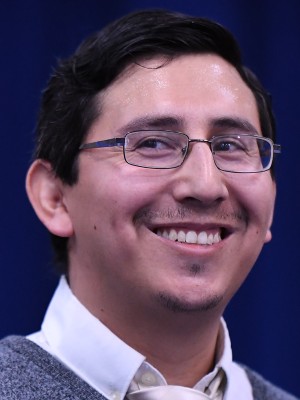
Albert Her Many Horses. Courtesy photo.

Her Many Horses, a music and Lakota Language teacher, was named a national Milken Educator and received an unrestricted $25,000 cash prize. Awarded by the Milken Family Foundation, the annual presentation is part of a nationwide tour that honors exceptional educators for excellence and innovation in education. Her Many Horses is the only recipient from South Dakota this year. 

“Albert Her Many Horses shares a perspective and personal experience with the young hearts and minds he is molding within the very community that shaped him,” said Dr. Jane Foley, Milken Educator Awards Senior Vice President. “Albert’s unique insight and deep understanding of the needs of his students, school and community make him an excellent leader and mentor.”

“Mr. Her Many Horses has all the hallmarks of what constitutes a first-rate teacher: He is an expert in his fields of music and the Lakota language, he is highly adaptable to new technologies and new situations, and he is an exceptional role model for his students and fellow teachers at Todd County Middle School,” said Dr. Joseph Graves, South Dakota Secretary of Education. “His hard work will inspire his students throughout their lifetimes – his dedication to them ensures that.”  

“Congratulations to Bobber Her Many Horses on receiving the Milken Educator Award,” said U.S. Senator Mike Rounds. “Bobber is a leader in the community of Mission and has had a significant impact on the students at Todd County Middle School. He is not only a role model to his students, but for teachers across the state and country as well. This well-deserved award is a testament to Bobber’s hard work, both in and out of the classroom.”

Her Many Horses earned a Bachelor of Arts in music education from Augustana University in 2011. 

He will join other honorees at an all-expenses-paid Milken Educator Awards Forum in Los Angeles in June 2024, where they will network with their new colleagues as well as veteran Milken Educators and other education leaders about how to broaden their impact on K-12 education.  For more information on the Milken Educator Awards can be found on their website.

SGU hosts Christmas Dinner for Elders

ANTELOPE LAKE CAMPUS – The Sinte Gleska University faculty and staff hosted Sicangu grandparents for an afternoon of activities with food, gifts, prizes and a photo shoot with Santa.

Cheryl Medearis opened the afternoon with a welcome address on behalf of Sinte Gleska University. The Elder Christmas Dinner is an annual event organized by the SGU staff and faculty. The gathering is a favorite amongst Sicangu grandparents.

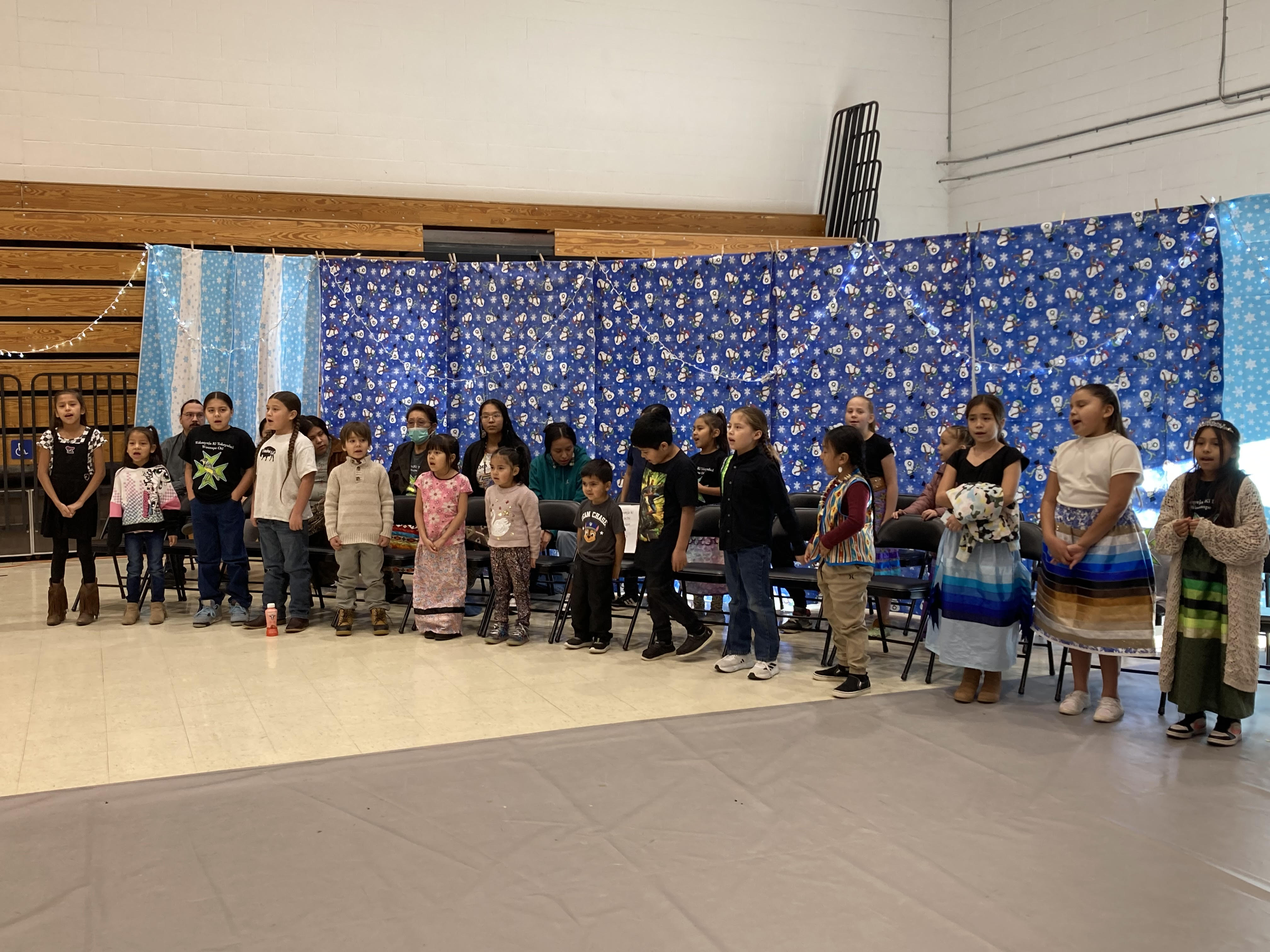
Students from the Wakanyeja Ki Tokeyahci Lakota Immersion School shared Lakota songs to uplift their grandparents. Photo by Vi Waln.

This year, students from the Wakanyeja Ki Tokeyahci Lakota Immersion School offered a group meal prayer in Lakota. They also shared Lakota songs to uplift their grandparents. Staff members Sage Fast Dog, Leland Little Dog, Foster Cournoyer-Hogan, Robert Bordeaux, Shylee Brave, Charlotte Walking Eagle, Talia Trimble, Rachel Janis and Kendra Elk Looks Back accompanied the students.

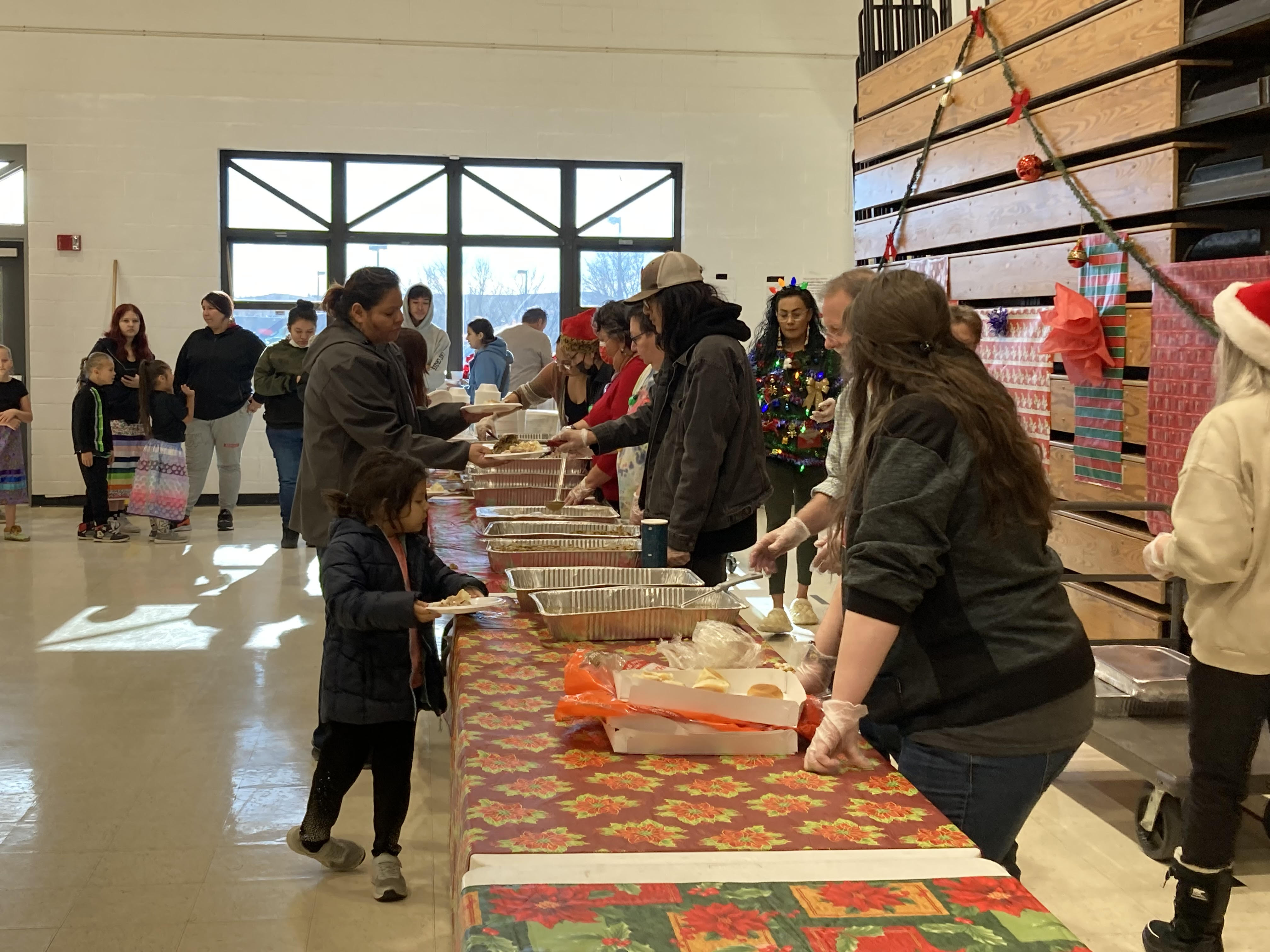
A meal of turkey, ham, mashed potatoes, corn, green beans, stuffing, bread, coffee and lemonade was enjoyed by all who attended. A variety of desserts was also served. SGU staff and faculty carried plates to each table for all grandparents who attended.

Sinte Gleska University staff, students and faculty served many grandparents and family members at the annual Christmas Dinner. Photo by Vi Waln.

Following the meal, the grandparents played several games of bingo. Ted Hamilton was the bingo caller. Winners took home cash prizes. Special guests at the event were grandparents from the White River Health Care Center.

Most elders received door prizes. Many families took advantage of the holiday background available for a photo shoot with Santa Claus. SGU staff also distributed coats, blankets, socks and shoes to grandparents and family members. Pre-lit Christmas trees and holiday tabletop decorations were also given to grandparents. Everyone who attended received a candy bag with peanuts and fruit.

Sicangu grandparents appreciate the staff and faculty of Sinte Gleska University for their generosity in hosting the Elder Christmas Dinner.

Rosebud, Oglala citizens named Native Nation Rebuilders

The Native Governance Center celebrated Native American Heritage Month by naming 22 tribal citizens from the MN-SD-ND region to Cohort 13 of Native Nation Rebuilders.

The new Rebuilders include Lakota representatives SummerRose Last Horse, Dawn Moves Camp, Faith Moves Camp and Ernest Weston Jr. from the Oglala Sioux Tribe. Also named was Alexis White Hat-Kayonnie from the Rosebud Sioux Tribe. Other South Dakota Rebuilders include Burt Dillabaugh (Cheyenne River Sioux Tribe), Marquel Holiday (Yankton Sioux Tribe) and Feather LaRoche (Lower Brule Sioux Tribe).

“This cohort of leaders is remarkable and committed to positive change in their communities. Participating in this program will allow them to forge new connections, gain valuable insights and knowledge, and learn about the rebuilding framework needed to support their nations,” stated Jessica Glidden. She serves as the Native Governance Center Leadership Development Program Manager.

Cohort 13 of Native Nation Rebuilders represents 22 of the 23 Native nations located in Native Governance Center’s three-state region (MN, ND, and SD). Rebuilders cohort 13 shares a common desire to use seventh generation thinking (care for future generations) throughout their work. Many of them also are passionate about working with youth, reinforcing their commitment to the future of their nations.

Cohort members have backgrounds in entrepreneurship, corporate ventures, community infrastructure, cultural revitalization, education, health, government relations, and more. Native Nation Rebuilders are leaders who are passionate about strengthening their nations. Indigenous-led and grounded in Indigenous values, the two-year program helps future Rebuilders develop skills around community engagement, movement building and Indigenized governance practices. The curriculum provides participants with a Native nation rebuilding framework they can use to solve problems and jumpstart their leadership journeys. Rebuilders also design and carry out community action plans that demonstrate what they’ve learned and positively impact their communities. 

Native Governance Center (NGC) staff have made extensive updates to the Rebuilders curriculum over the last few years, ensuring that the content reflects feedback from previous cohorts, NGC’s organizational values, and a variety of learning styles. The curriculum now features updated and regionally focused governance case studies, experiential learning opportunities grounded in community, new speakers, and hands-on activities honoring cultural match. The goal of the Rebuilders program is to equip changemakers with tools and frameworks they can use to help rebuild their nations.

Also named to Cohort 13 were Shelly Davis, Zachery King, Jade Malaterre, Cynthia Poitra and Cedar Savage all representing the Turtle Mountain Band of Chippewa. Téa Drift and Jaylen Strong represent the Bois Forte Band of Chippewa. Cyndy Milda and Carrissa Pickit, both from the Shakopee Mdewakanton Sioux Community. Wendy Spry, Angela Vig and Rita Walaszek Arndt from the White Earth Nation. Andrea Reese will attend from the Leech Lake Band of Ojibwe. And Tawnya Stewart will represent the Mille Lacs Band of Ojibwe.

Tribal Council hears update from Sicangu Co

ROSEBUD – The Rosebud Sioux tribal council heard an update on a Uniform Commercial Code (UCC) proposal which would allow tribal citizens and businesses better access to capital.

Michael LaPointe, of the Sicangu Co. economic development office, shared statistics and other information about the proposed UCC at Rosebud. The proposal will also be presented to the economic development committee for further consideration.

A UCC Financing Statement is a legal document that gives a creditor a security interest in a debtor’s property. It is used to protect the creditor in the event of bankruptcy or other financial hardship. A UCC financing statement is also required for many businesses to obtain loans from banks and other financial institutions. Rosebud does have a commercial code in place under Title Fourteen, but a UCC financing statement with the state has never been approved.

LaPointe also shared statistics which show that a half a billion dollars leaves Todd County every year. Most employed tribal citizens must shop at off reservation businesses to buy the items they need for their household and family. If nothing changes, estimates are that this export of dollars to off reservation businesses will continue to grow at four percent per year.

A goal is to find out ways to keep that money from leaving the reservation and that cannot be done without retail stores and other businesses. Most tribal citizens regularly travel to off reservation business such as restaurants, large variety stores (Walmart, Target), clothing and other stores to buy what they need because these products and services are not available locally. Developing local businesses to serve the needs of tribal citizens in Todd County alone would create over six hundred new jobs.

In addition, statistics from 2019 showed the Rosebud Sioux Tribe having 30,203 people registered as citizens with the enrollment department. An estimated 11,510 of these tribal citizens between the ages of eighteen- and sixty-five-year-olds were unemployed. This put the tribal unemployment rate for 2019 at 75.02 percent.

Also, if Rosebud’s population continues to grow at the current rate, in the year 2040 there would be an estimated 70,513 tribal citizens registered with the enrollment department. If nothing changes, the number of eighteen- to sixty-five-year-olds who face unemployment would be an estimated 31,478 or 88.44 percent.

Partners in Performance (PIP) worked with Sicangu Co to develop a ten-year economic development roadmap focused on plans to expand in the areas of wind energy, bison ranches and local construction. If successfully implemented the roadmap could (1) double the economic growth rate from 2 percent to 4 percent, (2) create 3,000 or more new jobs and (3) increase economic diversification and create economic resilience. PIP also developed a partnership and capability development plan to support the tribe in successfully implementing the economic development roadmap.

Two South Dakota tribes have adopted Uniform Commercial Codes, improving access to financial capital. The Cheyenne River Sioux Tribe has created programs to support financial access and tribal business development. Also, the Oglala Lakota Nation provides loans, micro loans and financing on their tribal lands. The memorandum of agreements these tribes have with the state does not waive tribal sovereignty as all disputes are settled in tribal court. Both tribes now have improved their access to capital and some Rosebud tribal citizens have gotten financing from them to operate businesses in Todd County.

UCC filing requirements for special housing projects and new business in South Dakota are: (1) must be filed with the South Dakota Secretary of State’s Office, (2) must include name and address of the debtor, (3) must include name and address of the secured party, (4) description of the collateral, (5) statement indicating that the financing statement is being filed to perfect a security interest in the collateral, (6) must be signed by both the debtor and the secured party and (7) is effective for five years from the date it is filed.

The November 22, 2023, Rosebud Sioux tribal council meeting can be viewed in it’s entirely on YouTube.

Rosebud hosting meetings to hear comments on hospital compact

ROSEBUD – The RST Health Administration has a few weeks left to hear any feedback from tribal citizens about the compact assumption of the Rosebud IHS hospital.

The tribal council approved RST Resolution 2023-143 on May 17, 2023, creating the tribally chartered entity Sicangu Oyate Health System. The resolution states in part that the tribal council “has decided to pursue entering into an agreement with the Indian Health Service (I.H.S.) under a Title V Compact under the Indian Self-Determination Education Assistance Act (ISDEAA)…”

The tribal council subsequently approved Resolution 2023-239 which appointed a board to oversee the compacting process. Board members include Dr. Donald Warne (Oglala Lakota), Dr. Allison Kelliher (Athabascan), Dr. Darrell Plumage, Bill Snyder, Dr. Monte Bechtold, Scott Herman (RST President) and Lisa White Pipe (Chairwoman of RST Health Board).

Community meetings were held during October and November to hear any concerns tribal citizens have about the tribal pursuing a 638 compact to assume health services provided by Rosebud I H S Hospital. This week, meetings are scheduled for Butte Creek (7pm on 11/20/23), Ideal (7pm 11/21/23) and Upper Crut Meat (7pm 11/22/23). Next week, meetings are on the calendar for Soldier Creek (7pm 11/27/23), Horse Creek (11/28/23 at 7pm) and Sicangu Village (11/29/23 at 6:30pm).

Antelope Community will host a meeting on 12/4/23 at 7pm. The meeting in Parmelee will be held at 7pm on 12/12/23. No additional meetings are on the schedule. All meetings are held in the community buildings.

A handout with potential questions and answers was distributed at past meetings. Tribal officials are present at the meetings to offer a short presentation and to hear concerns from residents. Most of the sessions already completed in other communities were mainly listening sessions with no additional answers to questions posed by people in attendance.

Several Indian Health Service employees who currently work at the Rosebud Hospital have stated they are not being offered any explanation or timeline as to when the tribe will take over health care operations. Some employees have attended the community meetings to be informed about what to expect regarding their jobs and came away with more unanswered questions.

In 2014, the Rosebud Sioux Tribe, Oglala Lakota Nation and the Cheyenne River Sioux Tribe decided to compact health care services in Rapid City. The move saw the Great Plains Tribal Leaders’ Health Board eventually assume operations of the health care contract in 2019. The hospital which served Rapid City residents was recently demolished and the new Oyate Health Center replaced it.

The Oyate Health Center offers urgent care, primary care, optometry services, dental clinic, behavioral health, radiology, pharmacy, physical therapy and laboratory services. Tribal citizens living in Rapid City must now seek emergency and in-patient health care at the Monument Health Center.

For more information on the Sicangu Oyate Health System, please visit with your tribal council representative or call the RST Health Administration office at 605-747-5100.

Rosebud approves Point In Time count

ROSEBUD – The Rosebud Sioux tribal council approved legislation recently to allow a Point In Time count to gather data on houseless citizens on the Rosebud reservation.

According to the HUD Exchange, “The Point-in-Time (PIT) count is a count of sheltered and unsheltered people experiencing homelessness on a single night in January. HUD requires that CoCs [Continuum of Care] conduct an annual count of people experiencing homelessness who are sheltered in emergency shelter, transitional housing, and Safe Havens on a single night. CoCs also must conduct a count of unsheltered people experiencing homelessness every other year
(odd numbered years). Each count is planned, coordinated, and carried out locally.”

“One of the areas where we really want to improve our coverage is tribal communities,” stated Joseph Tielke, who serves as the Continuum of Care Administrator at the South Dakota Housing Development Authority. “Tribal nations and their housing entities are eligible to receive CoC funds.”

“The survey would count anybody who is in a public or private shelter, a transitional housing facility, sleeping outside or in a vehicle, or anybody who is living in a home that lacks the critical utilities,” Tielke said. The survey is mandated to be completed every year during the last ten days in January. An additional survey could also be conducted at the same time to gather information
on reservation homes where one, two, three or more families are living in one house.

The South Dakota Housing Development Authority has never done the Point In Time count on Rosebud. “We’re trying to create meaningful partnerships,” continued Tielke. “In getting the count done in all communities, we need new partners.”

Other tribes who have partnered to do the Point In Time count are Lower Brule, Yankton, Sisseton and Cheyenne River. The count would be organized by the tribe. Interviewers going door-to-door would be tribal citizens who live on the reservation. Also, there are many tribal citizens who worked for the
census in 2020. They have been trained to interview respondents and could potentially be hired to do the Point In Time count. The survey would likely be done on a smart phone app.

“The only people who can do the count on Rosebud are tribal members because they will be the only ones who can build that trust,” Tielke told the council. “This survey is not mandatory and any personal identifying information (PII) is removed.”

“The tribe will be able to get the information from every survey done on Rosebud,” Tielke said. The tribal council approved a resolution to do a partnership with the Housing for Homeless Consortium to do the Point In Time count in January 2024. For more information, please speak to your tribal council representative. Tribal council contact information can be found online.