Lakota youth compose original music for symphony orchestra

SIOUX FALLS – Sy Bordeaux, a 17-year-old Sicangu Lakota musician and composer, had his original music composition performed by the South Dakota Symphony Orchestra (SDSO) at a recent concert.
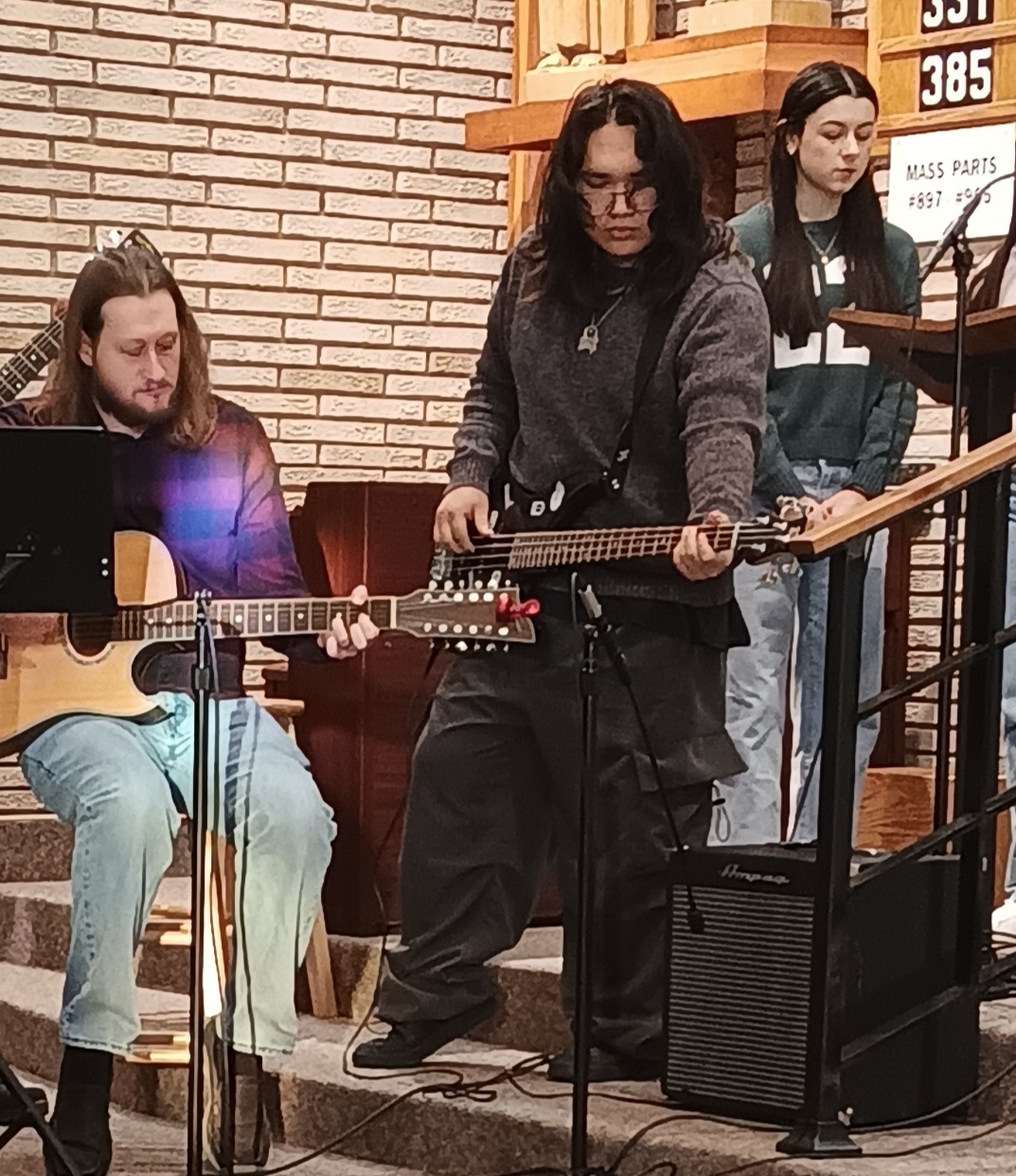
Sy Bordeaux (pictured in center), Sicangu Lakota, on guitar at a recent event.
Photo courtesy of Natasha D. Bordeaux.

The orchestra performed Bordeaux’s original music composition titled “Anxiety” at the Beats and Beethoven Concert held over the weekend at the Washington Pavilion in Sioux Falls. Bordeaux composed the piece when he attended the 2024 Music Composition Academy at Black Hills State University in Spearfish. 

Bordeaux was mentored by Navajo musician Michael Begay, who taught him how to create music for a string quartet. The resultant composition is an intense, heart-stopping musical journey through the “Anxiety” experience.

The orchestra also performed an original composition by Kili Cole, a 15-year-old Lakota cellist of Rapid City. Cole’s piece “Unfinished,” tells the story of the pain and hardships of the Indigenous boarding school era.

Kili Cole is a Lakota cellist. Her original music composition Unfinished was performed by the South Dakota Symphony Orchestra on January 25 in Sioux Falls. Photo courtesy of Instagram

Her Unfinished took influence from an in-progress sculpture by Dale Lamphere, which will be installed in Rapid City, SD in June 2025 to commemorate the lives of Native American children lost at the Rapid City Indian Boarding School (1898-1933). The title Unfinished is in tribute to the ‘unfinished’ lives of those children.

According to a press release, the South Dakota Symphony Orchestra (SDSO) and Music Director Delta David Gier announced complete programming for the January 25, 2025 concerts, which center earth’s changing climate and humans’ ingenuity toward, and compassion for, each other and the planet.

“We welcome this opportunity to share these rich, sonically diverse works – familiar and new – which offer hope and inspiration. Ted Wiprud is instrumental in our ongoing commitment to support young people and we feel it only right to introduce two student composers, Sy Bordeaux (Sisseton) and Kili Cole (Rapid City) who represent the future,” stated Gier.

Both of these works were written in July 2024 during the SDSO Music Composition Academy and premiered by the SDSO’s Dakota String Quartet in September 2024. With a few minor tweaks, the pieces have been adapted for performance by the full string orchestra.

“Gary Antoine (Sicangu guitarist and educator) was Sy’s music teacher,” stated Sy’s Mother Natasha D. Bordeaux. “Gary was the first to put a guitar in his hand last September, and he just excelled at it. A few months later, he is composing symphony pieces! I’m so happy he has found his purpose and his calling. He is now graduating a year early and gearing up for college.”

Bordeaux is a senior at Sisseton High School. He plans to major in music at the University of Utah and aspires to a career in music production. He plays electric guitar and bass.
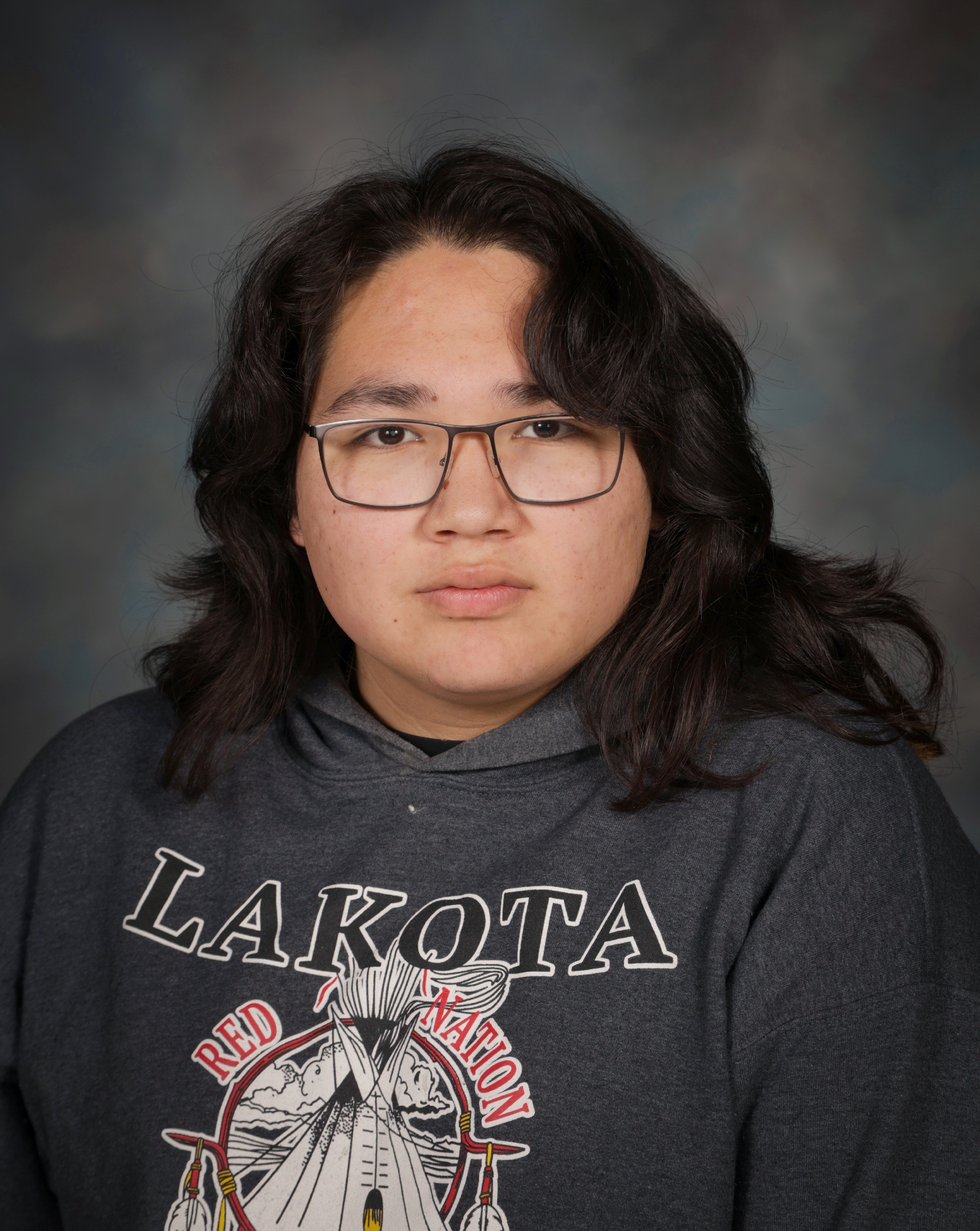
Bordeaux is the son of Natasha D. Bordeaux of Sisseton, the grandson of Earl Bordeaux Jr. of Sioux Falls, Terry and Sharon Brandis of Belle Fourche, and Clarabelle Leading Cloud of White River.
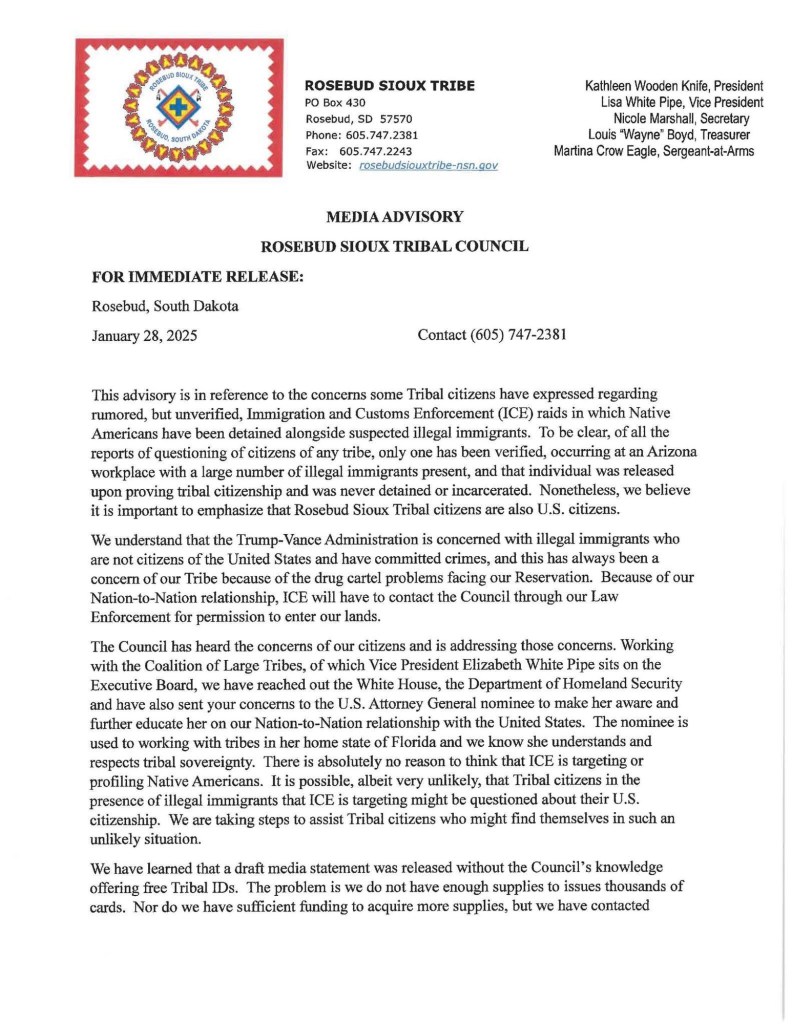

UPDATED 01.28.2025 Rosebud will provide tribal identification cards to citizens

ROSEBUD – President Kathleen Wooden Knife issued a statement regarding POTUS Executive Orders signed earlier this week, including those authorizing raids to expedite deportation of undocumented immigrants.

The statement was posted on the Rosebud Sioux Tribe’s social media accounts over the weekend. The tribe is currently working to authorize funds to allow tribal citizens to obtain identification cards. The statement urged tribal citizens to also obtain other valid forms of identification, including state driver licenses.

The statement reads: “On or about January 22, 2025, and upon taking the oath of office, United States President Donald Trump has issued a series of Executive Orders to order the Department of Homeland Security, Department of Justice, and Department of State to take all necessary action to immediately repel, repatriate, and remove illegal aliens across the United States.

“The Trump administration published in the federal register a notice to expand “expedited removal,” which allows U.S. Immigration and Customs Enforcement to deport migrants without due process; and

“The Department of Homeland Security said it was ending a policy that restricted Immigration and Customs Enforcement agents’ ability to arrest undocumented people at or near so-call sensitive locations, including houses of worship, schools, and hospitals.

“Fast-tract deportations threatens U.S citizens, and that mass deportation would catch far more people that the recently unauthorized immigrants the policy purports to target, and result in the expulsion of legal permanent residents, even U.S. citizens; “Racial profiling could result in US citizens and immigrants who ordinarily wouldn’t be subject to expedited removal being deported. Expedited deportation threatens the due process rights of all US citizens, including Tribal members, and violates the US Constitution and 1868 and 1851 Treaties.

“The U.S. Citizenship and Immigration Services, Handbook for Employers M-274, recognizes that a Native American tribal or community membership document issued by a Native American Indian tribe, or an Alaskan or Aleut community, recognized by the U.S, federal government, is evidence of identity, lawful permanent residence, and citizenship of the United States. The Rosebud Sioux Tribe is authorizing funds for the issuance of Tribal ID cards to all tribal members, and encourages all Tribal members to carry valid forms of identification.

“The Rosebud Sioux Tribe is in the process of assessing the legal effects of the unlawful and unconstitutional Trump administration Executive Orders, and will fiercely defend against any threat to the sovereignty of the Rosebud Sioux Tribe and protect the rights of tribal members.

We will stand in unity and like our ancestors we will persevere.”

Sicangu youth voice concerns to tribal council

ROSEBUD – Tokala Inajinyo Youth Leadership staff expressed concern over the future of the Federal Indian Boarding School Initiative after the US President-elect is sworn into office.

In June 2021, Secretary of Interior Deb Haaland established the Federal Indian Boarding School Initiative. Her official memorandum outlined plans for the Initiative, stating “the Department [of Interior] shall undertake an investigation of the loss of human life and the lasting consequence of residential Indian Board School. The primary goal of the investigation shall be to identify boarding school facilities and sites; the location of known and possible student burial sites located at or near school facilities; and the identities and Tribal affiliations of children interred at such locations.”

Also, S.1723/H.R. 7227: Truth and Healing Commission on Indian Boarding School Policies Act, was sponsored by Senator Elizabeth Warren in May 2023. The National Native American Boarding School Healing Coalition has online resources to support the passing of this Act. If the bill doesn’t pass, advocates believe the project will come to a halt.

In October 2024, President Joe Biden offered a formal apology for the government’s role in forcing children to attend boarding schools during a visit to the Gila River Indian Community in Arizona.

Consequently, grassroots advocates believe a new President of the United States (POTUS) coming into office will definitely affect what happens with the Federal Indian Boarding School Initiative. The future of S.1723/H.R.7227 is uncertain. Chelsea Wilson, Senior Project Manager for the Federal Indian Boarding School Initiative, is working with tribes and organizations to ensure the research gathered over the past 3 years is safely preserved and maintained.

The Tokala Inajinyo Youth Leadership group met with Wilson recently to discuss the Federal Indian Boarding School Initiative research, which is hosted online under Secretary Haaland’s office. There is a possibility when the new POTUS takes office, the information could be removed from the website. Another meeting with Wilson is planned. The group invited the tribal council members to attend this meeting.

The group also requested the tribal council approve a letter of support from the Tokala Inajinyo Youth Leadership program for the Crow Creek Sioux Tribe regarding the recent discovery of the 38 unmarked graves. They also urged the RST President and tribal council to write their own statement of support for Crow Creek.

The Tokala Inajinyo Youth Leadership program was instrumental in overseeing the 2021 return and reinterment of the remains of 9 Sicangu Lakota children who died after being sent to Carlisle Indian Industrial School in Pennsylvania during 1879-1918.

Moore seated as SGU President

Dr. Erica Moore is the new President of Sinte Gleska University. Photo courtesy of SGU.

ANTELOPE LAKE CAMPUS – The Sinte Gleska University Board of Regents have named Dr. Erica Moore as President, two years after the passing of longtime President Dr. Lionel Bordeaux.

Dr. Moore is Boriken Taino (Indigenous Caribbean/Puerto Rico). She was born and raised in New Jersey, has lived in Mississippi, Idaho and has resided in South Dakota for the last decade.

Moore most recently served as the Vice President of Indigenous Institutional Transformation for the American Indian Higher Education Consortium (AIHEC), where she oversaw student success initiatives and advocated and protected data and tribal sovereignty within research.

Previously, Dr. Moore served as the Chief Academic Officer at the Lower Brule Community College. She also served as Director of American Indian Student Center at South Dakota State University. Dr. Moore has a combined 15 years of academic affairs, student affairs and administration experience.

Sinte Gleska University also has four vice-presidents (VP) in the organization. They include Collette Keith, Executive VP, Cheryl Medearis, Academic Affairs VP, Scott Herman, Tribal Nations/Community VP and Cheryl Whirlwind Soldier, General Administration VP.

Board of Regents members are: Mike Boltz (Chairman), Richard Lunderman (Vice-Chair), Dera Iyotte, Wayne Frederick, Jessica Two Eagle (Student Rep.), Wilma Bearshield-Robertson (Elder Rep.) and Brenda I. Farmer (Staff/Faculty Rep.).

Sinte Gleska University is one of thirty-five prestigious Tribal College and Universities (TCUs).

Sinte Gleska University serves students primarily on the Rosebud Indian reservation. For interviews and more information, contact Luti Davis, SGU Development Director, at 605-856-8100.

Pejico opens doors

MISSION – Pejico, the Rosebud Sioux Tribe’s medical cannabis dispensary, accepted online registrations for the first 50 patients to receive a ticket to attend an evening opening.

The online tickets sold out quickly for the November 14 event. Registration required patients to be valid RST medical cannabis card holders. A grand opening was held for all RST medical marijuana card holders on Friday, November 15 at 9am. Per RST law, the dispensary is open to persons aged 21 years or older. In addition, you must have a valid RST Medical Card to enter.

In 2022, the Rosebud Sioux Tribal council enacted the Medical Marijuana Control Ordinance (2022-04). They subsequently approved Resolution 2022-269 legalizing cannabis use within the boundaries of the Rosebud reservation for qualifying patients. In order to qualify for a medical cannabis card, patients must be 21 years old and have a prescription by a licensed physician. Many local residents visited the Online Medical Card website to make an appointment with a medical doctor.

After a telehealth visit with a licensed physician, patients receive a qualifying letter to submit with their application for a medical cannabis card. Patients are responsible for paying all fees surrounding the physician visit. A debilitating medical condition qualifies people for a cannabis prescription. For example, patients who suffer from chronic pain, cancer, terminal illnesses or other medical conditions could be eligible for a cannabis prescription. 

Rosebud Sioux Tribe cannabis possession/use restrictions apply to medical card holders as follows: (1) a person can only carry a maximum of 3 ounces at any given time, (2) you cannot drive, operate or be in actual physical control of a vehicle under the influence of marijuana, (3) you cannot knowingly deliver marijuana to another person who does not lawfully hold a valid medical card and (4) an RST medical marijuana card will not always exempt an employee from submitting to drug testing. Drug testing policies and procedures are at the discretion of the employer.

Local residents noticed the signage upgrade at the Pejico medical cannabis dispensary now open in Mission SD. The building was formerly Stadium Sports. Photo by Vi Waln.

Pejico is located in the former Stadium Sports building in Mission on highway 18, just east of Subway. Hours are Monday through Saturday from 12-9pm and Sunday 12-6pm. The dispensary accepts cash payments only. A social media post over the weekend advertised Pejico’s Happy Hour from 4:20pm-5:20pm with a 10% off products. The dispensary currently offers only flower products.

The RST Cannabis Commission is the regulatory body of the Medical Marijuana Control Ordinance. Currently, the Commission has authorized REDCO (Sicangu Co.) to grow and sell medical marijuana. No other licenses are being issued at this time. RST Cannabis Commission members include Jonathan Odegard, Shakira Rattling Leaf, Deanna Haukaas, Anthony Bordeaux and Shastri Schoon.

Interested persons can apply for an RST Medical Marijuana Card through the Legislative Affairs office located in the tribal annex building in Rosebud, SD. For more information call 605-747-3185.

Pipestone Quarry threatened

PIPESTONE, Minn. – A rock quarry where Indigenous people from across the continent harvest red stone to make ceremonial pipe bowls is threatened by continued petroleum pipeline development.

The existing Magellan pipeline supplied gas to consumers in Minnesota before the permit expired in 2022. The pipeline is owned by ONEOK, a company based in Tulsa, Oklahoma.

A new permit was issued to the Magellan company recently. The permit includes a new re-route which bypasses the sacred site. However, Indigenous activists believe the route is still too close to the quarry of catlinite. The permit requires cultural surveys to be completed before the new route is constructed.

The Red Stone Movement, a collaboration of grassroots organizations and tribal governments, issued a statement recently calling for action to defend the sacred pipestone site. Indigenous people were asked to submit comments opposing the continued development of the Magellan Pipeline route.

The statement also outlines the danger to the site due to the Magellan pipeline, which is owned by ONEOK, a company which manages 50,000 miles of various energy pipelines. “Your water and your land is [sic] under attack due to ongoing extraction and pollution damage” caused by the pipeline. Supporters were asked to submit a letter of opposition to the Minnesota Public Utilities Commission by November 11.

The Pipestone National Monument is an area sacred to countless Indigenous people. It is the only place on Earth where catlinite, which is a brownish-red soft stone, can be found. Indigenous people make regular pilgrimage to harvest the red stone. A permit is required to mine the red stone. Permits are issued by the day, week, month or annual basis and are limited to enrolled citizens of federally recognized tribes. There is no charge to apply, but permit holders must supply their own tools.

Officials of the Pipestone National Monument must consult with 23 tribal nations when considering development on or adjacent to the sacred site. Those tribes are Cheyenne River Sioux Tribe, Crow Creek Sioux Tribe, Flandreau Santee Sioux Tribe, Fort Peck Assiniboine & Sioux Tribes, Iowa Tribe of Kansas & Nebraska, Iowa Tribe of Oklahoma, Lower Brule Sioux Tribe, Lower Sioux Indian Community in the State of Minnesota, Mandan Hidatsa Arikara Nation, Oglala Lakota Nation and the Omaha Tribe of Nebraska.

Also, the Otoe-Missouria Tribe, Ponca Tribe of Nebraska, Ponca Tribe of Oklahoma, Prairie Island Indian Community, Rosebud Sioux Tribe, Santee Sioux Tribe, Shakopee Mdewakanton Sioux Community, Sisseton Wahpeton Oyate of the Lake Traverse Reservation, Spirit Lake Dakota Tribe, Standing Rock Sioux Tribe, Upper Sioux Indian Community and the Yankton Sioux Tribe.

A meeting is scheduled for Monday, November 25, 2024 at a time and location to be determined in Fort Thompson, South Dakota on the Crow Creek Sioux reservation. Follow the Brave Heart Society Facebook page for final details regarding the meeting.

Rosebud hosts October animal clinics

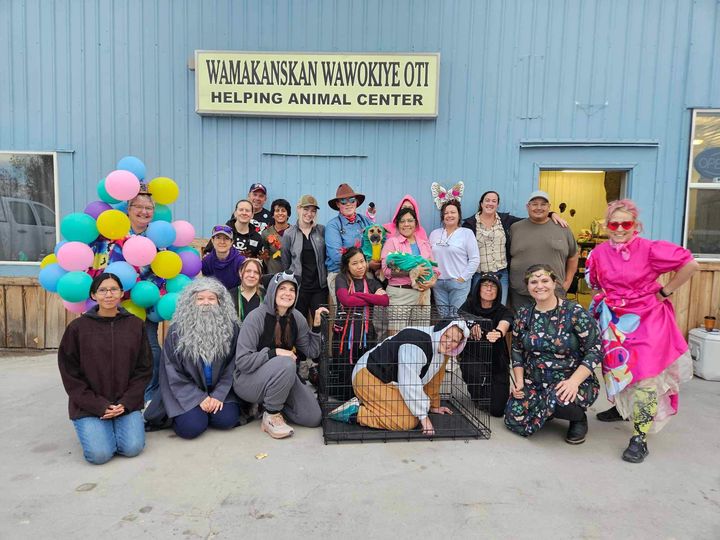
The RAVS 2024 season ended with an amazing trip to Mission SD at the Wamakanskan Wawokiye Oti (Helping Animal Clinic). Photo courtesy of Rural Area Veterinary Services – RAVS Facebook page.

MISSION – Local residents took their pets to the Wamakanskan Wawokiye Oti (Helping Animal Clinic) to receive complimentary medical care by the Rural Area Veterinary Services team.

The October clinic provided medical and wellness services to over 200 family pets. These clinics help animals receive care free of charge. Vaccines, grooming, emergency and surgical services are performed by license veterinarians. They are assisted by volunteer veterinarian students who commit their time by applying to help with these clinics.

According to the Rural Area Veterinary Services site, volunteers are selected based on year in school, prior experience and organizational need. Selection will be designed to provide a balance of experience and skill levels. New volunteers are encouraged to apply. More information can be viewed on their website.

The recent clinics included time set aside to provide spay/neuter surgeries to cats and dogs. Four-legged also received vaccines, exams, deworming, flea/tick medicine and any other wellness care they might need. The volunteer team also tended to sick and injured pets.

Nearly 10,000 animals cared for this year across all communities RAVS teams served. For the past 20 years, RAVS has sent volunteer teams to underserved rural communities where poverty and geographic isolation make regular animal health services unavailable.

RAVS’ veterinary teams have treated more than 170,000 animals, providing a range of services valued at more than $33 million. These services are provided at no cost to the clients or communities they serve. In addition, their field training programs have provided life-changing service-learning opportunities for more than 9,700 veterinary and veterinary technician students and professionals.

The Rural Area Veterinary Services are part of The Humane Society of the United States. These clinics were initially organized by Kathleen Wooden Knife, who was elected President of the Rosebud Sioux Tribe in August 2024. Currently, scheduling the clinics and other events are done by Robbie Clairmont of the Wamakanskan Wawokiye Oti (Helping Animal Clinic).

The Wamakanskan Wawokiye Oti (Helping Animal Clinic) also provides pet food distribution when donations are available. However, to the recent weather disasters in several southeastern states, there will be no complimentary pet food distribution until possibly the end of November or early December. Call the clinic at 605-856-2477 for more information.

Related links:

Bridging cultures and care: Indigenous CSU vet students serve Rosebud Reservation

Groomers Doing Good Deeds: Building a Community, Not Just a Career

Tribal Inauguration Held on Rosebud

Janet Alkire (SRST President), Kathy Wooden Knife (RST President), Cecilia Fire Thunder (former OST President) and Leana Long (Cabinet Staff member) gathered to honor elected officials at Rosebud over the weekend. Photo by Vi Waln.

ST. FRANCIS – Rosebud Sioux Tribal President Kathleen Wooden Knife was joined by other elected officials at a public inauguration held in the Hinhansun-Waphaha Oyanke (St. Francis community).

“As the first woman president of the Rosebud Sioux Tribe, I’m humbled and honored to be here,” stated President Kathleen Wooden Knife. “I’m hoping to make a change. I’m hoping to make a difference. I’m about helping the people. I’m here to help all of us together with the tribal council.”

The Honorable Kathleen Wooden Knife, the first woman elected President of the Rosebud Sioux Tribe, addressed the people who attended the Inauguration. Photo by Vi Waln.

“I was raised by a matriarch. I was raised by a grandma. She instilled in me a lot of the moral and ethical values which I stand by today,” continued President Wooden Knife. She concluded her address with the following quote from Chief Arvol Looking Horse:

We need a great healing and we need a great forgiving but healing can’t begin without forgiveness. We must forgive each other, forgive our loved ones, forgive our friends, forgive our enemies, forgive ourselves. We need to pray even for a person who has done us wrong. In our tiospaye, in our family, when two people fight they are made brother and sister. Forgiveness itself is a powerful medicine. We need forgiveness to create peace. Mitakuye Oyasin.

Rosebud Sioux Tribe President Kathy Wooden Knife was honored by her family. Also honored by their relatives were tribal council representatives Robert Rattling Leaf (Horse Creek), Lila Kills In Sight (Spring Creek), Michelle Hollow Horn Bear (Grass Mountain), Stanley Wooden Knife (Corn Creek), Alvin Bear Heels Sr. (Ring Thunder, Marian Little Thunder (Upper Cut Meat), Chris Eagle Bear (Black Pipe) and Emily Boyd-Valandra (Parmelee). Photo by Vi Waln.

Other tribal officials honored by their relatives included Louis Wayne Boyd, RST Treasurer, along with tribal council representatives Robert Rattling Leaf (Horse Creek), Lila Kills In Sight (Spring Creek), Michelle Hollow Horn Bear (Grass Mountain), Stanley Wooden Knife (Corn Creek), Alvin Bear Heels Sr. (Ring Thunder), Marian Little Thunder (Upper Cut Meat), Chris Eagle Bear (Black Pipe) and Emily Boyd-Valandra (Parmelee).

Featured guest speaker was the Honorable Cecilia Fire Thunder, a former president of the Oglala Lakota Nation and the first Lakota woman elected to that position. The Honorable Janet Alkire, sitting president of the Standing Rock Sioux Tribe also attended the inauguration and offered words of encouragement.

In her keynote address, Fire Thunder encouraged the tribal council members in attendance to educate US Congressmen and Senators about us. Some elected officials in Washington are not aware of the needs of tribes. It is up to our local tribal elected officials to educate the people who have power over annual funding appropriations about the needs of our Lakota people. It is the responsibility of elected tribal officials to lobby for funding increases.

Standing Rock Sioux Tribal President Janet Alkire also addressed the gathering. She spoke about the obstacles she has faced in her 3 years as SRST President. She encouraged tribally elected officials to support one another and to be patient with one another. She also shared teachings from her elders that it is prophecy that more Lakota women are stepping into leadership roles.

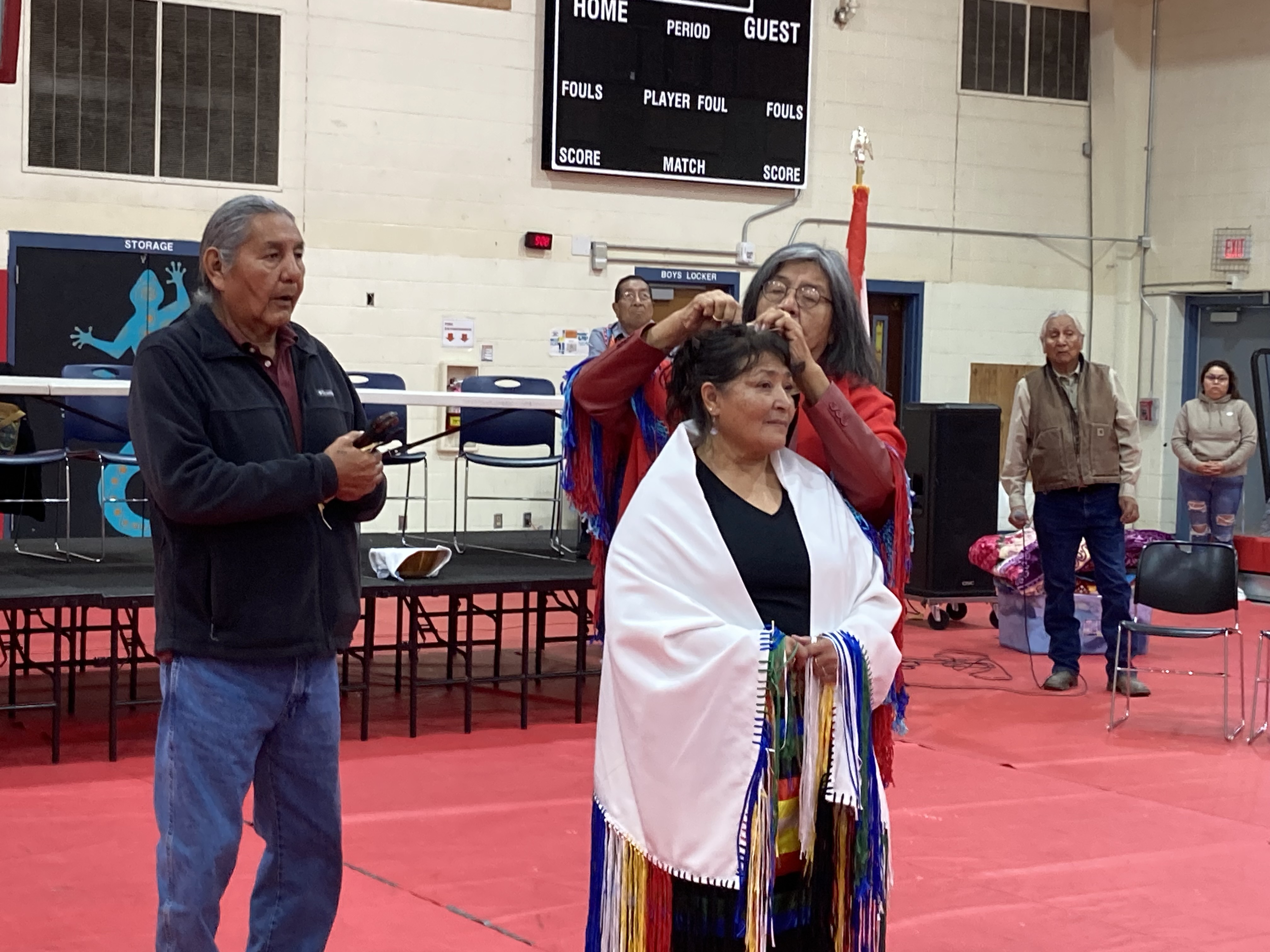
President Kathy Wooden Knife was given the Lakota name Wasu Luta Win by Russell Eagle Bear and Cecilia Fire Thunder. Pictured in the background are Pat Bad Hand, Duane Hollow Horn Bear and Jayden Rose Whiting. Photo by Vi Waln.

The Honorable President Wooden Knife was given the Lakota name Wasu Luta Win (Red Hail Woman). Her family provided an eagle plume, which was tied on by Cecilia Fire Thunder. She was also presented with a knife, a traditional woman’s tool, in recognition of her leadership role. Russell Eagle Bear and Duane Hollow Horn Bear put the knife on President Wooden Knife’s belt.

“Today we honor a young woman who stepped into a role of leadership among our people,” stated Eagle Bear. “Long time ago, the women never left their tipi without a knife because they protect the home and family. Today we’ve kind of forgotten that tradition. But those who follow their traditional ways, they always have a Mila (knife) with them.”

Pat Bad Hand Sr. acted as Eyapaha. A grand entry kicked off the day’s events. The elected officials in attendance and their distinguished guests, were led by veterans Leah Rattling Leaf and Leonard Leader Charge, who posted the Rosebud Sioux Tribal Flag and the American Flag. Local singers offered the Lakota Flag song, Veteran’s song. Prayer and honor songs were also rendered.

A meal of soup, wojapi, fry bread and soft drinks were served. Gifts were distributed to those in attendance by President Wooden Knife’s staff. The inauguration was broadcast live, courtesy of St. Francis Indian School.

RST Election Board schedules hearing

ROSEBUD – The Rosebud Sioux Tribe’s Election Board will hold a hearing to determine eligibility of a candidate who filed for the Soldier Creek council representative seat.

Tribal citizens Tamaleon Wilcox and Norman Running Sr. both filed nominating petitions to run for the Soldier Creek seat. The hearing is scheduled to hear a challenge on the eligibility of candidate Norman Running Sr.

Following the decision of the Election Board on the challenge, eligible candidates will be certified to be placed on the ballot. A Special Election to fill the Soldier Creek vacancy will then be scheduled by the tribal council.

The vacancy was created when the sitting tribal council representative, Kathleen Wooden Knife, was sworn in to serve as RST President last month. There are 2 years remaining of the 3-year term for the Soldier Creek tribal council seat.

The hearing will be held at the Webster Two Hawk, Sr. Annex building at 10am on Friday, October 11, 2024. For more information you may call the RST Election office at 605-747-2381.

Funding will bring electricity to tribal homes

SOUTH DAKOTA – A $71 million investment from the Investing in America agenda to electrify homes in 13 communities across Indian Country will help close the access-to-electricity gap.

Two Lakota tribes will receive a share of this funding to improve services in their communities. The Rosebud Sioux Tribe will receive $11.8 million in funding for this initiative. Another $2 million will go to the SAGE Development Authority, a federally chartered Section 17 corporation created by the Standing Rock Sioux Tribe.  

“Every family deserves to have access to reliable, affordable electricity. Now, with historic investments from President Biden’s Investing in America agenda, we’re honoring our commitment to deliver clean energy to Indian Country to electrify more homes,” said Secretary of Interior Deb Haaland. “This new program is building reliable, resilient energy that Tribes and communities can rely on, and advancing our work to tackle the climate crisis and build a clean energy future.” 

This second and final round of funding from the Bureau of Indian Affairs’ Tribal Electrification Program, is part of an overall $150 million commitment to provide financial and technical assistance to connect homes in Tribal communities to transmission and distribution that is powered by clean energy; provide electricity to unelectrified homes through zero-emissions energy systems; transition electrified homes to zero-emissions energy systems; and support associated home repairs and retrofitting necessary to install the zero-emissions energy systems. In addition, the program supports clean energy workforce development opportunities in Indian Country.  

“Indian Affairs’ Tribal Electrification Program continues to provide Tribes with the assistance they need to ensure their communities have safe, reliable electricity, which is essential to daily living,” said Assistant Secretary for Indian Affairs Bryan Newland. “Working with Tribal governments on developing clean energy sources and bringing the benefits of dependable electricity to their communities is part of our mission of service to federally recognized Tribes.”   

In 2000, the Energy Information Administration estimated that 14 percent of households on Native American reservations had no access to electricity, which was 10 times higher than the national average. In 2022, the Department of Energy Office of Indian Energy issued a report citing that 16,805 Tribal homes were unelectrified, with most being in the Southwest region and Alaska.  

The Tribal Electrification Program advances the Biden-Harris administration’s Justice40 initiative, which sets the goal that 40 percent of the overall benefits of certain federal investments flow to disadvantaged communities that are marginalized by underinvestment and overburdened by pollution, including federally recognized Tribal Nations. To see a complete list of tribes receiving a share of this funding, visit

For more information, visit the BIA’s interactive map for projects in Tribal communities funded through the Investing in America agenda.