World Elder Abuse Awareness Day

06-15-2018

Vi Waln

As Lakota people, we’ve always shown reverence to our elders. Any person who is older than you are is considered your elder. Lakota people at least 55 years old are likely tribal citizens carrying an abundance of our ancestral cultural knowledge. The majority of fluent Lakota speakers are people in this age bracket.

It’s an election year again on the Rosebud. We are already seeing signs posted across the reservation advertising candidate’s names. Many of our candidates for public office campaign on improving conditions for the youth and elders. Yet, there are still young Lakota people taking their own lives. Lakota elders are still suffering in deplorable conditions. No one cares.
 

06.15.18
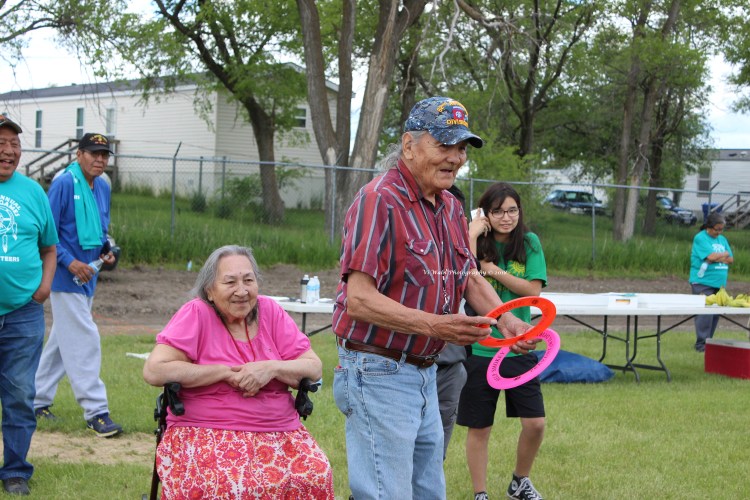
Sicangu Lakota Elders participate in the Annual Elder Games held on the Rosebud Indian Reservation. Photo from the 2017 Games.


Today, we have parents and grandparents sacrificing a great deal to raise their families. Working a full-time job on the reservation is a huge sacrifice, as a majority of our employed people spend 40 hours a week or more at a thankless job. They sacrifice to work at their full-time jobs to financially support their families. There’s also many employed Lakota people financially supporting more than one household. For example, they could be paying the electricity bill for unemployed relatives who can’t find jobs.

Consequently, there are adults who’ve never developed a work ethic. These are our people whom would rather scheme their way through life. They are the ones standing in line at various programs demanding a hand out. The lack of a strong work ethic goes back to generations of public assistance. Depending on public assistance to pay our way through life is showing our children that it’s acceptable to have tribal/state/federal programs subsidize rent, electricity, food, clothing or other necessities.

Of course, we do have a lot of families living in poverty. Yet, there are also unfilled jobs advertised on the Tribe’s website. TECRO is another program where people can apply to work, especially with all the construction projects happening now. Still, it’s a hard fact that many Lakota people cannot pass a drug or background screen.

Some adults won’t qualify for employment due to their drug use. Reservations also have a high drop-out rate. We hear many excuses as to why people can’t complete school. High school diplomas are required for many jobs. With Sinte Gleska University offering GED and college classes, daily roundtrip rides to attend college and student meals, there’s no excuse to work on becoming an employable tribal citizen.

Unfortunately, there are elders living on small amounts of income also supporting adult children and grandchildren. Some of those elders were evicted from their homes last year due to the drug use of adult family members living in the house. Other elders are abused for the fixed income they receive every month. A lot of our older men and women are intimidated by their adult children into handing over their meager resources. The money is then wasted on buying alcoholic drinks, meth, prescription pills or gambled away.

There are also Lakota grandparents raising small children. It’s heartbreaking to see the many Lakota babies who’ve been abandoned by their parents. We all know of grandmas or grandpas whom are financially responsible for grandchildren or even great-grandchildren. When these small children reach their teenage years, many of them put undue stress on our old folks.

Our elders deserve to enjoy their remaining years. Of course, many of them could outright refuse to support their small grandchildren, but it’s also the Lakota way to make sure your family has enough to live. I cringe to think about how our society will be when my grandchildren are the Unci and Lala.

June 15 is World Elder Abuse Awareness Day. We must do more to support our Lakota Elders on the Rosebud Reservation.


Did you like this post? Consider making a donation to help maintain this website. Wopila!

National Children’s Mental Health Awareness Day

May 9, 2018

Vi Waln

Children mental health awareness day

Lots of small Lakota children are being traumatized as you read this. Parents, guardians, grandparents or other caregivers are inflicting trauma on our children every minute of every day. Trauma isn’t just physical abuse. Mental, emotional and spiritual trauma is also child abuse.

There are lots of small children acting out the effects of trauma. For example, there are many children on our reservations that learn how to be a bully in their homes. People responsible for the care of children may often believe they only have to feed, clothe and provide shelter for the small children in their care. They haven’t a clue about how their personal behavior is traumatizing the children in their home.

For instance, there are a lot of Lakota people right now whom are heavily addicted to using large amounts of drugs or alcohol. Substance abuse regularly happens in front of the children in the home. There are also many children who witness extreme levels of violence in their homes. Yelling, physical assaults and adult dysfunction are just a handful of behaviors our children and teens are exposed to every single day. Consequently, these are behaviors which inflict trauma on our youth.

People who have to regularly cuss are also inflicting trauma. There are articles out there right now that encourage the use of cuss words by adults. When people cuss all the time or are unable to carry on a normal conversation without interjecting the F word between every other spoken word, it creates negativity in the home.

Also, when every other word out of your mouth is f***, you can be certain the children and teens in your care will follow the example you’re setting. This is very obvious in the number of small children who call adults “bitch” or other disrespectful names. It’s not funny when I hear a 4-year-old child say f*** you to an adult.

Right this very minute, there are small children home alone. They were not sent to school today. Many don’t have clean clothes. Others don’t have any food in the house because the SNAP card was sold for drugs or alcohol. These are traumatized children who will grow into adults and likely suffer a myriad of issues in their lives.

May 10 2018

The trauma children suffer stays with them. It isn’t forgotten when they reach adulthood. They will likely inflict the same kind of trauma on their own children, perpetuating the vicious cycle we all witness on a regular basis. Our children deserve a healthy childhood in a home with caring, sober adults. Our children deserve to eat a good meal, have clean clothes to wear, as well as look forward to a safe home after school and on weekends. Parents are obligated to help their children grow into healthy adults.

According to the Substance Abuse and Mental Health Services Administration (SAMHSA), adverse childhood experiences (ACEs) “are stressful or traumatic events, including abuse and neglect. They may also include household dysfunction such as witnessing domestic violence or growing up with family members who have substance use disorders. ACEs are strongly related to the development and prevalence of a wide range of health problems throughout a person’s lifespan, including those associated with substance misuse.

ACEs include, but are not limited to: physical abuse, sexual abuse, emotional abuse, physical neglect, emotional neglect, intimate partner violence, mother treated violently, substance misuse within household, household mental illness, parental separation or divorce and an incarcerated household member.”

May 10 is National Children’s Mental Health Awareness Day. We often claim our children are sacred but most of us don’t walk the talk. It’s up to you to raise healthy children. Do your part to break the vicious cycle.


Your donation helps maintain this site

Todd County School District Needs New Leadership


February 27, 2018


Vi Waln

Students currently attending He Dog school in rural Parmelee, SD have been studying for over a year in an unsafe building. Parents were made aware of this issue only by reading an article recently published in the Argus Leader. Since the release of that skewed news report, parents worked hard to have their students moved from the unsafe building.

Several parents and grandparents attended the Todd County School District Board of Education meeting on February 12. They were allowed to voice their concerns, but didn’t receive definite answers to their many questions. Some parents chose to keep their student(s) out of school until the issue of an unsafe building was resolved. Other parents were accused of being “poisonous” by a school board member.

One public response from a school board member attempted to deflect responsibility away from the school district by stating it was the Bureau of Indian Affairs’ (BIA) responsibility to maintain the building since they own it. In reality, it was the administration’s decision to put students back into the unsafe building, as they’ve leased it from the BIA for decades.

Consequently, the BIA issued a report with an “inspection created” date of 11/01/2016 and a “finalized date” of 05/22/2017 outlining a number of safety issues on the He Dog campus. The report addressed He Dog’s bus garage, main building and pump house. An excerpt from the 7-page report states “Main School Building. Two level building. Has fire alarm system. No sprinkler system. Due to age and condition, recommend the building be condemned and demolished.”

Administrators should have allowed the students at He Dog to remain in the modular classrooms they occupied outside of the main building. For example, my Takoja was in 3rd grade last year at He Dog school. When the school year started in August 2016, his classroom was located in a modular building on the south side of He Dog’s campus.

One day my Takoja came home and said his class had been moved into a room in the basement of the main building. It seemed odd to me but I generally don’t give a second thought to the decisions made by the administrators. I figure they are highly educated and paid decent salaries to ensure our children are in an environment where they can learn without their family worrying about their safety. I was wrong.

There were days when my Takoja came home and said his classroom was flooding. Other days he didn’t have school at all because of the flooding in the basement. It really didn’t make sense to me for the students to be in the main building if administrators had to cancel school due to safety issues caused by regular flooding in basement classrooms.

At the February 12 meeting, I was frustrated that the school board attempted to place blame on the BIA for an unsafe building. In reality, they already knew the BIA’s recommendation about the building based on the 2016 inspection report. The report is posted at He Dog school for the public to see. Many of us believe the students should have never been put back into the main building. But again, that’s an administrator decision.

As I sat there listening to the board go back and forth with the parents who were seeking answers, it occurred to me that the students were moved into the main building after the current superintendent was hired. Thus, the students were moved with her approval.

I asked the board to please hold someone accountable. I believe the superintendent is the person with final decision-making authority. So, I also asked the school board to remove the superintendent immediately. The superintendent should be accountable to the parents and community for allowing students to be housed in an unsafe building for so long. Let’s hope none of our students suffer from any health problems caused by being in an unsafe building!

Again, parents didn’t get their questions answered at the school board meeting. The school district does submit press releases to a local newspaper. However, I believe the written account released in the newspaper containing the February 12 meeting discussion will be censored by the superintendent, who has the final say over everything at the Todd County School District. Let’s hope the official meeting minutes accurately reflect what was said!

Again, if you’d like to hear what was actually said at the February 12 school board meeting, you can view the YouTube video.

Most of the He Dog students were moved out of the main building last week. Remember, it was the school district’s choice to put students back in that building. Please remember that the BIA has no say about who is in that building, which they recommended be “condemned and demolished.” As parents and grandparents, we still want someone be to held accountable for committing a criminal act by putting elementary students in an unsafe environment.

Many parents, grandparents, staff and community members are anxious for new leadership at the Todd County School District. July 1 is the beginning of a new contract year. A lot could happen between now and then. Our students and staff will continue to suffer for 4 long months under the current leadership. I encourage you to talk to school board members and request they immediately hire a superintendent who will ensure our students are in a safe environment while they are at school.


Did you like this post? Consider making a donation to help maintain this website. Wopila!
We Must Write Our Own Stories

February 4, 2018

Vi Waln


005


The conservative Argus Leader newspaper sent a journalist to He Dog school in November to do a story on an initiative established through a grant, to increase Lakota language and culture in the classroom. The article was released last month and upset many people. I viewed the article as another example of poverty porn.


Lakota people have been subject to poverty porn for years. When wasicu reporters try to write authentic Lakota news reports, the result is often poverty porn. A classic example of poverty porn was the Dateline episode that Diane Sawyer did at Pine Ridge a few years back. Wasicu reporters and journalists can’t share a genuine Lakota perspective on any topic. They are not Lakota.


These news stories are the result of wasicu journalists being called upon to write our stories. Personally, I was offended that a wasicu reporter was allowed into my community school to do such a negative report on the work being done there. Those of us who work in the journalism field wonder why Lakota reporters are overlooked when it comes to writing news articles on Lakota students attending schools on Indian reservations.


It’s another example of how we are invisible to mainstream society and oftentimes, our own people who live off the reservation. There are many educated, capable Lakota journalists in South Dakota. I’m sure we’re all wondering why one of us wasn’t commissioned to write this story.


We have intelligent tribal citizens living on the Rosebud and Pine Ridge reservations. Many of our tribal people hold advanced college degrees and display a strong work ethic to support their family. It’s a slap in the face for all of us to read one ignorant reporter’s story about failing Lakota children from the Rosebud Indian Reservation.


A group of concerned parents, grandparents, educators, students and community members spoke out at a meeting in Parmelee, SD on February 3, 2018. People expressed their concerns about the inaccuracies of the story. Many of those in attendance emphasized how Lakota culture and language have been a part of the curriculum at He Dog school for a very long time.


In fact, the late Christine Dunham was my Lakota studies teacher when I attended He Dog as an elementary student. The foundation she created at the school has blossomed. Today, there is at least 1 certified teacher who is a fluent Lakota speaker, she incorporates our language and culture into her classroom activities on a daily basis. We also have paraprofessional and support staff who are fluent Lakota speakers.


004


Lakota culture and language in our schools cannot be attributed to just one administrator, like the article suggests. It’s a collective effort of the teachers, paraprofessionals and support staff to incorporate Lakota activities into the daily experiences offered to students at all levels. Yet, the crucial work happening today in Lakota language was not the focus of the report.


For instance, many students participate in drum group by rendering the Lakota Flag song every morning before classes start. This is a cultural activity that’s been going on at several schools for at least a decade. Many of those Lakota students also attend and sing at our ceremonies, a fact that isn’t known to people who don’t attend ceremony at all.


Lakota children are smart. I’ve long believed that the intelligence level of our Lakota students shouldn’t be determined by the wasicu designed assessments our students must suffer every semester. The Argus Leader article states 1 in 10 students at He Dog are below grade level in reading. I’ve learned that the test scores of the Kindergarten students attending He Dog school actually increased from the levels they were at last fall. This is another fact that was not mentioned.


I encourage the parents, grandparents, educators and community members who were in attendance at the February 3 meeting to continue to voice their concerns. If you are a parent of a Todd County student, your help is needed. This grassroots movement is just beginning. This is our school district and we have to get involved to help our children have the best educational experience they can.


Future meetings will be advertised by members of the organizing group. We need you to attend all the meetings they request your presence at. If you want to be involved in changing things at He Dog school, as well as the entire Todd County School District, please come to a meeting.


The group plans to attend the Rosebud Sioux Tribe’s Education Committee meeting on February 7 at 1pm in Rosebud, SD. They also plan to attend the Todd County School Board meeting on February 12 in Mission, SD.


Our children are depending on you to tell the world they are smart Lakota students who should be supported by positive news reports, instead of the classic poverty porn published by wasicu journalists who will never be able to articulate a true Lakota perspective on anything.


Did you like this post? Consider making a donation to help maintain this website. Wopila!
 

Your Anger Will Embarrass Your Child(ren)

January 28, 2018

Vi Waln

Our local schools are in the midst of winter sports season. Basketball teams are busy with their daily practice routines. When teams aren’t in training, they are on a bus traveling to play games against the other schools listed on their schedules. School sports is a time for our students to learn how to play fair and get along with others.


I haven’t been to the Lakota Nation Invitational (LNI) sports event for a couple of years. One memory I have of LNI is how poorly the adults behave during games played in the Civic Center. For instance, one year I sat in an area where I didn’t know anyone to watch a boys’ basketball game. It was a big mistake.


After the game got underway, I was soon appalled at the bad behavior of the adults. They were booing and shouting at the referees. Many had no shortage of cuss words as they discussed amongst themselves what was happening on the court. I spoke out, to no one in general and loud enough for many to hear, about how we were supposed to model good sportsmanship, but no one listened. I left the game at halftime.


I was horribly embarrassed for those high school basketball players. They were out there trying to enjoy themselves at what might have been the biggest event in their life, yet they had to listen to their parents and other relatives holler around and belittle the officials. The loud booing was terrible. Those adults brought shame to their family, school, community and tribe.


Not much has changed. In fact, the bad behavior modeled by parents and other relatives is often magnified when the team is playing on their home court. There are also many coaches who model bad behavior. Some of you are grandparents, yet you still act like angry, undisciplined children at basketball games.


As adults, we are role models no matter what we do. Some of you reading this will think “I never asked to be a role model.” Well it’s time to wake up folks because the behavior you engage in determines the type of role model you are. You’re in denial if you believe your behavior affects no one but you. You are teaching your children how to act.


Our children will behave in the same manner we do when they are adults. For example, some of those parents (and coaches) who’ve modeled poor sportsmanship at LNI now have grown children acting the same way. It’s to be expected that the grandchildren of that negative role model grandpa or grandma will also be booing and hollering at the referees when they are the adults.


I’ve got to emphasize how embarrassing your bad behavior is to many people. When you act up at a game and scream at the referee or boo at the other team, you are showing us what kind of person you really are.


Many people make a conscious choice to carry around their anger. For example, many of our people do nothing to process and let go of their anger. So, it’s to be expected that the anger surfaces when they are sitting in the bleachers watching their children or grandchildren’s team play a losing game.


The repressed anger comes out and is inappropriately directed at the referee. Or their repressed anger might be directed at the other team’s coach. Or the coach is directing repressed anger at the officials. Or maybe adults are having a heated discussion, full of cuss words, with a family member about how much they don’t like the star player of the other team. It’s so inappropriate.

Picture1

So, the next time you want to show off your bad behavior at an elementary, middle or high school sports event, please remember all those young, impressionable minds watching you. Your actions show them how to behave. Please don’t be surprised when your children and grandchildren grow up to act in a way that brings embarrassment to your family.

31589-54376

I really empathize with all of our young, smart, talented athletes. I also feel for the game officials and some school coaches. The coaches have to answer pointed questions asked by young, impressionable players about the poor sportsmanship modeled by the adults.


It’s especially inappropriate to behave badly at elementary and middle school games. Those small children are being giving a lesson on how to behave when they are grown-ups. Please act appropriately!


Our children play these games to learn how to be a good sport. They play to learn skills that will help them get along with other people. Adults who behave badly must stop and think about who is watching. Bad behavior at a public event is conduct unbecoming Lakota people.


Our children watch everything we do. The children you are responsible for usually grow up to be just like you. Please model positive encouragement for the players at games, don’t be that embarrassing adult throwing a tantrum at public sporting events.


Did you like this post? Consider making a donation to help maintain this website. Wopila!

Missing and Murdered Indigenous Women #MMIW

January 22, 2018

Vi Waln

January is National Slavery and Human Trafficking Prevention Month.  Many tend to believe these crimes don’t apply to us because we live on isolated Indian reservations. The truth is our people are just as vulnerable to victimization as anyone else.


This past weekend there were countless women’s marches across Turtle Island. This movement amped up awareness efforts the day after the presidential inauguration in January 2017. Many women are marching in response to the election of the 45th president of the United States, a man who openly displays misogynistic tendencies and has admitted to sexual assault.


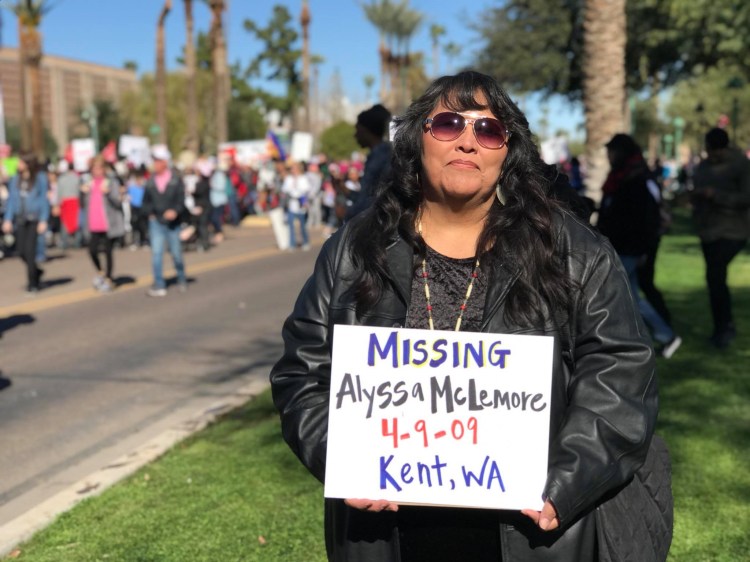
Many Indigenous women joined these marches to bring attention to our missing female relatives, many of whom have likely been murdered. It’s also possible that many of our missing women have been abducted, held hostage and trafficked by evil people. We must make a collective effort to inform our women about the dangers they may encounter.


Phoenix womens walk 01-21-2017
An Indigenous woman holds a sign during the Women’s March in Phoenix, AZ on 01-21-2018. Photo from Facebook


Many missing women have not been seen nor heard from for long periods of time. The list of unsolved murder cases involving Indigenous women continues to grow. These incidents have sparked many Missing and Murdered Indigenous Women awareness campaigns. The hashtag #MMIW is often used to identify these campaigns.


Social media is used by many to share information about missing women. It’s heartbreaking to see photos of our beautiful women who are missing posted on Facebook, Twitter, Instagram and other social media sites. Sadly, many missing women were later found dead by law enforcement or family members. Some murder cases were prosecuted, while others remain unsolved.


In this era of open acceptance of misogyny and racial discrimination by high ranking government officials, its no wonder that instances of missing and murdered women have increased. We are in an era where it has become dangerous for Lakota women to travel alone, even in South Dakota. Again, we have to teach our young women and children how dangerous it can be, both in this state and across Turtle Island.


This brings to mind a story shared with me about places where Indigenous women risk being abducted. Details about this story are generalized to protect the victim. Indigenous people living in South Dakota must always be aware of what is happening around us, especially in public places.


Young women who hitchhike in strange areas are at high risk for abduction. There are no safe places for Indigenous women traveling alone or with small children. Even public truck stops in South Dakota are no longer safe.


For example, recently a young woman was trying to get home and wound up at an unfamiliar truck stop. Soon several men enter the truck stop restaurant wearing masks, the kind that motorcycle riders wear. They sit at a table where the young woman can hear them talking.


The topic of their conversation is what they do with Indigenous women after they abduct them. The young woman grows afraid and calls a relative, who tells her to stay there until someone arrives. She leaves her table to visit the restroom. Upon returning to her table, she takes a drink of her coffee. She immediately feels the effect of an unknown drug. She wants to pass out and struggles to keep her eyes open. She consciously fights the effects of the drug because she knows if she passes out, they will take her.


Soon, she receives a call from the relative who is waiting outside. She runs to get in the car, where she immediately passes out from the drug that was slipped into her coffee.


Be careful when you travel. Never leave your food or drink unattended in a public restaurant. Always tell someone where you are going and when you expect to arrive. Check in with family at every stop you make.


In this evil era of slavery and human trafficking, none of us are safe.


Did you like this post? Consider making a donation to help maintain this website. Wopila!
Our Children Deserve to be Exposed to Healthy Adults

January 15, 2018

Vi Waln


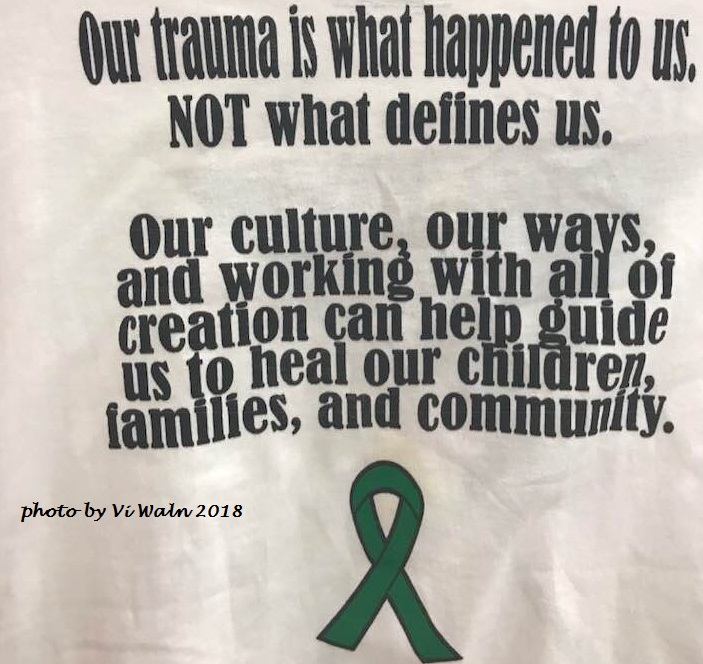
Lakota people have survived generations of historical trauma. Some seek professional help to overcome destructive behavior. There are also many Lakota people healing their inner trauma through ceremony.


However, there are many others still self-medicating with drugs and alcohol. Other Lakota people engage in immature or inappropriate behavior because they don’t understand how trauma affects them. These people are treating others, including our children, badly.


Adults working in our schools carry their unresolved trauma into the school building. Many will unwittingly project the pain of their individual trauma on the students they work with. Local school boards are encouraged to deal with this serious issue by implementing a more thorough screening process of all applicants who have direct contact with students.


Professional school staff includes administrators, teachers and counselors. These staff members are required to have certain credentials before they are hired to work in a school. All school staff members are also required to pass a drug test and clear a criminal background investigation.


Consequently, many parents and grandparents want our local schools to hire emotionally intelligent staff. Our children are in dire need of exposure to adults who are emotionally intelligent. Yet, school boards are still putting professional, paraprofessional and support staff who don’t understand emotional intelligence to work in our schools.


There are many parents actively complaining about the behavior of staff members at our schools. However, it seems as though nothing is being done to resolve the complaints. School administrators defend their staff, even when their staff are in the wrong. When I worked in a local school, I witnessed the bad behavior exhibited by many staff members.


An example of bad behavior is when an administrator, teacher, paraprofessional or support staff member unofficially determines that a child is a “problem.” The unofficial determination in the adults’ mind affects every future interaction they have with the student. For instance, the employee forever judges the student as a “problem,” giving up any faith in the learning ability of the student.


Body language is a way to gauge what is going on inside another person. Those of us who watch body language closely, can easily see how students are judged by watching how the principals, teachers, paraprofessionals or support staff react.


For example, the facial expression of an adult visibly changes when they see the “problem” student in the hallway or when the student enters the classroom. Our children are smart, they know when an administrator or a member of the teaching or paraprofessional or support staff has labeled them as a “problem.” Most of the time, the student will work hard to live up to that negative label they’ve been given by the school employee. It’s a vicious cycle.


Another example of body language I witnessed happened when I went into a local school recently to visit with an administrator. While I was in the office, a staff member came in with a very surly look on his face. He didn’t smile or say hello to either one of us, he just dropped a piece of paper on the principal’s desk and walked out. He looked pure miserable to me.


The obvious look on his face showed me that he didn’t want to be there. The incident made me regret the choice of school my Takoja picked to attend. It made me wonder if all the staff members’ faces looked like his. I felt bad for our children, who suffer having to look at adult faces like that every school day.


Adults who want to work in schools need lots of training. Specific training should be required in the effects of trauma. Other in-service must be offered in emotional intelligence because when you have staff members who lack this crucial skill, the students have zero faith in them. The student will continue to challenge the staff member and then laugh at the bad behavior they’ve provoked in the adult.


Our schools must also get serious about employing alcohol and drug free individuals. We live in a very small world and our children know which school employees are using drugs and which ones are heavy drinkers.


Many parents would like to see every staff member submit to a breathalyzer before they can clock in. We would feel a lot safer if we knew for sure that staff members aren’t showing up hungover at school. We would also like to see policies updated to have more frequent drug tests for all staff, as well as school board members.


Our students must walk through a metal detector when they enter the school building every morning. It’s too bad there isn’t a detector which school staff can walk through to measure their level of emotional intelligence, or their tendency to judge our children, or if they have alcohol and drug residual in their body.


Our children deserve to be exposed to healthy adults to help them grow into the tribal leaders they are destined to be.


Did you like this post? Consider making a donation to help maintain this website. Wopila!

Our Ancestors Live In Our Youth

January 2, 2018

SBP
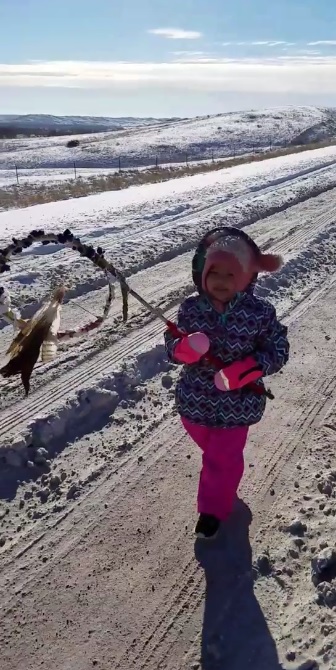
Sophie Brings Plenty was the youngest Lakota in the Wounded Knee Survivors Run. The run is held to remember the massacre survivors who fled north after their relatives were killed in 1890 by the 7th Cavalry.  Photo from Facebook.

By Vi Waln

The resilience of our ancestors is found in our youth. It was emotional to watch the video of Sophie Brings Plenty running on a snow packed road, carrying an eagle feather staff in the Wounded Knee Survivors Run. Indigenous young people were also a part of the Dakota 38+2 Memorial Ride, the Water Walk to bring awareness to Missing and Murdered Indigenous Women and the ride to remember the Wounded Knee Massacre.

Our people have survived with the effects of historical trauma for centuries. Consequently, there are still many of our people who don’t value education. Yet, education is what helps us learn how to heal ourselves of intergenerational trauma.

Education doesn’t always mean attending the schools built by the wasicu. But we do have Indigenous health professionals who are working with our young people to help them overcome their trauma. For instance, Dr. Darryl Tonemah (Kiowa/Comanche/Tuscarora) is a psychologist who works with adults and children in numerous communities on Turtle Island. We appreciate his sacrifice in earning professional credentials. He uses his education to help our people better understand and overcome the effects of trauma.

We would do well to educate ourselves by learning about our ancestors and embracing what they stood for. Our ancestors fought and died so we could be here today. They also carried historical trauma but they never gave up. We have to embrace our cultural heritage as a way to educate ourselves on how historical trauma affects our daily lives.

Healing from intergenerational or historical trauma isn’t going to come from a pill prescribed from an Indian Health Service physician. Individuals must work on themselves to heal from the pain carried in their DNA. Attending the ceremonies still being held in our homelands is one way to heal.

Prayer is important when we are walking the path of healing. Many of us are taught not to pray for ourselves as many believe we should only pray for others. Still, I encourage you to pray for yourself every single day.

I’ve learned to pray for myself because I have to heal myself so I can be an example for people who don’t understand why they are the way they are. When we suffer from historical trauma, we will often turn to substance abuse to numb our pain. Many of our young people are severely traumatized but they don’t really understand it.

It’s up to the adults to show our young people the healing path. We can do that by being a positive role model. Yet, it’s hard to be a positive role model when you are an adult who doesn’t understand what historical trauma is. Again, we have to educate ourselves on what trauma is and how we can move forward to heal. Once you understand why you are the way you are, you can’t go back. You can only move forward into wellness.

I am truly grateful to all our relatives who continue to bring awareness to historical trauma by riding, running and walking every December, often in subzero temperatures. Wopila for remembering our ancestors executed in the 19th century by the 7th Cavalry and President Lincoln. Wopila for praying for our Water. Wopila for praying for the Indigenous women who are missing and those who’ve been murdered. You are good relatives setting a positive example for our children. We can heal!

Did you like this post? Consider making a donation to help maintain this website. Wopila!

Donate Button with Credit Cards

Black Friday, Trauma and PTSD

045

November 24, 2017

Vi Waln

Today is Native American Heritage Day in the United States. It’s also one of the biggest shopping days in our modern commercial society. Customers are getting a jump start on Christmas shopping by cashing in on Black Friday sales.

When you live on an Indian reservation marked by abject poverty, Black Friday deals are often limited to just viewing the photos of the trending products advertised on television or the internet. November and December are just like any other time of the year for many living on Indian reservations; people struggle to pay utility bills and buy food just like they do every month. In many cases, there is nothing left to purchase Christmas gifts or food for a big dinner.

November is designated as Native American Heritage Month. This is also the time of year when our historical or intergenerational trauma is triggered. We will remember many traumatic events over the coming weeks.

Several historical dates are approaching in which our ancestors were slaughtered by the US military forces. How ironic for the US government to declare Black Friday as Native American Heritage Day when it coincides with the start of some of the bloodiest anniversaries in our memory.

For example, on November 27, 1868, Lieutenant Colonel George Armstrong Custer attacked Chief Black Kettle’s band of Cheyenne near the Washita River in Oklahoma. Black Kettle had been promised safety by the nearby Commander of Fort Cobb. The massacre resulted in the death of the Chief and 103 of his people, many of which were women and children.

Another event in our collective memory is the November 29, 1864 massacre of Cheyenne and Arapaho people at Sand Creek in Colorado. Most of the people killed were women and children. Soldiers also mutilated many bodies and paraded through nearby towns displaying the bloody genitals of women.

Back then, mutilated body parts were called redskins, since they were freshly stained with the victims’ blood. There were often posters advertising cash payments to people who turned in fresh redskins. Today, the world knows redskins as a football team’s mascot. They can’t understand why we are offended.

December is a traumatic month for the Lakota/Dakota/Nakota people. Chief Sitting Bull was murdered on December 15, 1890 on the present day Standing Rock reservation by Lakota police officers. In addition, President Lincoln gave the order that resulted in the mass execution of 38 Dakota men in Mankato, Minnesota on December 26, 1862.

And the most infamous massacre was at Wounded Knee on December 29, 1890, when the 7th Cavalry murdered Chief Big Foot’s band and left their bodies to freeze after a blizzard hit the area. The murdered Lakota were buried in a mass grave that is now visited by hundreds of tourists every summer.

Even though the government recognizes modern-day tribes by designating November as Native American Heritage Month, that honor means nothing to many of us who experience post-traumatic stress disorder (PTSD) deep in our genes. Consequently, there is an upswing of substance abuse during the last 2 months of the year. Many of us believe that increased drinking and drugging is due to the PTSD carried in our collective memory.

We can overcome the effects of historical or intergenerational trauma. It takes an effort by the individual to recognize trauma and begin the hard work to release it. Letting go of trauma isn’t easy and it can be extremely painful. Yet, it’s the only way we will heal.

Many of us are in denial about the effect historical or intergenerational trauma has on our family. If you look at today’s society, there are young people and children suffering horribly on our reservations. The majority of this suffering is likely caused by the trauma we carry in our collective memory.

As long as we do nothing to heal the trauma we carry, our children will continue to be abused, sexually molested and taken away from us by state sanctioned social workers. Our refusal to heal will result in more intergenerational trauma for our descendants.

I can’t tell you to heal, you have to do that on your own. We all have the strength to overcome the obstacles in front of us to begin walking the path to healing. Lakota prayer and ceremony have healed many of us. When you make a conscious effort to work on healing the historical trauma you carry, it will have a positive effect on your children and grandchildren.

Ask for healing in your daily prayer and then be ready to embrace it.

Did you like this post? Consider making a donation to help maintain this website. Wopila!
Donate Button with Credit Cards

Pay Attention To The Red Flags

November 19, 2017

By Vi Waln

silentwitness3

Statistics tell us that Native American women are sexually assaulted at a much higher rate than any other group. Assaults against Indigenous women are not limited to rape. There are countless women out there suffering from sexual harassment. In addition, too many Lakota women suffer from mental, emotional, physical and spiritual abuse inflicted by their romantic partners every single day.

Men, women and children now living on our reservations are victims of physical, mental, emotionally, sexual and spiritual abuse. Much of this abuse is rooted in intergenerational or historical trauma. The White Buffalo Calf Woman Society on the Rosebud Reservation offers services to help both male and female victims. Despite the many victims, I want to focus on men who abuse women.

Unfortunately, the majority of men have forgotten the teaching that women are sacred. Even in thought, women are to be held sacred. If you don’t understand what that means, you can look to the story passed down by our Lakota ancestors about the coming of Pte San Win (White Buffalo Calf Woman) and the Cannunpa she gifted us. In short, the story is about a man who paid with his life after having a bad thought about Pte San Win.

Women are the givers of life. In Lakota society, women own the home and nurture their families. Today, many women living on Indian reservations are financially supporting a household of people. Women also care for extended family members. Still, we continue to be abused on many levels by the men in our lives.

There are Lakota men living on our reservations who regularly display misogynistic behavior. As a result, heterosexual women must be careful when choosing a romantic partner. Women must put their own personal safety first.

When you look around our reservations, you will see many couples getting serious about one another very quickly. These couples might move in together or publicly announce an engagement soon after meeting. It isn’t healthy behavior, yet many view it as normal.

Many women who found the strength and courage to leave a violent relationship can testify to the abuse they suffered. They will tell you about how the abuser said all the right things in the courtship stage of the relationship. He may have sympathized with the woman about a serious illness, or her problems at work, or the issues she might have with children and other family members. Abusers wear the honeymoon mask well; they know how to say all the things women want to hear.

When a woman is falls in love with an abuser, she will overlook her own intuitive red flags about his behavior. She will also ignore the advice of family and friends. Women who might come to her with stories about how the man she is involved with is a violent abuser, are viewed as jealous or even spiteful. She truly believes the man has changed for the better since his last abusive relationship.

Yet, nothing could be further from the truth. He hasn’t changed. Abusers who haven’t been through a treatment or anger management program will continue to hurt their partners on many levels. He can profess to love you and still beat the heck out of you. He might even kill you.

There is a reason he was single when you met him. Single men over the age of 35, who have children with one or several women, are the type we need to stay away from.

Many women watch with heartbreak when a good friend gets romantically involved with a violent man. But we refrain from telling her the details of the violent incidents in his past because we risk bringing harm to ourselves or our family. We make a choice to allow the woman to learn for herself how abusive he can be. We also pray she is not murdered during the course of the relationship.

Ladies, please take an honest look at your relationship. Pay attention to the red flags because they are never wrong. Maybe you could ask the man you’re involved with, the real reason why he left his last 2 or 3 or 4 relationships. Watch carefully his reaction to questions about his former partners. You also need to know if he’s financially supporting his minor children. It’d be great if he had a job where he earned enough money to financially support all of his children and help you pay your bills too.

There is only one of you. You, as well as your children, have a right to be safe in your own home. Please be careful about the man you choose to be your partner.

Did you like this post? Consider making a donation to help maintain this website. Wopila!
Donate Button with Credit Cards