Children are still in cages

migrantchildren960
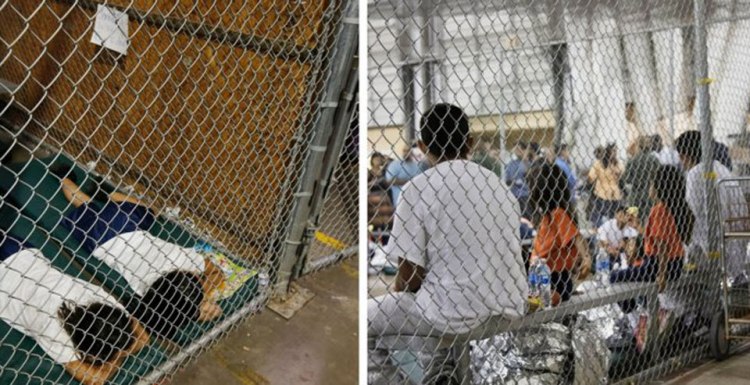
Children kept in cages by Trump administration. AP photo.

This week, the United States of America is celebrating Christopher Columbus, the lost Italian who has long been credited for the discovery of the North American continent. Even though Columbus landed on some island in the Bahamas in 1492, he is still lauded in most history books as the European who discovered America.

In South Dakota, the second Monday in October has been designated as Native American Day since 1990. Still, many non-Native Americans will overlook the fact that the state legislature changed the holiday from Columbus to Native American. Perhaps it’s out of ignorance that they refuse to acknowledge the change of the holiday name. Or maybe it’s because Christopher Columbus will always be their hero.

The working people on South Dakota’s Indian reservations probably don’t give a second thought to what the day is called, they enjoy the holiday as a paid vacation day. Many people in South Dakota have also forgotten that the late Governor George Mickelson asked the state legislature to declare 1990 as a Year of Reconciliation.  Yet, there has not really been any reconciliation between the State of South Dakota and the tribal citizens living on the nine reservations.

Contemporary tribal citizens are making a conscious choice to call themselves by the names used by their ancestors. For instance, many people at Rosebud prefer to be called Sicangu Lakota instead of Rosebud Sioux. In addition, other states in this country are changing the name of the Columbus Day to Indigenous Peoples Day to recognize the struggles we continue to suffer as rightful residents of Turtle Island.

Some prefer Indigenous Peoples Day because it connotates what we’ve known forever – our ancestors were thriving on Turtle Island long before Columbus stumbled onto an unnamed island in the Bahamas. Oral tradition tells us our long-ago ancestors emerged from Wind Cave. But American history books continue to confuse modern day Lakota students by perpetuating the fallacy that our ancestors walked across an ice bridge to settle here.

Over the weekend there were many celebrations of Indigenous Peoples Day across this continent. Parades were held in many cities to remind the descendants of all who immigrated to this continent that Indigenous people have always been here. We are still strong in our cultures and ceremonies. Indigenous children all across Turtle Island are growing up immersed in their own culture and attending ceremony on a regular basis.

Yet, there are many of us who see no reason to celebrate Indigenous Peoples Day or Native American Day. The choice to not celebrate a holiday initially declared to acknowledge a lost Italian – and later the Native American or Indigenous people he attempted to annihilate – is personal. It’s great to have a paid day off for the working people. But I don’t feel good about celebrating Native American or Indigenous Peoples Day when there are cages full of brown children at the borders of the United States.

Our ancestors were thriving when Columbus landed on that unnamed island in the Bahamas. It’s said our ancestors welcomed the immigrants with open arms; providing shelter and food when they had none. Look where our generosity got us.

Today there is no attempt at reconciliation in South Dakota. Instead, our people continue to be racially profiled when we travel to the sacred HeSapa. Wasicu cops watch for license plates from counties designated as Indian reservations and look for any reason to stop our people. Our children continue to be abused in the state-controlled social services system.

The Indigenous people of America are still referred to as “merciless Indian Savages” in the 1776 Declaration of Independence.

I can’t celebrate any holiday when there are still countless Indigenous children dying in American-built cages.


Vi Waln (Lakota) is an award-winning Journalist. She can be reached through email vi@lakotatimes.com
Boarding School Survivors Healing Day at Rosebud

Boarding School Survivors Healing Day at Rosebud
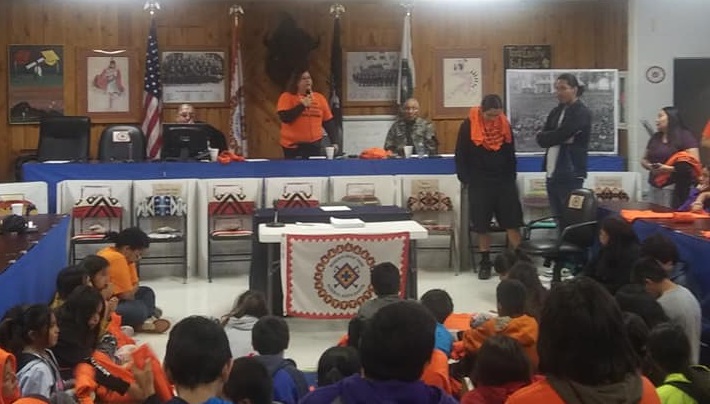
On September 30, 2019, Lakota students wore orange t-shirts printed with I survived boarding schools now I must re-remember. Facebook photo.


ROSEBUD – Tribal citizens organized an event to acknowledge the suffering some survivors of boarding schools lived through on the Rosebud Reservation.

Wokiksuye naha Wayuonihan was held in the tribal council chambers for contemporary boarding school survivors. The event also remembered students who never came home after leaving for boarding school. President Rodney Bordeaux issued an Executive Proclamation designating September 30 “as a day of healing for all those members of the Rosebud Sioux Tribe that survived the Boarding School era and for those tribal members that never returned home.”

The proclamation also read “In 1900 there were approximately 20,000 children attending the schools and by 1926 the number of children increased to 60,889. The state of South Dakota had a total of 23 boarding schools through the state. The Bureau of Indian Affairs, St. Francis Mission and Bishop Hare home for boys were three of those schools that were built on the Rosebud Reservation.”

“We acknowledge that our relatives who attended these schools have their own personal accounts and experiences during their time of attendance. We also acknowledge the lives of our relatives that were lost during their time attending school.”

“We want to honor these individuals for their resiliency and strength to persevere during this time to ensure our nation continues to exist. We want our future generations to understand the hardships for our relatives but to also see the power we carry as people to overcome adversary and remain true to our Lakota ways. Today we begin our healing journey here in Sicangu country by acknowledging our history in connection to the boarding schools and honor our relatives.”

The event was coordinated by Toy Lunderman and Sunrise Black Bull. They chose September 30 because it was the day in 1879 that the first group of Sicangu children left Spotted Tail Agency to board a train for the week-long trip to Carlisle. Sadly, there were many children who got sick and died while at the school. They were buried in a cemetery on school grounds.

The following Sicangu children are buried in Carlisle, Pennsylvania:

Dora (Her Pipe) Brave Bull, a 16-year-old female student who arrived at the school on 10/06/1879 and passed away on 04/24/1881.

Ernest Knocks Off-White Thunder, an 18-year-old male, who arrived at the school on 10/06/1879 and passed away on 12/14/1880.

Lucy Pretty Eagle (Takes the Tail), a 10-year-old female, who arrived at the school on 11/14/1883 and passed away on 03/09/1884.

Warren Painter-Bear Paints Dirt, a 15-year-old male, who arrived at the school on 11/30/1882 and passed away on 09/30/1884.

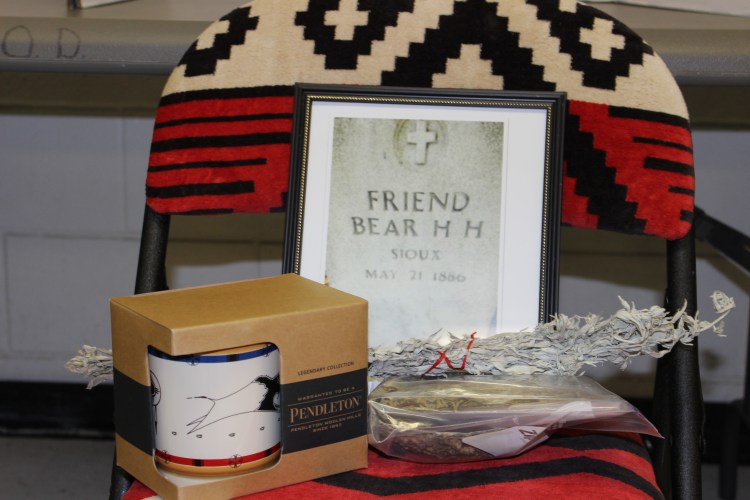
Friend Hollow Horn Bear, a 17-year-old male, who arrived at the school on 11/14/1883 and passed away on 05/21/1886.

Young Eagle-Foot Canoe, a 14-year-old male, who arrived on 11/14/1883 and passed away on 06/28/1886.

Dennis Strikes First- Blue Tomahawk, a 12-year-old male, who arrived on 10/06/1879 and passed away on 01/19/1881.

Rose Long Face, an 18-year-old female, who arrived on 10/06/1879 and passed away on 04/29/1881.

Maud Swift Bear, a 15-year-old female, who arrived on 10/06/1879 and passed away on 12/14/1880.

Alavan or Alvan (One That Kills Horse), a male who passed away on 03/22/1881.

Boarding School Survivors Healing Day at Rosebud 2
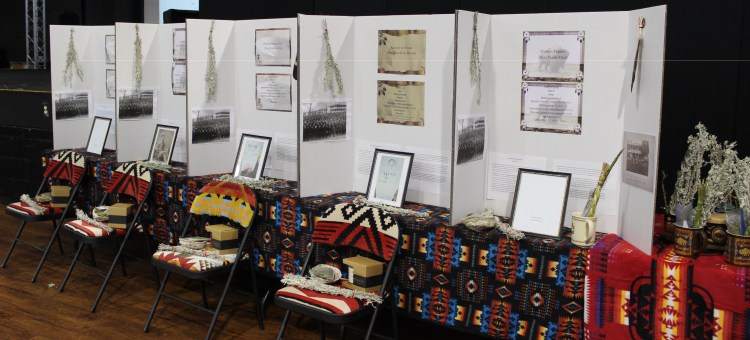
Lakota memorials for children buried in a Carlisle, PA cemetery, were displayed at a 2016 meeting between tribal officials from the Rosebud and Northern Arapaho tribe and Department of Defense/Army officials. Photo by Vi Waln.

The Sicangu Youth Council and the Tribal Historical Preservation Office began working on having the remains of the children buried in the Carlisle cemetery returned to Rosebud in 2016. The Sicangu Youth Council and the Tokala Inajinyo Suicide Prevention Mentoring Program created a display memorial for each child. Each memorial included photos, a Pendleton covered folding chair, an abalone shell and sacred herbs. The memorials were on display in the tribal council chambers on September 30. Officials continue to pressure the Department of Army to allow the remains of these students to be returned to Rosebud. All of the Lakota children buried in the Carlisle cemetery are remembered in ceremony.

The Rosebud Sioux Tribe’s Historical Preservation Office, St. Francis Indian School, RST Diabetes Prevention Program and Inyan Hocoka Tipi Ki Family Resource Center helped make the event a success. Students and staff from SFIS, He Dog School and Todd County School District attended the event. A student drum group sang honor songs. A meal was provided by SFIS.

Peter Gibbs of the RST Historical Preservation Office was honored for all the work he has done to bring the remains of the children buried at Carlisle home to Rosebud.

“We plan to have another event next year in a larger venue,” stated Toy Lunderman. “We also want to create some smaller gatherings through the year just for the survivors for them to enjoy each other, share, cry, smile, laugh and most importantly, heal.”


Vi Waln (Lakota) is an award-winning Journalist. She can be reached through email vi@lakotatimes.com

Hate Speech

Lakota people have different definitions of what they deem as hate speech. Most of us living on Indian Reservations experience hate speech, either in person or online. Social media has empowered those who thrive on hate. Still, the majority of social media users regularly posting hateful speech are cowards at heart.

I did an informal poll on social media by asking my friends to define what they believe is hate speech. All of the answers were based on how Lakota people are treated by the wasicu when they travel off the reservation. Sometimes remarks made by the wasicu are ignorant and most of the time hateful speech is actually fear-based.

I’ve learned there are only two emotions: love and fear. All the good feelings and acts of kindness come from love. The negativity we all experience in life (the bully, anger, violence, racism, discrimination, etc.) stem from fear. Hate is basically fear. It doesn’t matter what we are talking about – maybe it’s a person, an idea, the government or something else – we tend to hate what we fear.

Our ancestors understood love. This can be seen in how the camp took care of everyone. There were no homeless people. There was no hunger (unless it was a time of famine when everyone went hungry). Our virtue of generosity stems from love.

Christianity is a fear-based religion. The Catholic church teaches that when a follower commits a mortal sin, they’re going to hell when they die. The fear of an afterlife in hell was systematically instilled in a majority of Indigenous people. Many ancestors gave up our Lakota way of life, as the clergy said they would go to hell if they continued to hold ceremony. Christian agents worked to devastate our spirituality by preaching fear.

Christianity and the bible continue to encourage hate speech among our people. Last month, an Oglala tribal citizen spoke out against the same sex marriage ordinance recently adopted at Pine Ridge. She said:

“This law [same sex marriage] is a moral sin, it is unnatural, ungodly and the most gruesome, repulsive act. It is an abomination unto our Lord God of the Bible. We are not dogs; we are humans and we are created by the most holy God.  In Genesis, God created man and woman. And this is the design that God planned for men and women, he told them to replenish the earth. Homosexuality falsifies God’s design. In Leviticus 20:13 if there is a man who lies with a male, as those who lie with a woman, both have committed a detestable act, they shall surely be put to death and their blood guilt is upon them. The Lord God said defile not yourselves in any of these things. Nations are defiled. Those that God cut off therefore he said I will visit the iniquity of man and he said that the land will spew you out of this land. The severe consequences of men laying together, women laying together, there’s severe consequences in that. They shall surely be put to death and their blood guilt is on them.”

This example shows us that hate speech is being uttered by our own Lakota people. Hate speech, like the words spoken by the Oglala tribal citizen, is everywhere. It even comes from our own relatives.

I appreciate the legislation recently approved by the tribal council at Pine Ridge approving same sex marriage. I also applaud the legislation passed by the tribal council banning hate speech. This legislation ban means that when Lakota people come to verbalize their inner fear of our Two Spirit relatives at a public meeting, tribal officials can stop them from speaking their hate out loud.

index


Vi Waln (Lakota) is an award-winning Journalist. She can be reached through email vi@lakotatimes.com

Cannabis can end disease and poverty

048
White Plume Hemp Harvest was held on September 20. Photo by Vi Waln.

I attended the White Plume Hemp Harvest near Wounded Knee creek on Saturday. It was a perfect day to be outside and visit with friends. A prayer of gratitude was offered for the Hemp relatives that would be harvested for medicine. It was an awesome day in the sun witnessing an absolutely legal harvest of mature hemp plants in Oglala Lakota County, South Dakota.

Alex White Plume has been growing hemp for decades. Initial crops were confiscated by federal agents, as hemp was considered an illegal drug for the miniscule amount of tetrahydrocannabinol (THC) the plant contains.

Cannabis plants include both marijuana and hemp. Both types contain cannabidiol (CBD) and tetrahydrocannabinol (THC), which are natural compounds of the plants.

Industrial hemp, which was declared legal when the federal government passed the recent Farm Bill, is a cannabis plant that contains less than 0.3 percent THC. Marijuana is also a cannabis plant, containing a much higher concentration of THC. High levels of THC in a cannabis plant provides the intense psychoactive effect which marijuana recreational users seek.

Kristi Noem, Governor of South Dakota, made her stand on industrial hemp known to the entire globe through a recent editorial published in the Wall Street Journal. She chooses to overlook the medicinal benefits of hemp because “Hemp and marijuana look and smell the same. Police officers can’t tell the difference between them during a traffic stop.” https://www.wsj.com/articles/why-i-wont-support-legalizing-hemp-11568068697

Consequently, South Dakota – as well as the rest of the country – is battling a war against methamphetamine. A majority of Lakota people have been affected by meth, either by succumbing to addiction or watching a family member lose everything because of their drug use.

The Governor could make better use of her time by focusing on how to eradicate meth from this state, instead of worrying about how the cops are going to tell the difference between cannabis plants. Many of us wonder why she’s demonizing a natural medicine that might actually help meth users overcome their addiction.

Cannabis users, whether it’s marijuana or hemp, will give testimony to the healing properties of CBD/THC. For instance, numerous people who use CBD products can tell you how the medicine has changed their lives. People who suffered from chronic pain are now going through life either free of hurt or cured from a terrible disease. CBD works better than any pain medication on the market. Even more effective is the fact that CBD products don’t have a mile-long list of side effects, often cited in television commercials marketing new-drugs.

Healing properties contained in many plants, trees, animals and water were the medicines our ancestors used. Nature is a living being and has guided Indigenous people to medicines needed for our ailments. Indigenous people carry this knowledge and we will pass it on to our children.

We must wean ourselves off of the poisons prescribed by Indian Health Service providers. Too many of us watch our own good health deteriorate as the list of prescriptions we take home increases.

It’s time for us to reclaim the plant-based cures for the diseases our people suffer; synthetic drugs have already killed too many of our relatives. Scientists working with cannabis plants have developed strains to focus on specific illnesses, like cancer or diabetes. I’m grateful to the sovereign tribal governments in South Dakota who’ve developed, and continue to draft, legislation legalizing cannabis plants.

Hemp, along with medical/recreational marijuana, has the potential to end the abject poverty affecting the majority of our tribal citizens. That is, tribal entrepreneurs and businesses could prosper from taxed, retail sales of cannabis.

Kudos to the White Plume Tiospaye for their persistence in caring for our cannabis plant relatives in Lakota country.

209.2
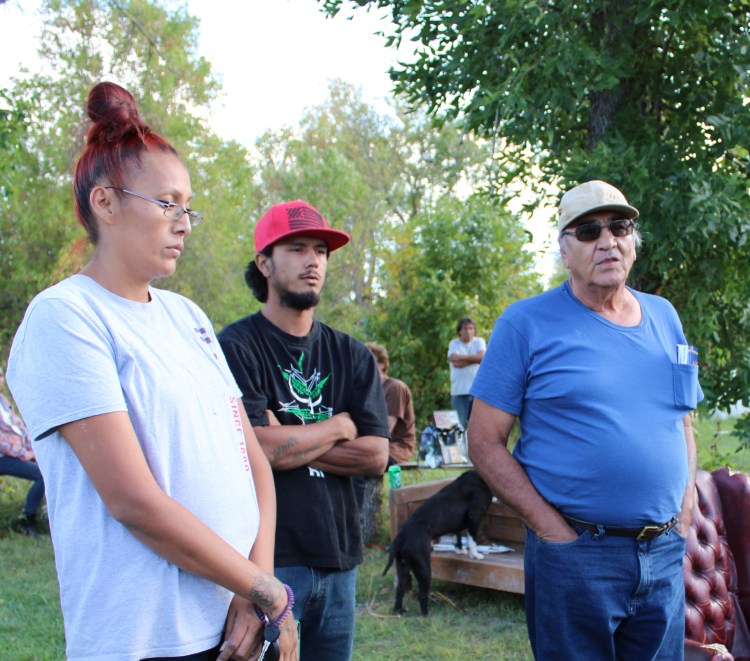
Rosebud White Plume and Tyson White Plume will manage the White Plume Hemp business. Alex White Plume will focus on developing hemp seed. Photo by Vi Waln.


Vi Waln (Lakota) is an award-winning Journalist. She can be reached through email vi@lakotatimes.com


More on Lateral Violence

When contemplating what to write about each week, lateral violence nearly always tops my list. Wikipedia says: “Lateral Violence occurs within marginalized groups where members strike out at each other as a result of being oppressed. The oppressed become the oppressors of themselves and each other. Common behaviors that prevent positive change from occurring include gossiping, bullying, finger-pointing, backstabbing and shunning.”

Today, there’s a lot of lateral violence occurring on social media. Lakota people who haven’t worked to heal their issues are good at promoting lateral violence. For instance, they will lash out at others through dramatic, hateful social media posts.

Lots of social media keyboard warriors don’t give a second thought about what they’ve written, or who will read it. That is, many of our children learn how to perpetuate lateral violence tactics from their parents or other extended family members. This results in many of our young Lakota people tormenting their classmates both in person and online.

September is suicide prevention month. We’ve lost young people who were suffering from lateral violence to suicide. Today is a great time to talk to your children about how harmful it is to perpetuate lateral violence.

Healthy Lakota people are aware of the many relatives who haven’t taken the time to heal their individual trauma. Unhealthy people will deny promoting lateral violence. For example, there are people on our reservations who look down on their fellow tribal citizens because of the federal government-imposed blood quantum. Full-bloods, half-bloods and lineal descendants have all suffered some sort of lateral violence because of the fraction listed on their tribal abstract.

One example of lateral violence would be a tribal council refusing to grant tribal membership to an applicant who is less than one-quarter Lakota, despite the constitution allowing such memberships. Tribal council members will verbalize a variety of reasons for refusing tribal membership. The lateral violence tribal officials perpetuate comes from a place of fear. This fear is based in the belief that the potential lineal descent tribal members will somehow take over the abundance of wonderful benefits the tribe supposedly offers their citizens.

Also, there’s a lot of lateral violence in the tribal workplace. This is evident in the number of written complaints tribal workers compose on computers while on the clock. Tribally-chartered entities also engage in lateral violence by filing complaints on tribal officials. A lot of time is wasted by officials sorting out the hurt feelings of employees or citizens. The time spent trying to figure out who is right, could instead be focusing on improving the program services. There isn’t any benefit in attempting to destroy a fellow tribal worker.

We are in the midst of a lot of change. The weather we are experiencing has caused hardship for many of our people, especially elders. Yet, we’d rather worry about tearing apart our fellow tribal citizens on social media. Many of you live for the gossip we hear from our so-called friends. And we can’t wait tell everyone our version of the gossip we just heard.

Yet, I never give up the hope that Lakota people will change. Our ancestors worked hard to survive. Their summers were spent hunting, gathering and storing food in preparation for brutal winters. They had no time to gossip about one another in derogatory ways. They lived for the entire tribe.

045

Modern day Lakota people have no idea what it would be like to live for the whole tribe. It would mean giving up the time we waste gossiping, bullying, finger-pointing, backstabbing and shunning our own people. Use your time wisely and work on healing.

Emotional health clears your mind and heart of all the lateral violence you’ve perpetrated.

Vi Waln (Lakota) is an award-winning Journalist. She can be reached through email vi@lakotatimes.com
Lakota Elders: A Precious Resource

Methamphetamine has changed our lives in Indian Country. Even if we’ve never taken a hit of the drug, most of us know at least one person whose life has been devastated by meth.

For example, Sicangu Wicoti Awayankape (SWA) is the entity which oversees subsidized housing on my reservation. A lease must be agreed to and signed by the person who is head of household upon moving in; there are a lot of rules the tenants have to follow to keep the house.

With the influx of meth use on our reservation, a large number of families on Rosebud have been evicted from their SWA housing units. Many heads of household were evicted in tribal court for the high levels of methamphetamines present in their home, resulting in the entire family becoming homeless.

A lot of those homes were leased for years by elders. As Lakota people, we’ve always taken care of our relatives. Our grandparents are the type of people who will take in their children or grandchildren when they have no where else to go. In the majority of the evictions on Rosebud, the head of household had no idea meth was being used in the home.

Bewildered grandparents found themselves homeless due to methamphetamines. It isn’t fair to them, but it’s a written law in the Department of Housing and Urban Development (HUD) policy that tenants can be evicted for illegal drug use. If you think about it, behavior resulting in a Lakota elder being evicted from their home is elder abuse. Many of those elders are still homeless.

Other elders are still living in HUD homes in Indian Country. Many of them live in fear of the adult relatives residing with them. Lakota grandparents are the type of compassionate humans who can’t bear to see their adult children suffer. So, against their better judgement, they do what they can to provide for their adult children, grandchildren and great-grandchildren.

136
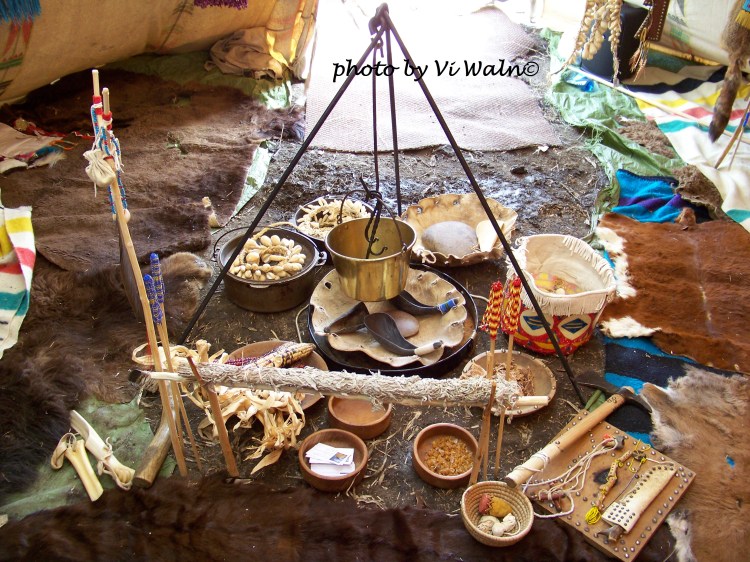
Lakota elders and children participate in the annual Rosebud parade. Photo by Vi Waln.

Also, lots of our contemporary Lakota adults misunderstand the role of grandparents in child-rearing. For instance, many Lakota children have been deserted by their parents and we see many of our abandoned children living with grandparents or even great-grandparents. Other less fortunate Lakota children, who were taken into custody by social workers, are now living with non-Indian foster families off the reservation – largely because they had no grandparents to take them.

The myriad of effects going back to the trauma our people have suffered over the last five centuries has contributed to our people turning to drugs or alcohol to numb their pain. It’s a fact that meth use has crippled the ability of many Lakota people to care for their small children and teenagers.

It’s a given that Lakota grandparents will step in to fill the needs created by absent or incapable parents. So, there is no such thing as retirement for many Lakota grandparents who are financially supporting their Takoja. The contribution of our Uncis and Lalas to our contemporary Lakota society is priceless.

Parents who’ve lost custody of their children would do well to start paying one or more monthly bills for their elder relatives who are providing financial support for those same wakanyeja. Grandparents who are financially supporting school aged students need extra help to care for those children. Electricity and other bills must be paid every month. Winter is coming, buy Unci some groceries or fill up her propane tank. If Lala has a wood stove, pay for all his wood.

September is National Grandparents Month. Grandparents Day is on Sunday, September 8, 2019. Those of you fortunate enough to have living grandparents, please buy them dinner or pay their electricity bill.

Lakota elders are a precious resource.

Vi Waln (Lakota) is an award-winning Journalist. She can be reached through email vi@lakotatimes.com

Lateral violence and Lakota Culture

Lakota children deserve to learn about their culture. Our children have a right to be a part of ceremony, even if their family knows nothing about Lakota culture. We must empower our children by helping them learn about ceremony and encouraging their active participation.

Our ancestors worked hard to pass down traditional knowledge to Lakota families. Our contemporary Lakota elders, raised by parents and grandparents who lived a ceremonial way of life, are our most valuable resource. They can teach our children what it means to be Lakota.

Yet, many ancestors were forced to abandon Lakota culture. Our ceremonies were against the wasicu law for several generations. A lot of our Lakota ancestors were locked up behind bars in wasicu prisons for having ceremony. Still, our Lakota way of life persisted and today we are witness to a cultural renaissance.

Every single one of our Lakota ceremonies has an important purpose. Consequently, our ancestors realized they had to carry on our ceremonial way of life because it is crucial to our survival. A handful of brave ancestors refused to allow wasicu laws prevent them from conducting ceremony.

Thus, as Lakota people, we must all be grateful to the foresight of our long-gone ancestors. Our culture would surely have perished without the dedication of Lakota people who continued to have ceremony, despite the wasicu laws forbidding it. Because of the efforts of our ancestors, today’s Lakota children can still partake in our ceremonies.

On Rosebud, we have tribal programs employing dedicated Lakota staff who work hard to ensure our people have an opportunity to learn about their own cultural way of life. One program at Rosebud is the Child Care program. The staff there works hard to provide sessions for our people to learn skills to carry on our Lakota culture.

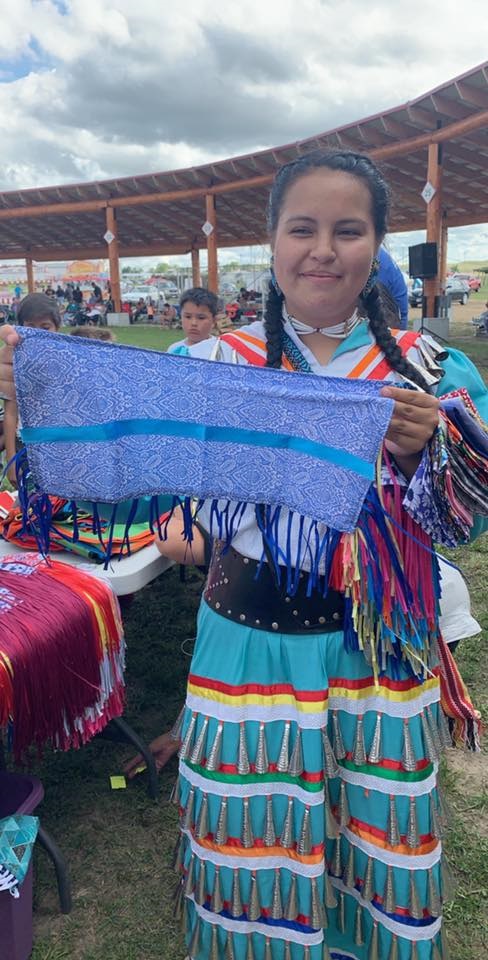
For instance, program staff have provided free sessions for tribal citizens to learn how to make star quilts and shawls. There was also a session on how to make choke cherry juice. Over the summer, staff invited tribal citizens to join them in harvesting medicinal plants on the Rosebud.


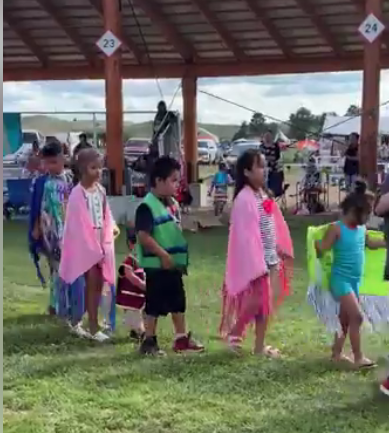
Another way the Child Care staff makes a difference is by promoting ceremony. For example, all year long the dedicated staff worked to help 70 children receive Lakota names during the Rosebud youth wacipi. Another 200 children were gifted a shawl or vest so they could participate in the wacipi.

Rosebud Youth Wacipi 2
Rosebud’s Child Care staff distributed either a shawl or vest to over 200 children at the Youth Wacipi. Photo from Facebook.
Rosebud Youth Wacipi 3
Staff and volunteers put in many hours creating the gifts in all sizes for the children of Rosebud. Photo from Facebook.

I understand the naming ceremony and making of wacipi regalia has traditionally been the role of family. But the persecution of our ancestors, whom were dedicated to our Lakota ceremonial way of life, resulted in the loss of traditional practices. The federal government worked hard to Christianize our people with tales of hell fire which put fear in many Lakota people. Also, the federal government established the boarding/residential schools to basically beat the culture out of Lakota people.

Christianity and the residential/boarding school experiences were devastating, not only to our culture, but our Lakota ceremonial way of life as well. These experiences continue to encourage lateral violence, which a majority of our Lakota people continue to perpetuate. For instance, I read a post on social media about how it wasn’t right to have a “mass naming” of Lakota children.

We should be applauding our relatives who work to ensure our children have an opportunity to be Lakota.

The dedication and tenacity of our ancestors was essential in the survival of our cultural ways and ceremony. I am forever grateful to my ancestors for preserving our knowledge to empower all Lakota people who are alive today.

Kudos to the Rosebud Sioux Tribe Child Care Program staff for helping our children carry on our Lakota way of life!


Rosebud Youth Wacipi 2019
These children wear the shawls and vests given to them at the Youth Wacipi by the Rosebud Child Care staff. Photo from Facebook.


Vi Waln (Lakota) is an award-winning Journalist. She can be reached through email vi@lakotatimes.com

Lateral Violence in the Workplace

July 22 2019

Local citizens who’ve been privileged to work for their own tribal organizations are familiar with lateral violence. Wikipedia defines lateral violence as “displaced violence directed against one’s peers rather than adversaries. This construct is one way of explaining minority-on-minority violence in developed nations.” https://en.wikipedia.org/wiki/Lateral_violence

Whether we work in private, public, government or tribal sectors on the reservation, we’ve all been subject to lateral violence. When lateral violence is allowed to run unchecked, it can cause permanent damage to any organization. Let’s look at some examples of lateral violence in the workplace. Consequently, the examples outlined in the following paragraphs are fictious and don’t represent any real person or tribal organization.

One instance of lateral violence would be when an employee who has worked with the organization for ten years or more, begins voicing disparaging remarks to her coworkers. All the disparaging remarks are directed at the new supervisor. Even though the supervisor is an educated, experienced tribal citizen, the employee will claim that the boss doesn’t know anything about the work the organization does.

In addition, lateral violence is perpetuated when the staff aligns with the disgruntled employee and continues the discussion amongst themselves. The on-going group discussion is focused on how unqualified they perceive the supervisor. In reality, the person hired in the leadership role has the credentials (experience and education) to qualify for the position.

Another instance of lateral violence will happen when new leadership comes into the organization. The new leader does an assessment to determine how to restructure the organization to better serve the public. When the assessment is complete and all employees informed of their role, a mandatory meeting is called to announce the restructuring plan to all staff.

Yet, the restructuring effort is undermined when one or more employees back out of the previously agreed upon job changes and refuse to attend the mandated staff meeting. Instead, the employees adopt a victim mentality by soliciting letters from their co-workers about how dissatisfied they are with the new supervisor. The letters are written on work computers and are all unsigned.

So then, the anonymous letters are handed over to a board member with questionable integrity. The fact that the staff didn’t follow the chain of command and went straight to a board member is a violation of the organization’s personnel manual. The letters are only presented to the one person on the governing body because the disgruntled staff members know they can manipulate that single board member.

As a result, the organization is thrown into turmoil. Several staff members abandon their jobs or resign due to the extremely hostile work environment. A handful of employees are left to pick up the pieces. The people served by the organization suffer.

I’m sure these examples are familiar to many of you working in organizations both on and off the reservation. One way to begin turning lateral violence around is through on-the-job training. That is, employers could empower their staff by offering regular sessions about what lateral violence can do to an organization. Another way to quash lateral violence is to offer professional training on team building and emotional intelligence.

However, there are many tribal citizens who can’t or won’t accept new ideas in the workplace. They refuse to view any training set up to empower them as something good. They will continue with disparaging remarks, like “training like this is only for wasicu.”

It’s sad our people would rather perpetuate lateral violence in the workplace. As a tribe, we will never move forward until our own people accept the fact that they need to begin their own healing. I can’t change anyone. I can only change myself and pray for everyone else.

Vi Waln (Lakota) is an award-winning Journalist. She can be reached through email vi@lakotatimes.com
 

Honoring the Memory

Vi Waln

July 7, 2019

030
Lakota children died at Carlisle Indian School. Their parents likely grieved for the rest of their lives. Photo by Vi Waln.


July is the month to remember parents who’ve lost children. Even though every July is acknowledged as a national month of awareness, the majority of our Indigenous people work hard to comfort their grieving relatives all year round. Every Tiospaye, Clan or Band in Indian Country knows what it’s like to have lost babies, children and teenagers to an untimely or tragic death. There are many of us who’ll mourn the loss of our child or grandchild forever.

Lakota people often speak about how the spirit of a blood relative can take all the bad with them when they pass away. For a long time, I didn’t understand what this meant. When someone died, I would look for the bad to go away from that family but I didn’t see it happening very much. Some of the family members didn’t change, they still enjoyed their bad habits even though they were supposed to be in mourning.

When my five-year-old Takoja died unexpectedly from an illness, it was the saddest, most painful time of my family’s life. Those first few days after her passing were marked with emotional shock. We cried. We didn’t sleep. We wondered how we would go on. Our lives were never the same.

The anniversary of her death is still hard. We remember everything we did that day she left us. I still remember all my relatives and friends who came to my house. They came by to comfort us by bringing hugs, food, coffee and their caring presence. My Maske came and cleaned my entire house. My friends brought quilts we used for the wake. Singers brought their drum. I saw Lakota compassion in action during our time of grief.

The passing of my Takoja helped me to understand how the death of a beloved child or grandchild could take the bad with them. Emotionally, nothing seemed to matter anymore when my Takoja died. That is, I didn’t want to have any hard feelings. I didn’t want to be mad at anyone. I wanted people to be happy and be good to each other. Takoja’s death showed me how precious life really is.

Takoja’s death changed my Tiwahe forever. It was the hardest thing we ever lived through. My family is still coping with our devastating loss. Every single day, we wonder what her life would have been like as an adult.

Those of us living in Indian Country understand the suffocating sadness that comes with the death of a child. Yet, I’ve seen a lot of our people show their willingness to let go of hard feelings, to let go of grudges that have perhaps been carried on for generations. This gives me hope. We want our Tiospaye to live happy. The only way we can truly be happy is to let all the bad go.

I believe our loved ones in the spirit world feel our sadness. And as hard as the death of a child is, the spirit world wants living relatives to be happy, not sad. They are in a spiritual place where they have the ability to take all our bad away. It’s up to us to let the bad go with them. They are in a beautiful place where deep sadness can be instantly transformed into unconditional love. They are preparing a place of beauty for us when it’s our time to walk on the Milky Way.

Pray for all parents who have lost a child. Remember the parents whose precious children are locked in cages at the border. Let’s honor the memory of our children who have passed on by being good to each other. Nothing will change until we live the changes ourselves.


Vi Waln (Lakota) is an award-winning Journalist. She can be reached through email viwaln@gmail.com

Indigenous Children in Cages are Sacred

Vi Waln

July 3, 2019

Most Lakota people are aware of teachings which tell us our children are sacred. However, a lot of our people have forgotten the true meaning of sacred children. Every day we see the suffering of our Lakota children. For example, there are children being raised by grandparents because the mother or father is lost in alcohol/drug addiction. Our young mothers and fathers sometimes abandon their children when they get involved in a new romantic relationship.

Indigenous children all over the world are suffering, their basic needs are not being met because of poverty. Even worse, the so-called leaders of this country have established detention centers at the border crossings to house Indigenous children forcibly taken from their parents who sought asylum in the USA from Central and Meso America. News reports are now telling us that several children have died in these detention centers.

Indigenous children are currently being denied basic hygiene, bedding, clothing, water and food. The children being detained in cages are also reporting sexual and other physical abuse by adults who are assigned to look after them. Many parents of these children are gone, either deported back to the area of Turtle Island where they fled from or detained in other centers established by the United States of America. We sit back and do nothing.

The children detained in cages at American borders are also sacred. They followed their parents who fled from living conditions much worse than our people are experiencing. These are Indigenous people that the United States is terrorizing.

It seems the sitting President of the United States (POTUS) is basing his 2020 election campaign on rounding up illegal “immigrants” and deporting them back to where they came from. I don’t understand how a human being can deny a child their parents and basic needs; especially when these families are fleeing from areas filled with violence from gangs and drug cartels.

Anyone who doesn’t have compassion for all the helpless Indigenous children being held in cages at the borders of this country is definitely not human. I believe those in favor of these children being kept in torturous conditions should be labeled as subhuman, since they obviously lack the emotional body that many of us are born with.

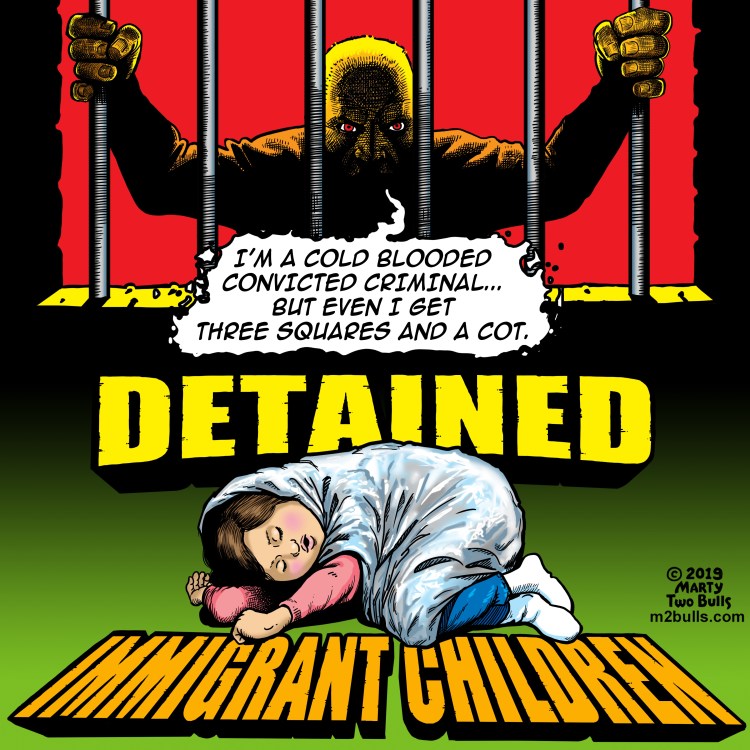
For instance, one editorial cartoon of POTUS playing golf while the bodies of a father and child lay in the water nearby cost a cartoonist his job. I saw nothing wrong with the cartoon, I believe it summed up the truth very well: Indigenous people are dying because of the policies of the POTUS. But the truth is the very thing your POTUS doesn’t want people to read, speak or hear.


15-42 CARTOON LCT Editoon 062819


Marty Two Bull’s editorial cartoon contrasts the conditions of two populations. That is, while prisoners housed in tribal, city, county, state and federal detention facilities receive a bed to sleep on, health care and three meals a day – the Indigenous children and their parents detained in US Immigration and Customs Enforcement (ICE) facilities sleep on concrete floors or on the ground without adequate food or medical care.

As I write this piece, the news is reporting POTUS as the first to set foot in North Korea to visit with their dictator/leader. This is a distraction folks. POTUS does these “firsts” to appease his racist voters. These POTUS publicity stunts are also orchestrated to draw our attention away from the fact that there are hundreds of Indigenous children suffering in cages at the borders of this country.

While the USA is again celebrating their Independence Day this week, remember the caged humans at the USA borders are Indigenous to Turtle Island. The caged children, teens, adults and elders are our relatives.


Vi Waln (Sicangu Lakota) is an award-winning Journalist. She can be reached through email viwaln@gmail.com